Shukla Sanjeev, Shankar Eswar, Fu Pingfu, MacLennan Gregory T, Gupta Sanjay
Department of Urology, Case Western Reserve University, Cleveland, Ohio, United States of America; The Urology Institute, University Hospitals Case Medical Center, Cleveland, Ohio, United States of America.
Department of Epidemiology & Biostatistics, Case Western Reserve University, Cleveland, Ohio, United States of America; Division of General Medical Sciences, Case Comprehensive Cancer Center, Cleveland, Ohio, United States of America.
PLoS One. 2015 Sep 17;10(9):e0138710. doi: 10.1371/journal.pone.0138710. eCollection 2015.
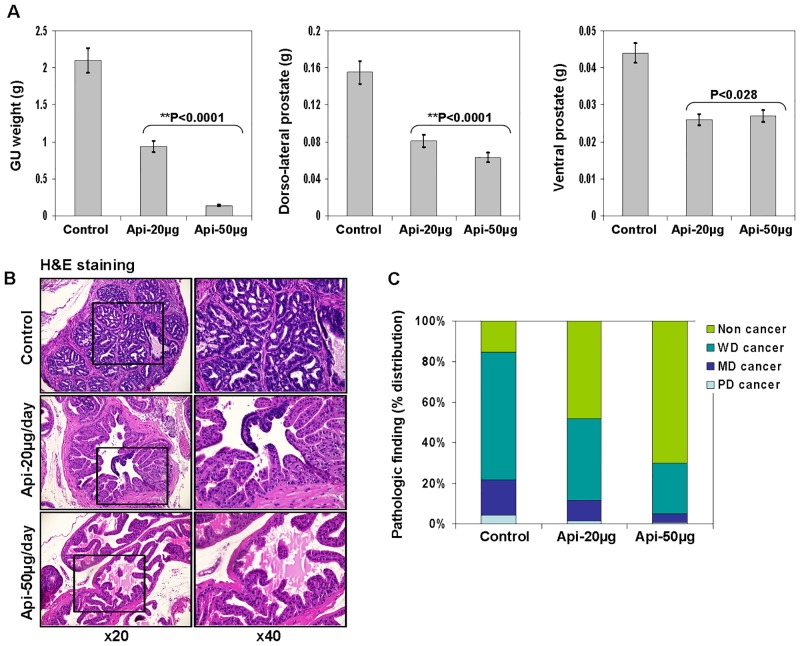
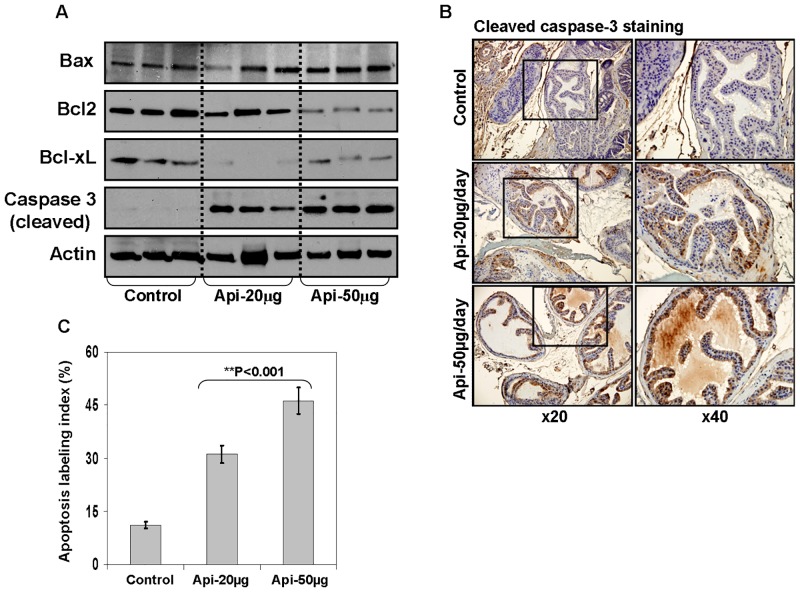
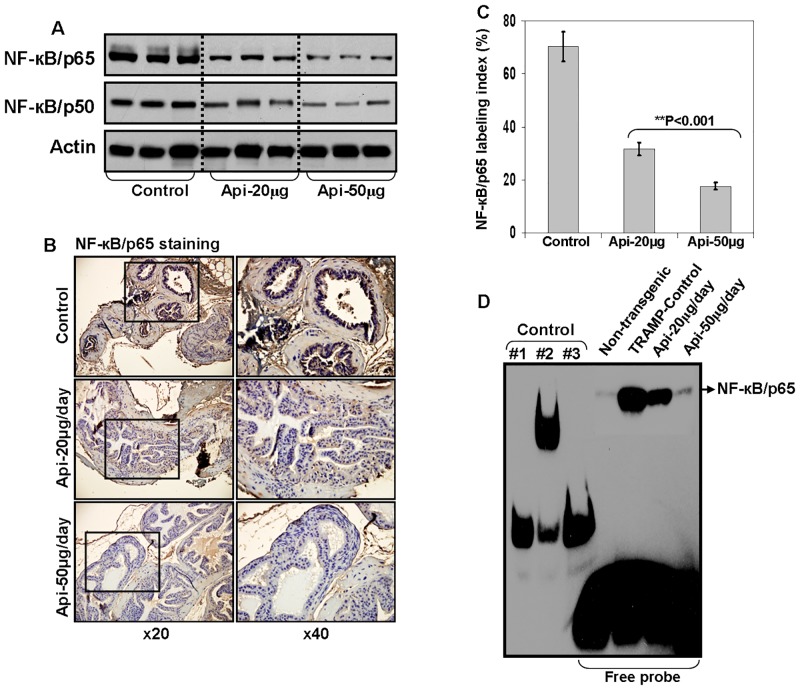
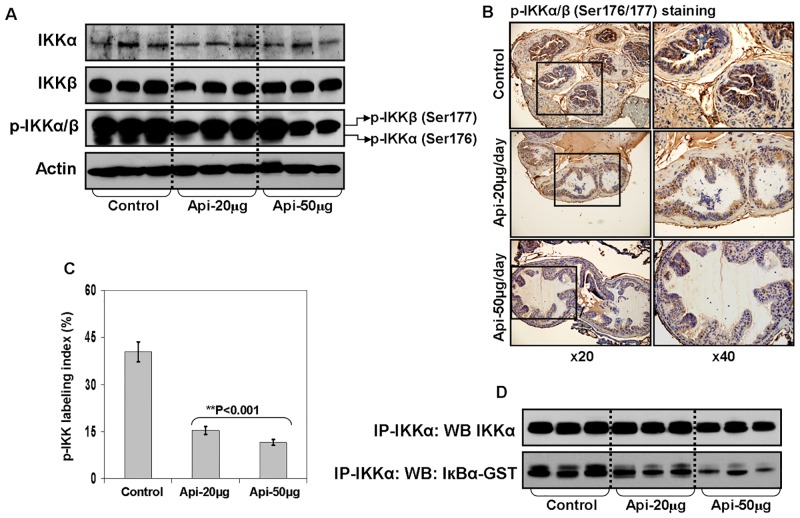
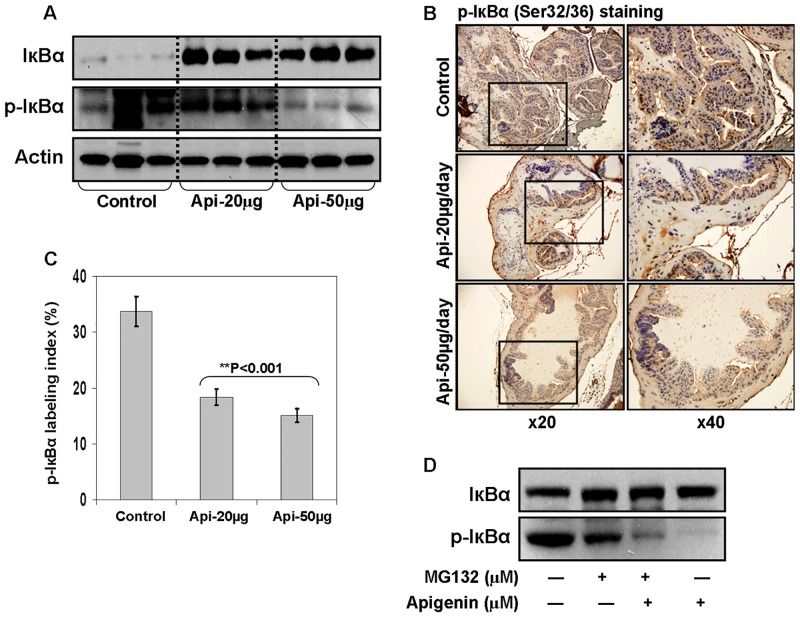
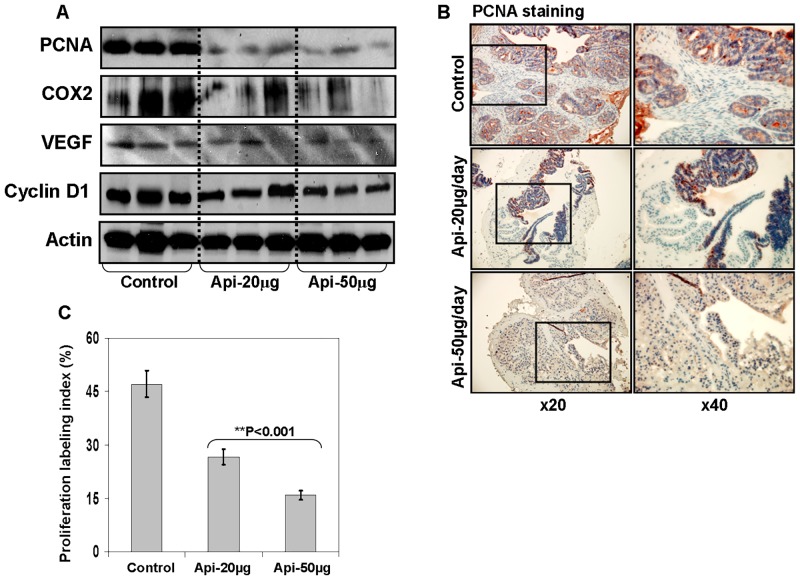
Aberrant Nuclear Factor-κappaB (NF-κB) activation due to rapid IκBα turnover and high basal IκBα kinase (IKK) activity has been frequently observed in prostate cancer. Apigenin, a naturally occurring plant flavone, exhibits anti-proliferative, anti-inflammatory and anti-carcinogenic activities by inhibiting NF-κB pathway, through a mechanism not fully understood. We found that apigenin feeding in microgram doses (bioavailable in humans) inhibited prostate tumorigenesis in TRAMP mice by interfering with NF-κB signaling. Apigenin feeding to TRAMP mice (20 and 50 μg/mouse/day, 6 days/week for 20 weeks) exhibited significant decrease in tumor volumes of the prostate and completely abolished metastasis, which correlated with inhibition of NF-κB activation and binding to the DNA. Apigenin intake blocked phosphorylation and degradation of IκBα by inhibiting IKK activation, which in turn led to suppression of NF-κB activation. The expression of NF-κB-regulated gene products involved in proliferation (cyclin D1, and COX-2), anti-apoptosis (Bcl-2 and Bcl-xL), and angiogenesis (vascular endothelial growth factor) were also downregulated after apigenin feeding. These events correlated with the induction of apoptosis in tumor cells, as evident by increased cleaved caspase-3 labeling index in the dorsolateral prostate. Our results provide convincing evidence that apigenin inhibits IKK activation and restores the expression of IκBα, preventing it's phosphorylation in a fashion similar to that elicited by IKK and proteasomal inhibitors through suppression of NF-κB signaling pathway.
由于IκBα快速周转和高基础IκBα激酶(IKK)活性导致的异常核因子-κB(NF-κB)激活在前列腺癌中经常被观察到。芹菜素是一种天然存在的植物黄酮,通过抑制NF-κB途径展现出抗增殖、抗炎和抗癌活性,但其机制尚未完全明确。我们发现,以微克剂量喂食芹菜素(人体可利用)可通过干扰NF-κB信号传导抑制TRAMP小鼠的前列腺肿瘤发生。给TRAMP小鼠喂食芹菜素(20和50μg/小鼠/天,每周6天,共20周)后,前列腺肿瘤体积显著减小,转移完全被消除,这与NF-κB激活的抑制以及与DNA的结合相关。摄入芹菜素通过抑制IKK激活阻断IκBα的磷酸化和降解,进而导致NF-κB激活的抑制。喂食芹菜素后,参与增殖(细胞周期蛋白D1和COX-2)、抗凋亡(Bcl-2和Bcl-xL)和血管生成(血管内皮生长因子)的NF-κB调节基因产物的表达也下调。这些事件与肿瘤细胞凋亡的诱导相关,背外侧前列腺中裂解的半胱天冬酶-3标记指数增加即证明了这一点。我们的结果提供了令人信服的证据,即芹菜素抑制IKK激活并恢复IκBα的表达,通过抑制NF-κB信号通路以类似于IKK和蛋白酶体抑制剂引发的方式阻止其磷酸化。