Brewster Monique S J, Gaudet Rachelle
Molecular and Cellular Biology, Harvard University, Cambridge, MA, USA.
Bioessays. 2015 Nov;37(11):1184-92. doi: 10.1002/bies.201500085. Epub 2015 Sep 21.
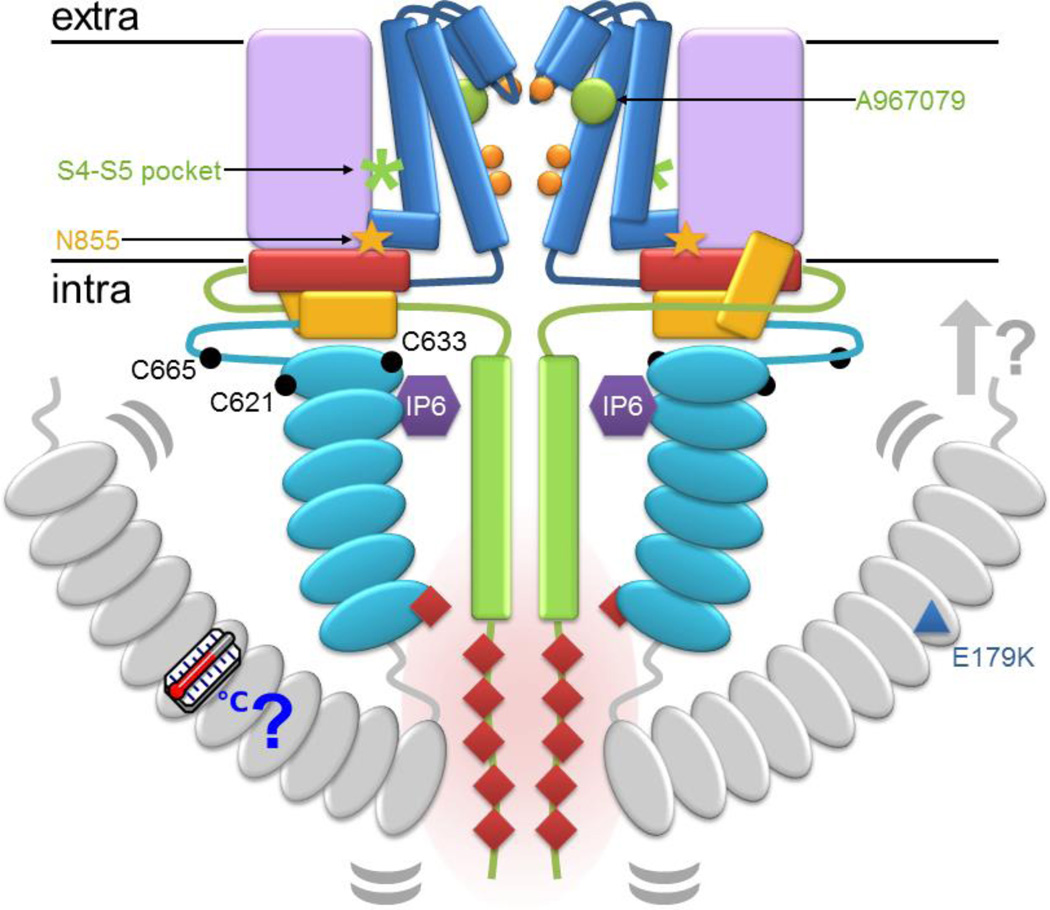
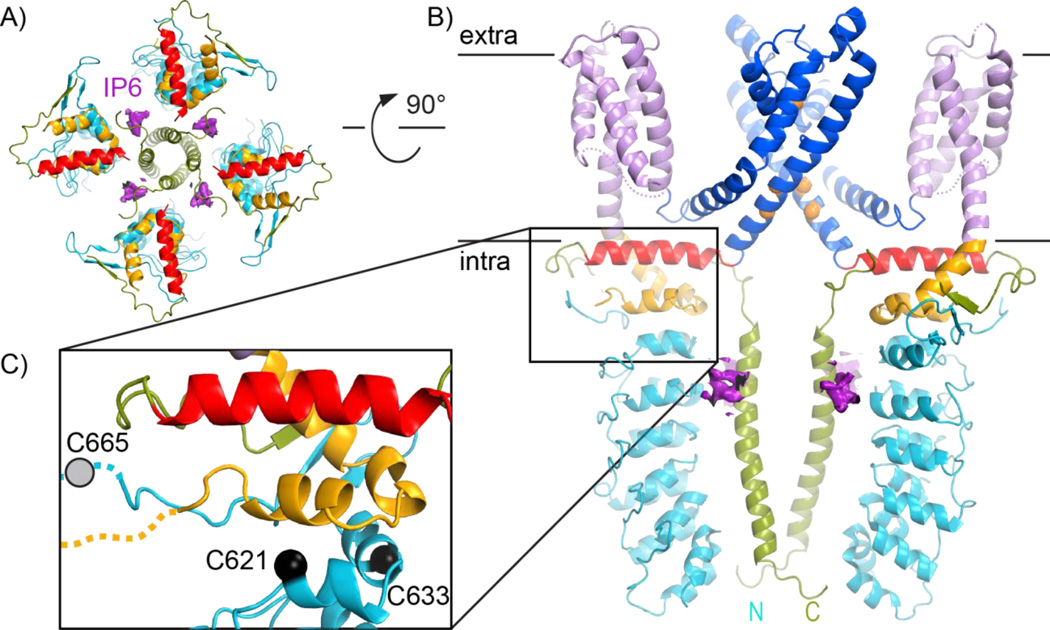
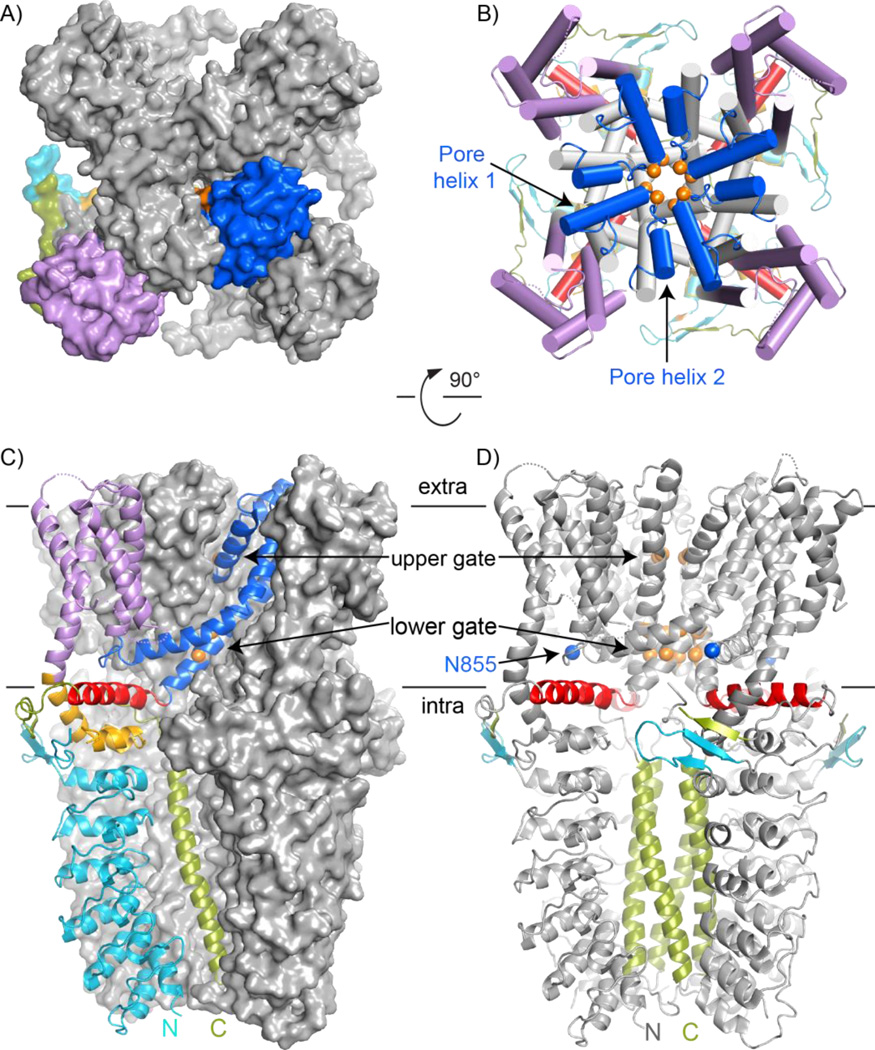
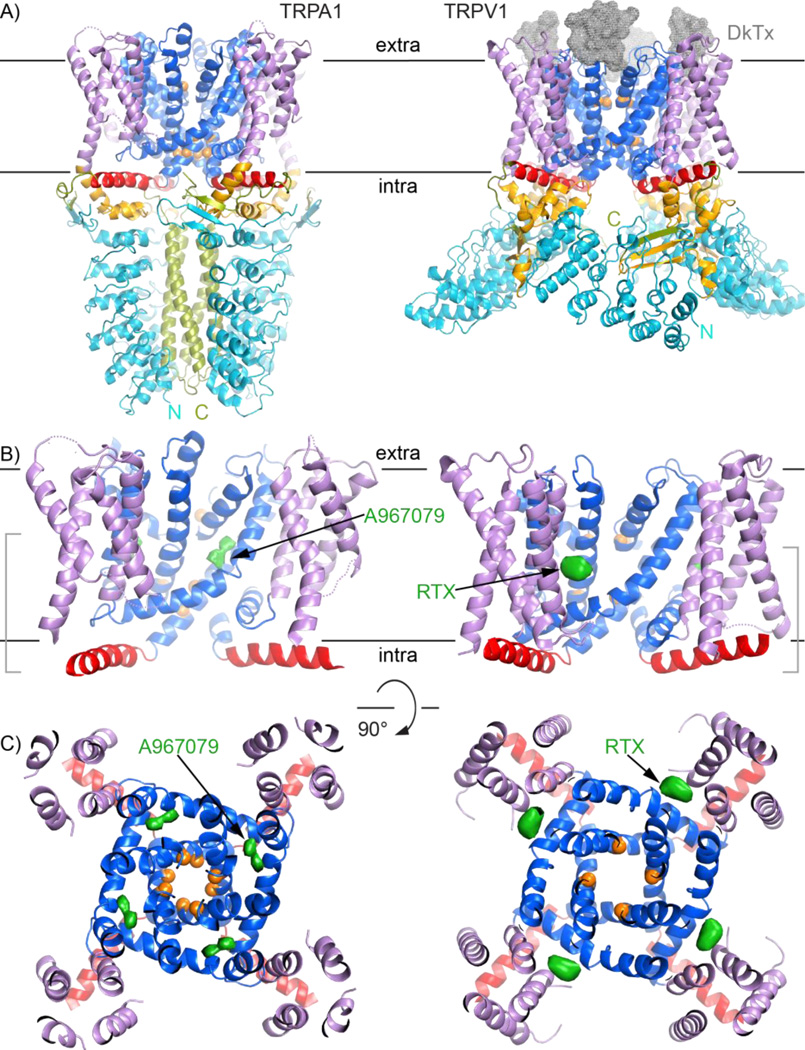
A new high-resolution structure of a pain-sensing ion channel, TRPA1, provides a molecular scaffold to understand channel function. Unexpected structural features include a TRP-domain helix similar to TRPV1, a novel ligand-binding site, and an unusual C-terminal coiled coil stabilized by inositol hexakisphosphate (IP6). TRP-domain helices, which structurally act as a nexus for communication between the channel gates and its other domains, may thus be a feature conserved across the entire TRP family and, possibly, other allosterically-gated channels. Similarly, the TRPA1 antagonist-binding site could also represent a druggable location in other ion channels. Combined with known TRPA1 functional properties, the structural role for IP6 leads us to propose that polyphosphate unbinding could act as a molecular kill switch for TRPA1 inactivation. Finally, although packing of the TRPA1 membrane-proximal region hints at a mechanism for electrophile sensing, the details of how TRPA1 responds to noxious reactive electrophiles and temperature await future studies.
一种疼痛感知离子通道TRPA1的新的高分辨率结构,为理解通道功能提供了一个分子支架。意外的结构特征包括一个类似于TRPV1的TRP结构域螺旋、一个新的配体结合位点,以及一个由肌醇六磷酸(IP6)稳定的不寻常的C末端卷曲螺旋。TRP结构域螺旋在结构上作为通道门与其其他结构域之间通讯的枢纽,因此可能是整个TRP家族以及可能其他变构门控通道中保守的特征。同样,TRPA1拮抗剂结合位点也可能代表其他离子通道中的一个可成药位点。结合已知的TRPA1功能特性,IP6的结构作用使我们提出多磷酸盐解离可能作为TRPA1失活的分子杀伤开关。最后,尽管TRPA1膜近端区域的堆积暗示了一种亲电试剂感知机制,但TRPA1如何响应有害的活性亲电试剂和温度的细节仍有待未来研究。