Heblinski Marika, Santiago Marina, Fletcher Charlotte, Stuart Jordyn, Connor Mark, McGregor Iain S, Arnold Jonathon C
The Lambert Initiative for Cannabinoid Therapeutics, Brain and Mind Centre, The University of Sydney, Sydney, Australia.
Faculty of Medicine and Health and School of Medical Sciences, The University of Sydney, Sydney, Australia.
Cannabis Cannabinoid Res. 2020 Dec 15;5(4):305-317. doi: 10.1089/can.2019.0099. eCollection 2020.
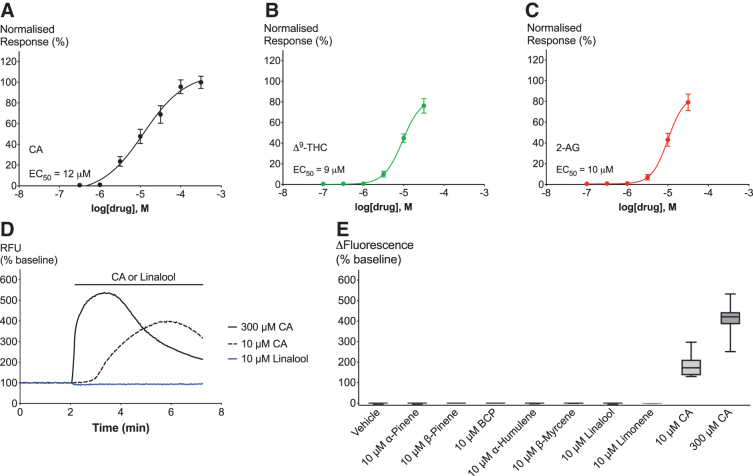
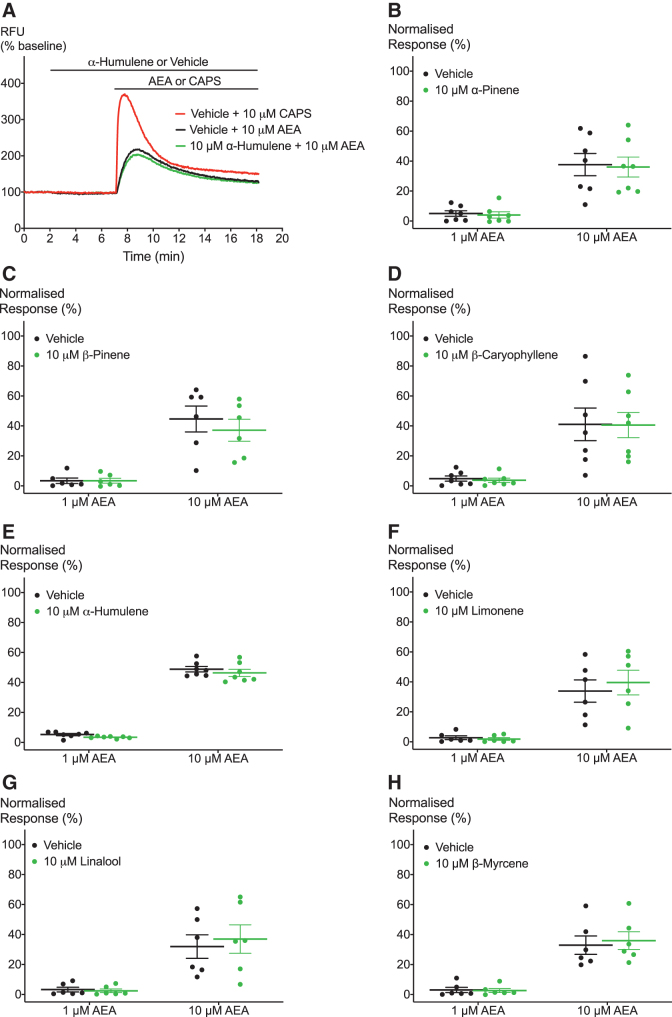
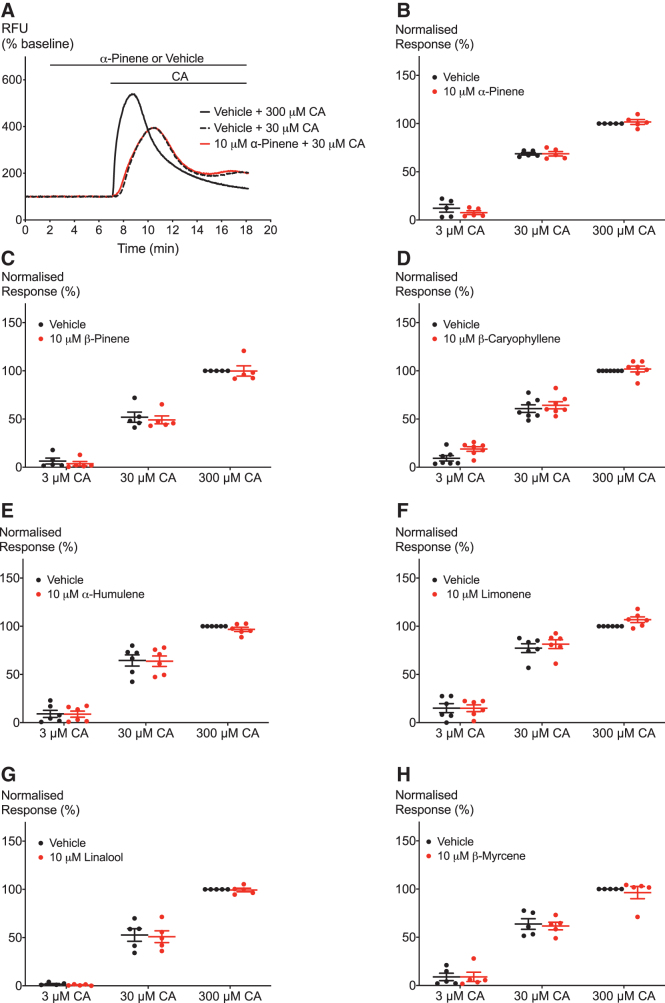
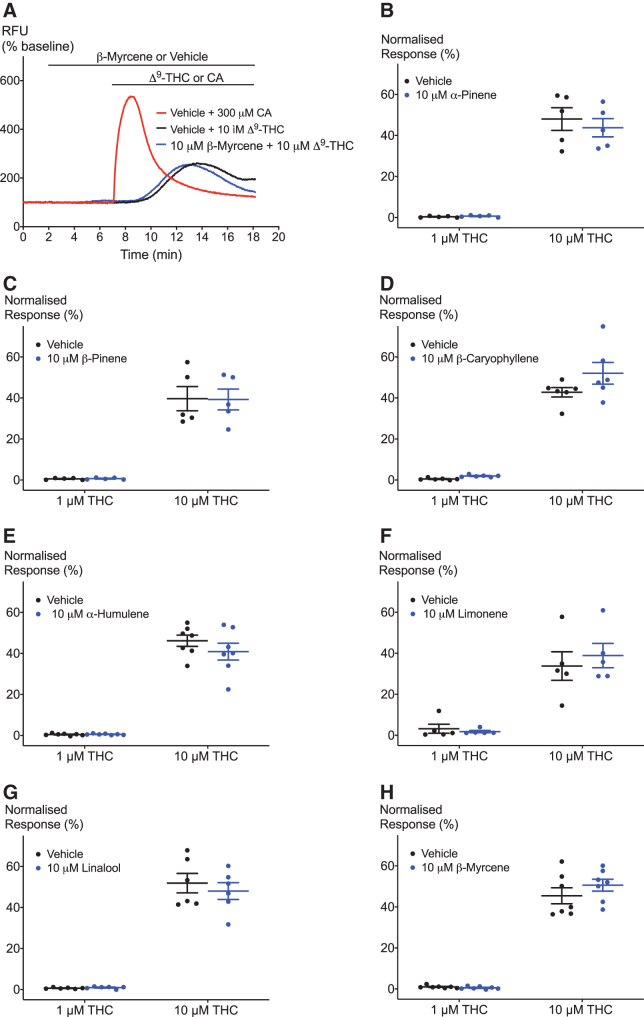
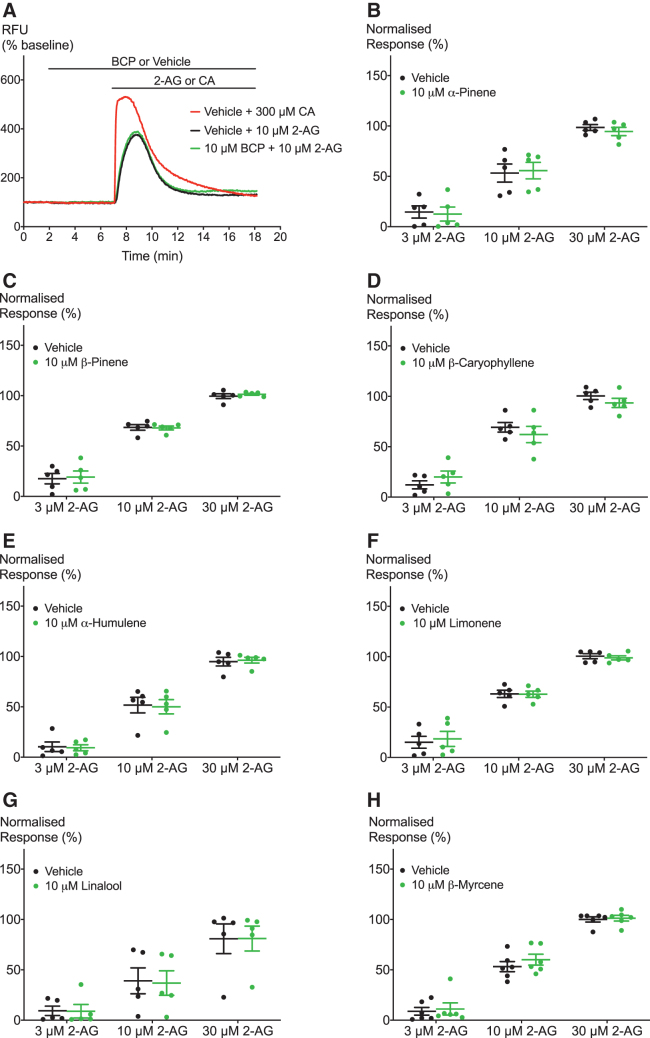
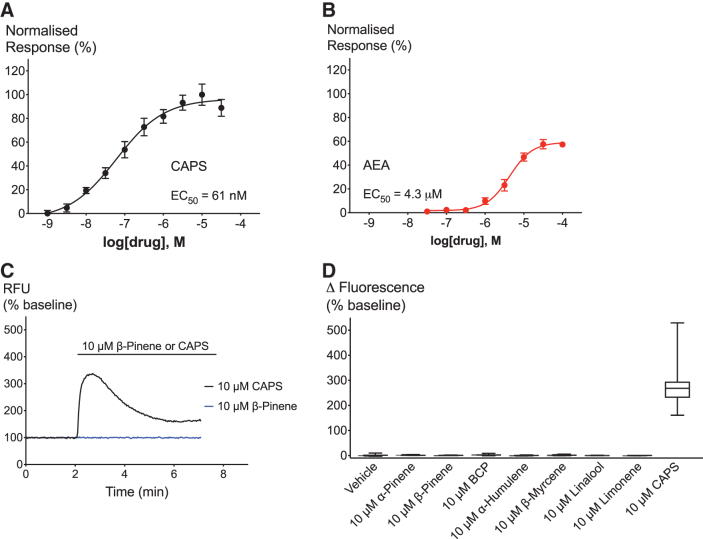
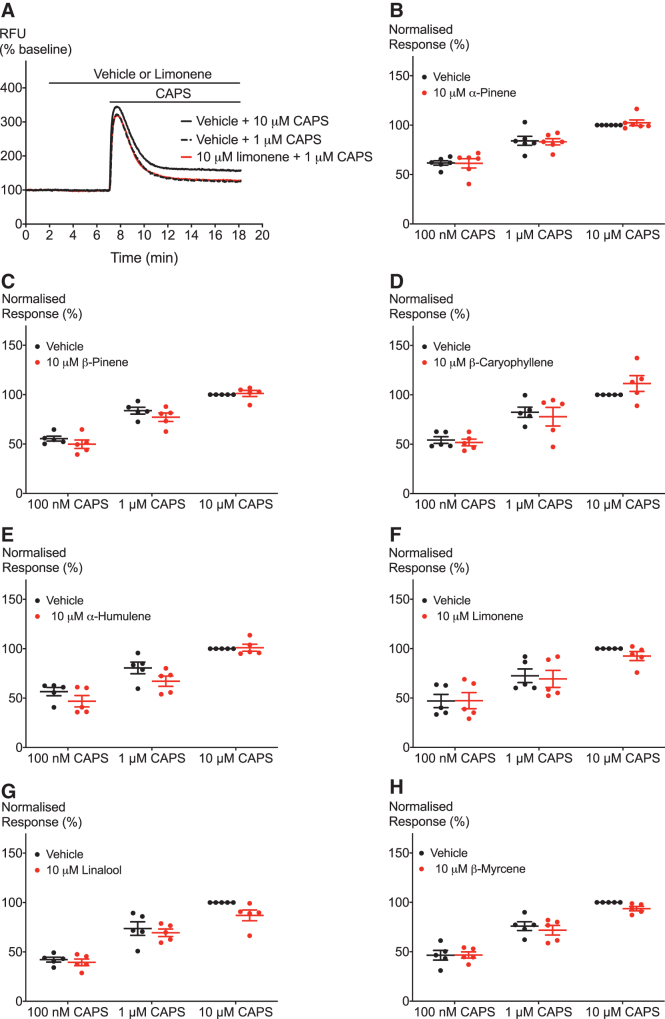
produces hundreds of bioactive compounds, including cannabinoids and terpenoids. It has been proposed that cannabinoids act in synergy with terpenoids to produce the entourage effect, a concept used to explain the therapeutic benefits of medicinal cannabis. One molecular explanation for the entourage effect is that the terpenoids augment the actions of cannabinoids at their molecular drug targets in cells. We recently reported that terpenoids commonly found in cannabis do not influence the functional effects of Δ-tetrahydrocannabinol (Δ-THC) on cannabinoid 1 and cannabinoid 2 receptors. The present study aimed to extend on this research by examining whether terpenoids influence the effects of phytocannabinoids and endocannabinoids on human transient receptor potential ankyrin 1 (hTRPA1) and human transient receptor potential vanilloid 1 (hTRPV1) channels heterologously expressed in mammalian cells. The activity of terpenoids, phytocannabinoids, and endocannabinoids was assessed in inducible HEK Flp-In T-Rex cells transfected with hTRPA1 and hTRPV1 channels, respectively. Real-time changes in intracellular calcium ([Ca]) were measured using the Calcium 5 dye and a FlexStation 3 plate reader. α-pinene, β-pinene, β-caryophyllene, linalool, limonene, β-myrcene or α-humulene did not affect [Ca] in hTRPA1 and hTRPV1 overexpressing cells. Cinnamaldehyde (CA), Δ-THC, and 2-arachidonoylglycerol (2-AG) activated TRPA1 receptors with high efficacy and similar potency (ECs of ∼10 μM). Capsaicin and anandamide (AEA) activated TRPV1 receptors with an EC of 61 nM and 4.3 μM, respectively, but TRPV1 showed no response to Δ-THC, cannabidiol, and other minor cannabinoids. Terpenoids did not significantly affect the responses of TRPA1 and TRPV1 receptors to submaximal and maximal concentrations of CA and Δ-THC or the endocannabinoids AEA and 2-AG. We could not find any evidence that the terpenoids tested here activate TRPA1 and TRPV1 channels or modulate their activation by Δ-THC and other agonists, including endocannabinoids.
它能产生数百种生物活性化合物,包括大麻素和萜类化合物。有人提出,大麻素与萜类化合物协同作用产生“整体效应”,这一概念用于解释药用大麻的治疗益处。对“整体效应”的一种分子解释是,萜类化合物增强了大麻素在细胞中分子药物靶点的作用。我们最近报道,大麻中常见的萜类化合物不会影响Δ-四氢大麻酚(Δ-THC)对大麻素1型和大麻素2型受体的功能作用。本研究旨在通过研究萜类化合物是否影响植物大麻素和内源性大麻素对在哺乳动物细胞中异源表达的人类瞬时受体电位锚蛋白1(hTRPA1)和人类瞬时受体电位香草酸1型(hTRPV1)通道的作用,来扩展这项研究。分别在转染了hTRPA1和hTRPV1通道的诱导型HEK Flp-In T-Rex细胞中评估萜类化合物、植物大麻素和内源性大麻素的活性。使用钙5染料和FlexStation 3酶标仪测量细胞内钙([Ca])的实时变化。α-蒎烯、β-蒎烯、β-石竹烯、芳樟醇、柠檬烯、β-月桂烯或α-葎草烯对过表达hTRPA1和hTRPV1的细胞中的[Ca]没有影响。肉桂醛(CA)、Δ-THC和2-花生四烯酸甘油酯(2-AG)以高效和相似的效力(EC约为10μM)激活TRPA1受体。辣椒素和花生四烯乙醇胺(AEA)分别以61 nM和4.3μM的EC激活TRPV1受体,但TRPV1对Δ-THC、大麻二酚和其他次要大麻素无反应。萜类化合物对TRPA1和TRPV1受体对亚最大和最大浓度的CA和Δ-THC或内源性大麻素AEA和2-AG的反应没有显著影响。我们找不到任何证据表明这里测试的萜类化合物能激活TRPA1和TRPV1通道,或调节它们被Δ-THC和其他激动剂(包括内源性大麻素)的激活。