Kuo Po-Hsiu, Chuang Li-Chung, Su Mei-Hsin, Chen Chia-Hsiang, Chen Chien-Hsiun, Wu Jer-Yuarn, Yen Chung-Jen, Wu Yu-Yu, Liu Shih-Kai, Chou Miao-Chun, Chou Wen-Jiun, Chiu Yen-Nan, Tsai Wen-Che, Gau Susan Shur-Fen
Institute of Epidemiology and Preventive Medicine, College of Public Health, National Taiwan University, Taipei, Taiwan; Research Center for Genes, Environment and Human Health, National Taiwan University, Taipei, Taiwan.
Department of Nursing, Cardinal Tien Junior College of Healthcare & Management, I-Lan, Taiwan.
PLoS One. 2015 Sep 23;10(9):e0138695. doi: 10.1371/journal.pone.0138695. eCollection 2015.
Autism spectrum disorder (ASD) is a neurodevelopmental disorder with strong genetic components. Several recent genome-wide association (GWA) studies in Caucasian samples have reported a number of gene regions and loci correlated with the risk of ASD--albeit with very little consensus across studies.
A two-stage GWA study was employed to identify common genetic variants for ASD in the Taiwanese Han population. The discovery stage included 315 patients with ASD and 1,115 healthy controls, using the Affymetrix SNP array 6.0 platform for genotyping. Several gene regions were then selected for fine-mapping and top markers were examined in extended samples. Single marker, haplotype, gene-based, and pathway analyses were conducted for associations.
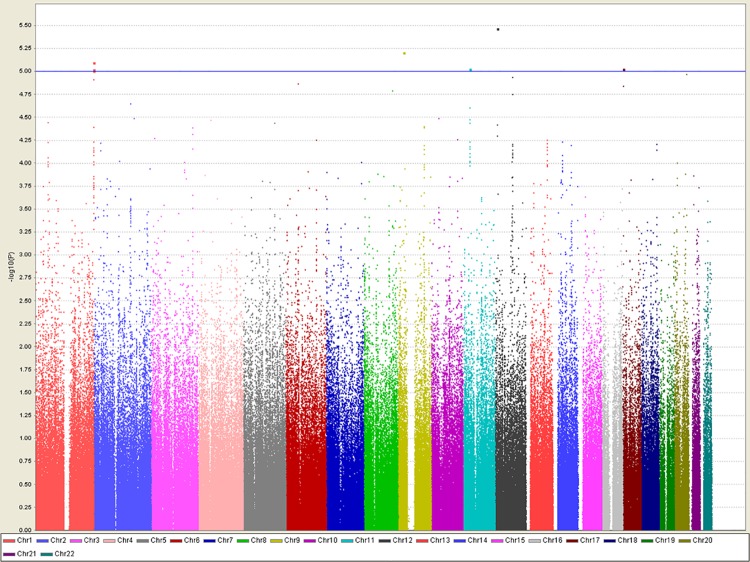
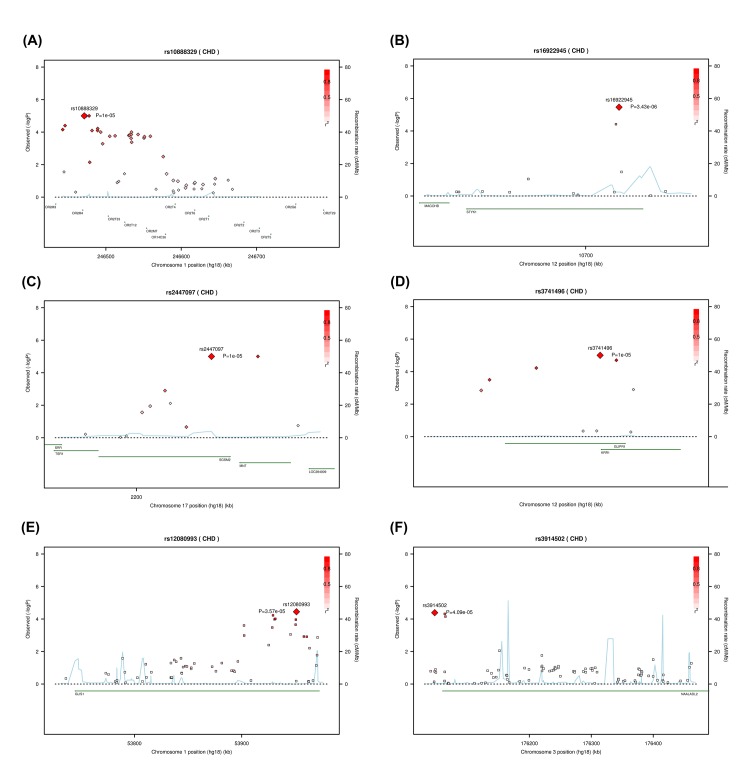
Seven SNPs had p-values ranging from 3.4~9.910-6, but none reached the genome-wide significant level. Five of them were mapped to three known genes (OR2M4, STYK1, and MNT) with significant empirical gene-based p-values in OR2M4 (p = 3.410(-5)) and MNT (p = 0.0008). Results of the fine-mapping study showed single-marker associations in the GLIS1 (rs12082358 and rs12080993) and NAALADL2 (rs3914502 and rs2222447) genes, and gene-based associations for the OR2M3-OR2T5 (olfactory receptor genes, p = 0.02), and GLIPR1/KRR1 gene regions (p = 0.015). Pathway analyses revealed important pathways for ASD, such as olfactory and G protein-coupled receptors signaling pathways.
We reported Taiwanese Han specific susceptibility genes and variants for ASD. However, further replication in other Asian populations is warranted to validate our findings. Investigation in the biological functions of our reported genetic variants might also allow for better understanding on the underlying pathogenesis of autism.
自闭症谱系障碍(ASD)是一种具有强大遗传成分的神经发育障碍。最近在高加索人群样本中进行的几项全基因组关联(GWA)研究报告了一些与ASD风险相关的基因区域和位点——尽管各研究之间几乎没有共识。
采用两阶段GWA研究来识别台湾汉族人群中ASD的常见遗传变异。发现阶段包括315例ASD患者和1115名健康对照,使用Affymetrix SNP阵列6.0平台进行基因分型。然后选择几个基因区域进行精细定位,并在扩大样本中检查顶级标记。进行了单标记、单倍型、基于基因和通路分析以寻找关联。
7个单核苷酸多态性(SNP)的p值范围为3.4~9.9×10⁻⁶,但均未达到全基因组显著水平。其中5个定位于3个已知基因(OR2M4、STYK1和MNT),在OR2M4(p = 3.4×10(-5))和MNT(p = 0.0008)中具有显著的基于经验基因的p值。精细定位研究结果显示GLIS1(rs12082358和rs12080993)和NAALADL2(rs3914502和rs2222447)基因中的单标记关联,以及OR2M3 - OR2T5(嗅觉受体基因,p = 0.02)和GLIPR1/KRR1基因区域(p = 0.015)的基于基因的关联。通路分析揭示了ASD的重要通路,如嗅觉和G蛋白偶联受体信号通路。
我们报告了台湾汉族人群中ASD的特异性易感基因和变异。然而,有必要在其他亚洲人群中进一步重复研究以验证我们的发现。对我们报告的遗传变异的生物学功能进行研究也可能有助于更好地理解自闭症的潜在发病机制。