Zimmerman B E, Pibida L, King L E, Bergeron D E, Cessna J T, Mille M M
National Institute of Standards and Technology, Gaithersburg, MD 20899.
National Institute of Standards and Technology, Gaithersburg, MD 20899 ; Nuclear Engineering and Engineering Physics Program, Rensselaer Polytechnic Institute, Troy, NY 12180.
J Res Natl Inst Stand Technol. 2013 Aug 15;118:359-74. doi: 10.6028/jres.118.017. eCollection 2013.
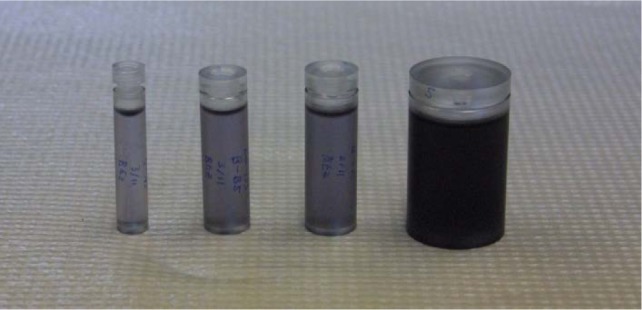
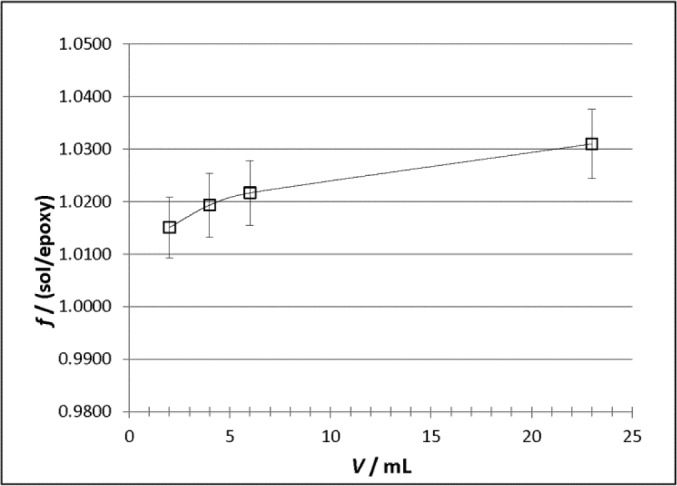
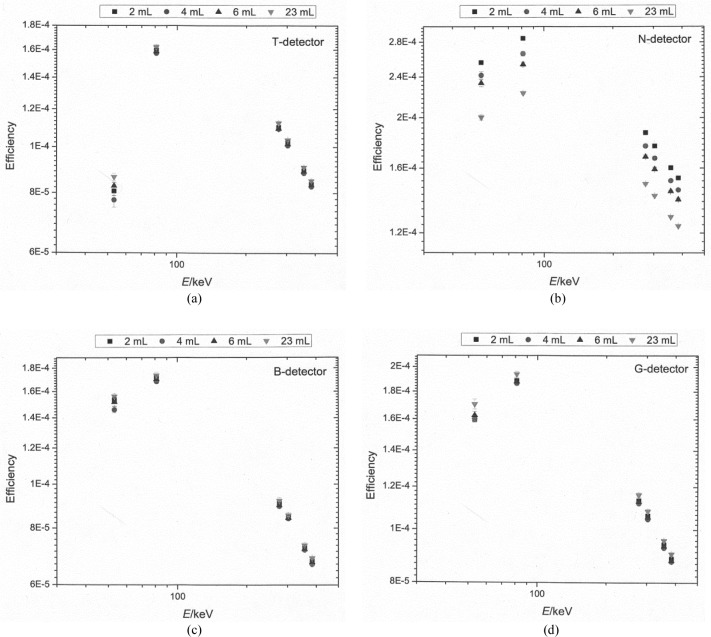
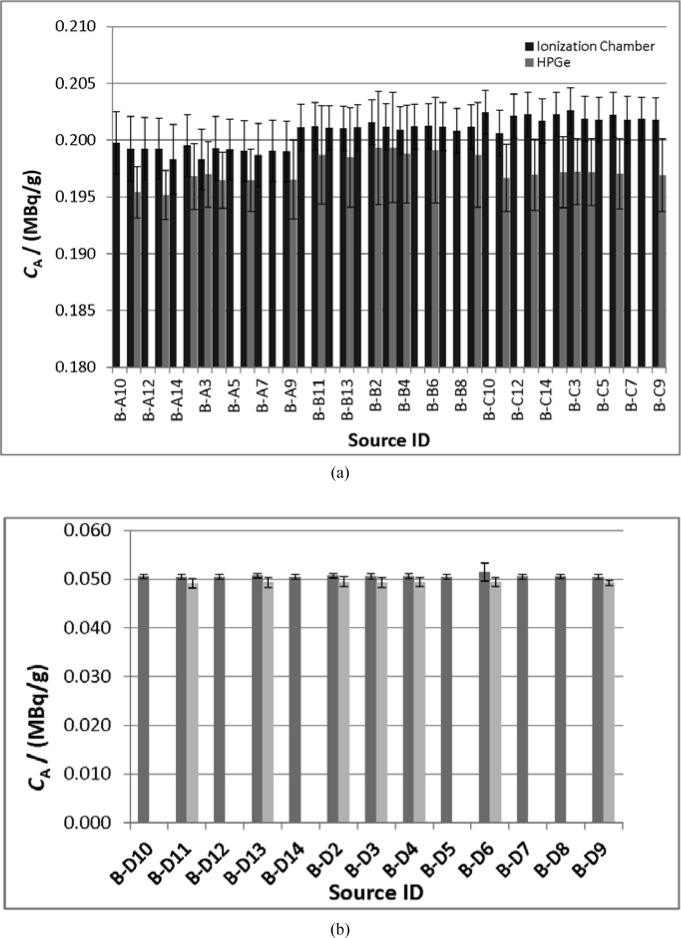
The International Atomic Energy Agency (IAEA) has organized an international comparison to assess Single Photon Emission Computed Tomography (SPECT) image quantification capabilities in 12 countries. Iodine-131 was chosen as the radionuclide for the comparison because of its wide use around the world, but for logistical reasons solid (133)Ba sources were used as a long-lived surrogate for (131)I. For this study, we designed a set of solid cylindrical sources so that each site could have a set of phantoms (having nominal volumes of 2 mL, 4 mL, 6 mL, and 23 mL) with traceable activity calibrations so that the results could be properly compared. We also developed a technique using two different detection methods for individually calibrating the sources for (133)Ba activity based on a National standard. This methodology allows for the activity calibration of each (133)Ba source with a standard uncertainty on the activity of 1.4 % for the high-level 2-, 4-, and 6-mL sources and 1.7 % for the lower-level 23 mL cylinders. This level of uncertainty allows for these sources to be used for the intended comparison exercise, as well as in other SPECT image quantification studies.
国际原子能机构(IAEA)组织了一次国际比对,以评估12个国家的单光子发射计算机断层扫描(SPECT)图像定量能力。由于碘-131在全球广泛使用,因此被选作比对的放射性核素,但出于后勤原因,使用固态(133)Ba源作为(131)I的长寿命替代物。在本研究中,我们设计了一组固态圆柱形源,以便每个站点都能有一套具有可溯源活度校准的体模(标称体积分别为2 mL、4 mL、6 mL和23 mL),从而能够对结果进行恰当比较。我们还开发了一种技术,使用两种不同的检测方法,基于国家标准对(133)Ba源的活度进行单独校准。这种方法能够对每个(133)Ba源进行活度校准,对于高活度的2 mL、4 mL和6 mL源,活度的标准不确定度为1.4%,对于低活度的23 mL圆柱体为1.7%。这种不确定度水平使得这些源可用于预期的比对工作以及其他SPECT图像定量研究。