Wu Pensée, van den Berg Caroline, Alfirevic Zarko, O'Brien Shaughn, Röthlisberger Maria, Baker Philip Newton, Kenny Louise C, Kublickiene Karolina, Duvekot Johannes J
Institute for Science and Technology in Medicine-Keele University, Guy Hilton Research Centre, Thornburrow Drive, Hartshill, Stoke-on-Trent ST4 7QB, UK.
Academic Unit of Obstetrics and Gynaecology, Royal Stoke University Hospital, Maternity Centre, Newcastle Road, Hartshill, Stoke-on-Trent ST4 6QG, UK.
Int J Mol Sci. 2015 Sep 23;16(9):23035-56. doi: 10.3390/ijms160923035.
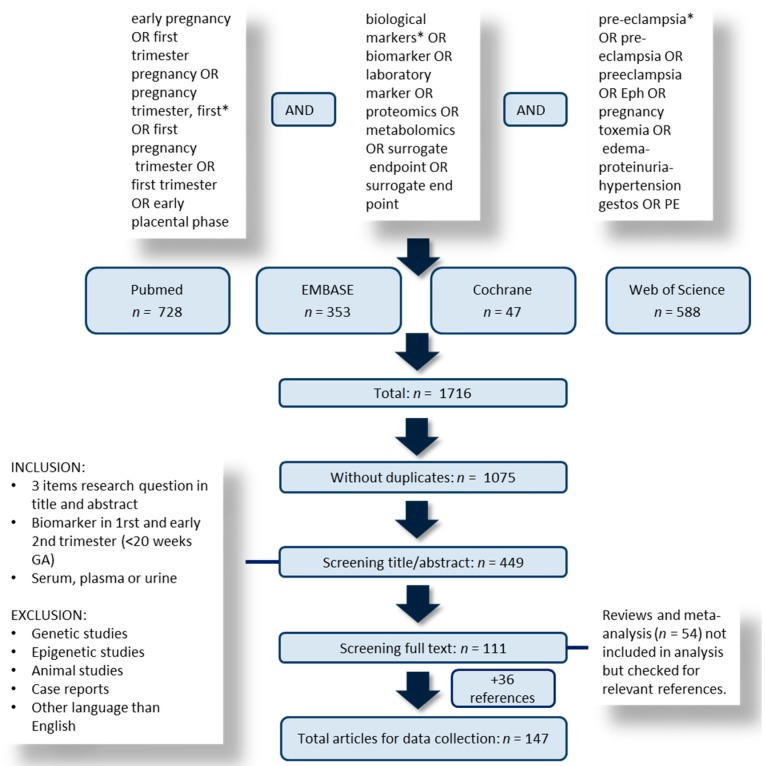
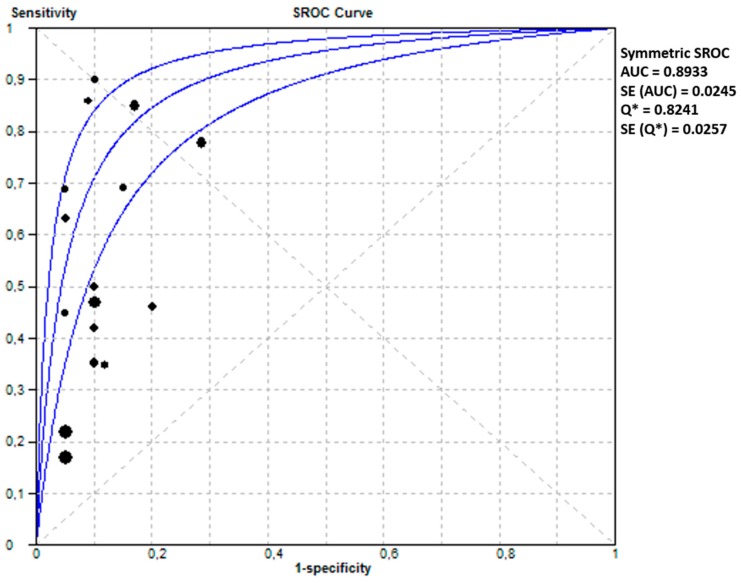
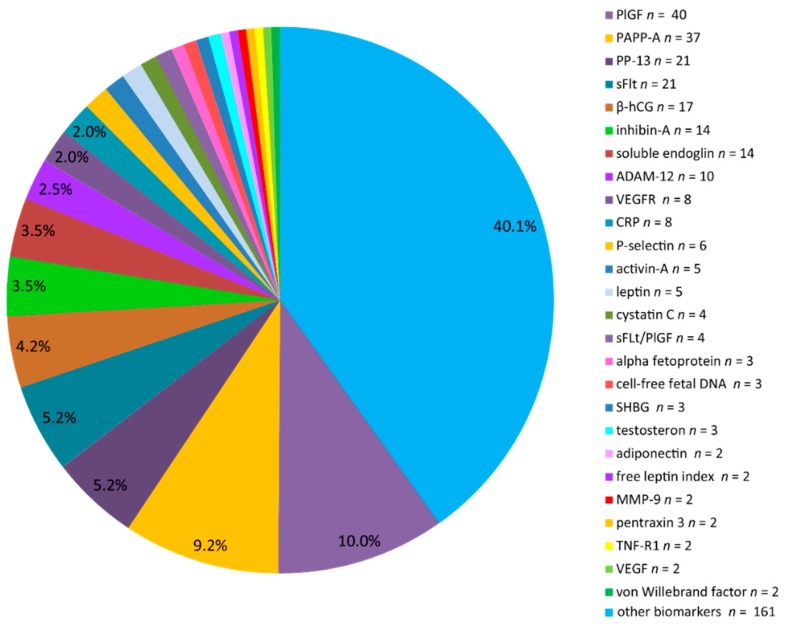
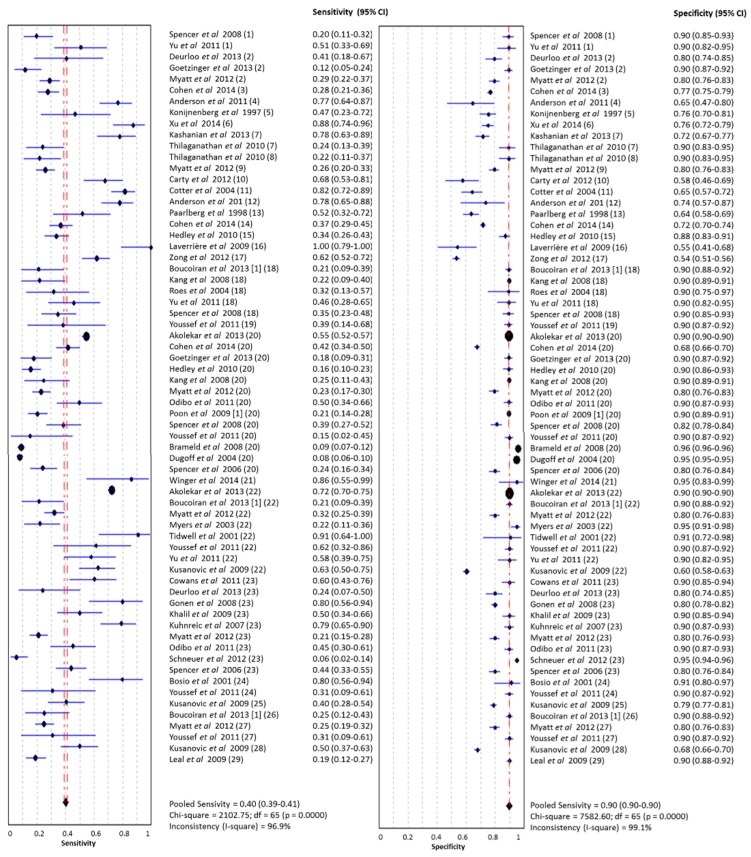
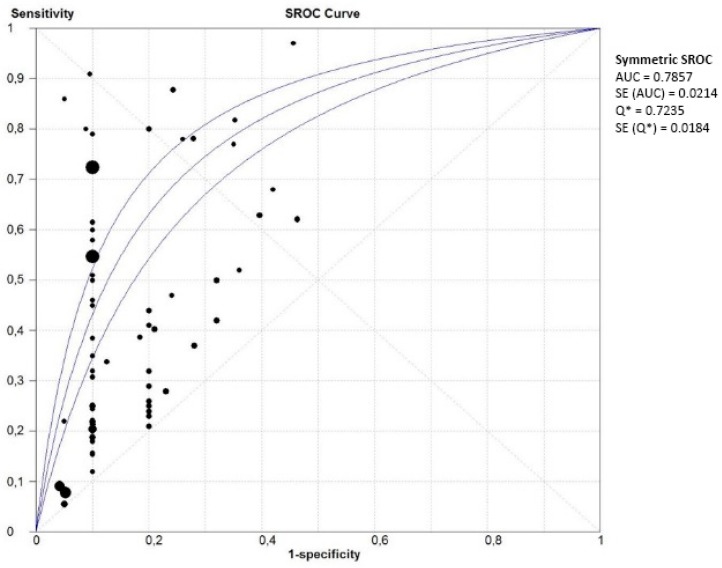
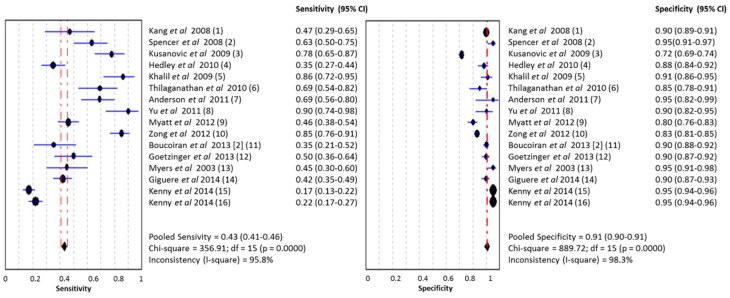
Pre-eclampsia (PE) complicates 2%-8% of all pregnancies and is an important cause of perinatal morbidity and mortality worldwide. In order to reduce these complications and to develop possible treatment modalities, it is important to identify women at risk of developing PE. The use of biomarkers in early pregnancy would allow appropriate stratification into high and low risk pregnancies for the purpose of defining surveillance in pregnancy and to administer interventions. We used formal methods for a systematic review and meta-analyses to assess the accuracy of all biomarkers that have been evaluated so far during the first and early second trimester of pregnancy to predict PE. We found low predictive values using individual biomarkers which included a disintegrin and metalloprotease 12 (ADAM-12), inhibin-A, pregnancy associated plasma protein A (PAPP-A), placental growth factor (PlGF) and placental protein 13 (PP-13). The pooled sensitivity of all single biomarkers was 0.40 (95% CI 0.39-0.41) at a false positive rate of 10%. The area under the Summary of Receiver Operating Characteristics Curve (SROC) was 0.786 (SE 0.02). When a combination model was used, the predictive value improved to an area under the SROC of 0.893 (SE 0.03). In conclusion, although there are multiple potential biomarkers for PE their efficacy has been inconsistent and comparisons are difficult because of heterogeneity between different studies. Therefore, there is an urgent need for high quality, large-scale multicentre research in biomarkers for PE so that the best predictive marker(s) can be identified in order to improve the management of women destined to develop PE.
子痫前期(PE)在所有妊娠中占比2%-8%,是全球围产期发病和死亡的重要原因。为了减少这些并发症并开发可能的治疗方法,识别有发生PE风险的女性非常重要。在妊娠早期使用生物标志物将有助于对妊娠进行适当分层,分为高风险和低风险妊娠,以便确定孕期监测并进行干预。我们使用正式方法进行系统评价和荟萃分析,以评估迄今为止在妊娠早期和妊娠中期早期评估的所有生物标志物预测PE的准确性。我们发现,使用包括解整合素和金属蛋白酶12(ADAM-12)、抑制素A、妊娠相关血浆蛋白A(PAPP-A)、胎盘生长因子(PlGF)和胎盘蛋白13(PP-13)在内的单个生物标志物时,预测价值较低。在假阳性率为10%时,所有单个生物标志物的合并敏感性为0.40(95%CI 0.39-0.41)。受试者操作特征曲线汇总(SROC)下的面积为0.786(SE 0.02)。当使用组合模型时,预测价值提高到SROC下的面积为0.893(SE 0.03)。总之,尽管有多种潜在的PE生物标志物,但其疗效一直不一致,且由于不同研究之间的异质性,比较困难。因此,迫切需要开展高质量、大规模的多中心PE生物标志物研究,以便确定最佳预测标志物,从而改善对注定要发生PE的女性的管理。