Kreber Lisa A, Griesbach Grace S, Ashley Mark J
1 Centre for Neuro Skills, David Geffen School of Medicine at UCLA , Bakersfield, California.
3 Centre for Neuro Skills - Clinical Education and Research Foundation, David Geffen School of Medicine at UCLA , Bakersfield, California.
J Neurotrauma. 2016 Sep 1;33(17):1607-13. doi: 10.1089/neu.2015.4127. Epub 2015 Nov 19.
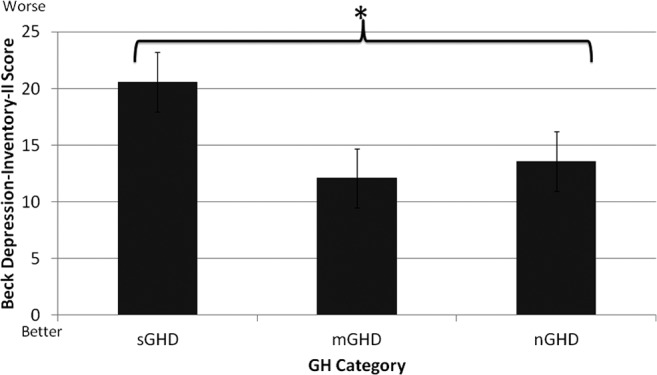
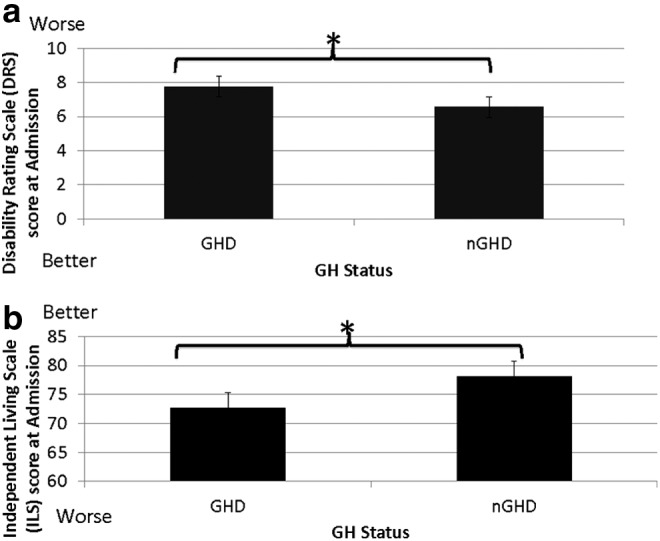
This study examined the prevalence of growth hormone deficiency (GHD) in patients with traumatic brain injury (TBI) during the post-acute phase of recovery and whether GHD was associated with increased disability, decreased independence, and depression. A secondary objective was to determine the accuracy of insulin-like growth factor-1 (IGF-1) levels in predicting GHD in patients with TBI. Anterior pituitary function was assessed in 235 adult patients with TBI through evaluation of fasting morning hormone levels. GH levels were assessed through provocative testing, specifically the glucagon stimulation test. GHD was diagnosed in a significant number of patients, with 45% falling into the severe GHD (≤3 μg/L) category. IGF-1 levels were not predictive of GHD. Patients with GHD were more disabled and less independent compared with those patients who were not GHD. Those patients with more severe GHD also showed decreased levels of cortisol and testosterone. Symptoms of depression were also more prevalent in this group. In addition, patients with severe GHD had delayed admission to post-acute rehabilitation. This study confirms the high prevalence of GHD in patients with TBI and the necessity to monitor clinical symptoms and perform provocative testing to definitively diagnose GHD.
本研究调查了创伤性脑损伤(TBI)患者在急性后期恢复阶段生长激素缺乏(GHD)的患病率,以及GHD是否与残疾增加、独立性降低和抑郁有关。次要目标是确定胰岛素样生长因子-1(IGF-1)水平预测TBI患者GHD的准确性。通过评估空腹晨激素水平,对235例成年TBI患者的垂体前叶功能进行了评估。通过激发试验,特别是胰高血糖素刺激试验评估生长激素水平。大量患者被诊断为GHD,其中45%属于严重GHD(≤3μg/L)类别。IGF-1水平不能预测GHD。与非GHD患者相比,GHD患者残疾程度更高,独立性更低。那些严重GHD患者的皮质醇和睾酮水平也较低。该组患者抑郁症状也更普遍。此外,严重GHD患者进入急性后期康复的时间延迟。本研究证实了TBI患者中GHD的高患病率,以及监测临床症状和进行激发试验以明确诊断GHD的必要性。