Srinivasan Bharath, Tonddast-Navaei Sam, Skolnick Jeffrey
Center for the Study of Systems Biology, School of Biology, Georgia Institute of Technology, 950, Atlantic Drive, Atlanta, GA 30332, United States.
Eur J Med Chem. 2015 Oct 20;103:600-14. doi: 10.1016/j.ejmech.2015.08.021. Epub 2015 Sep 5.
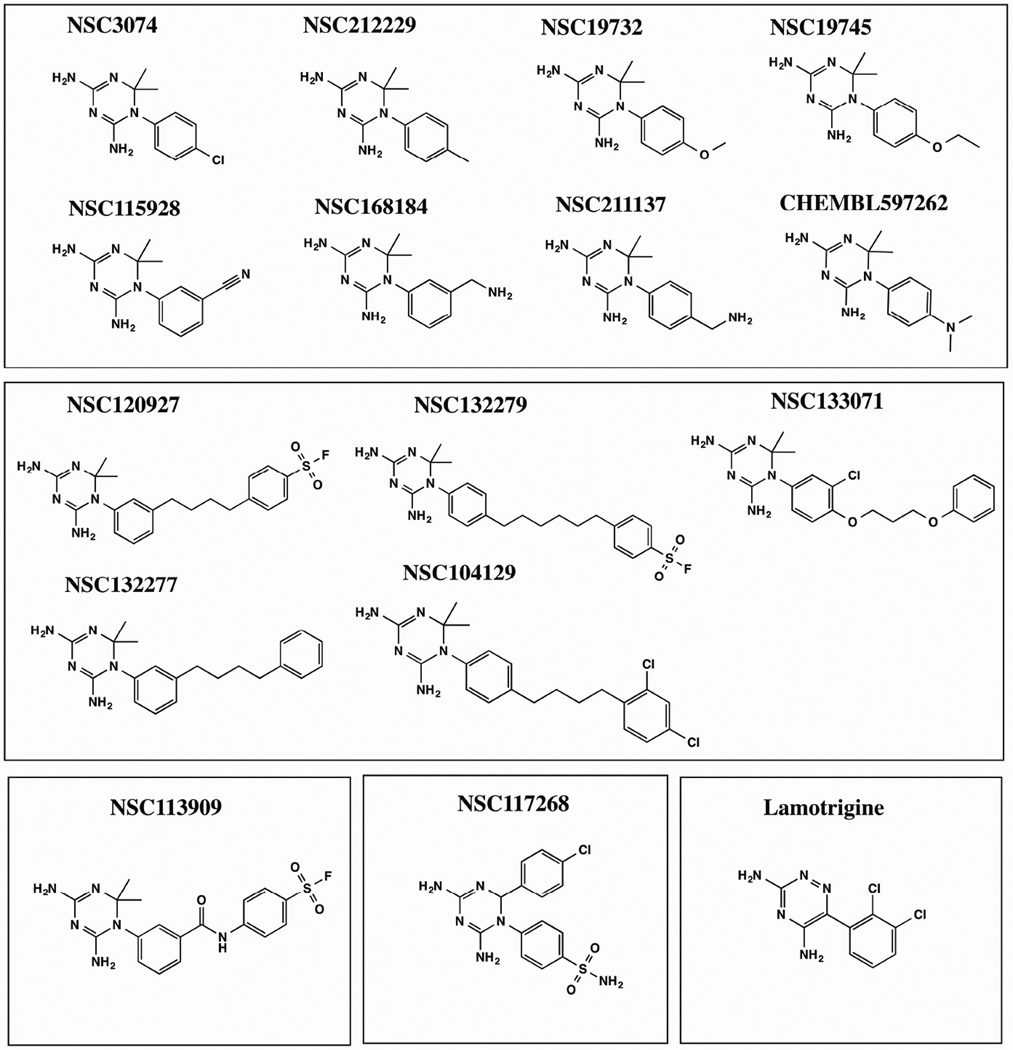
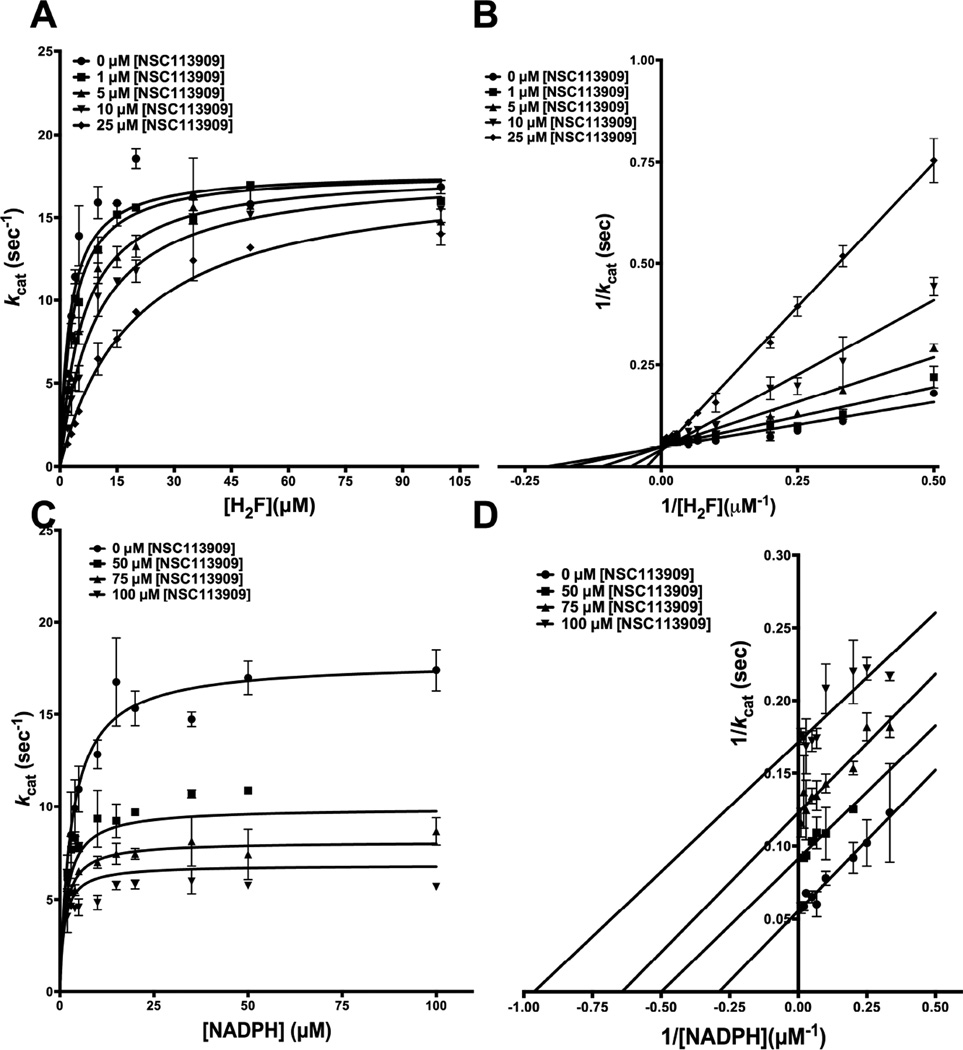
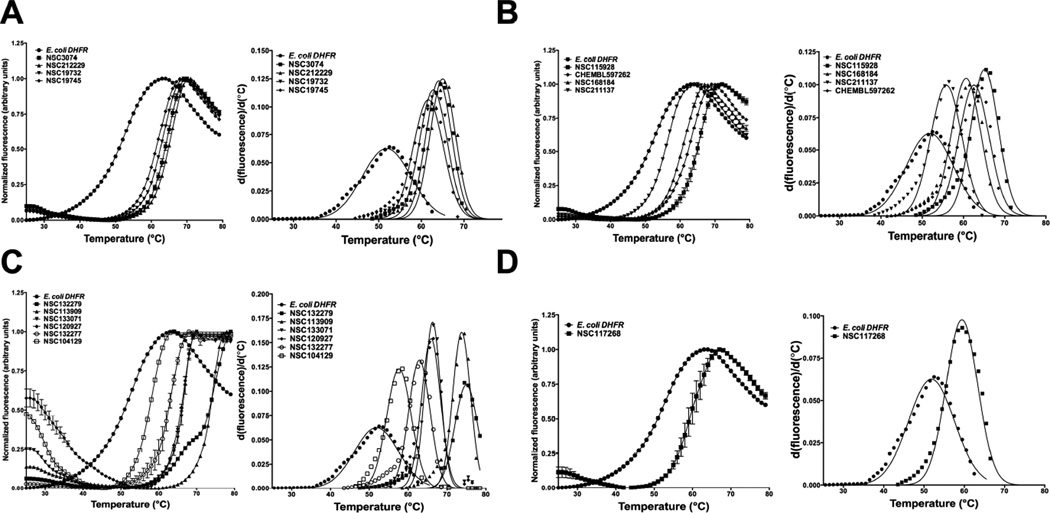
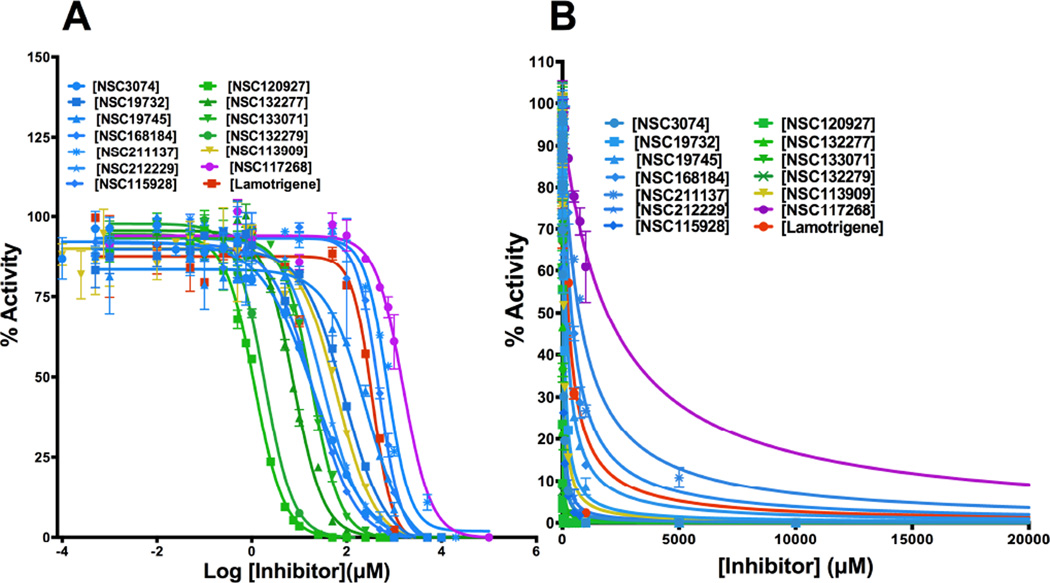
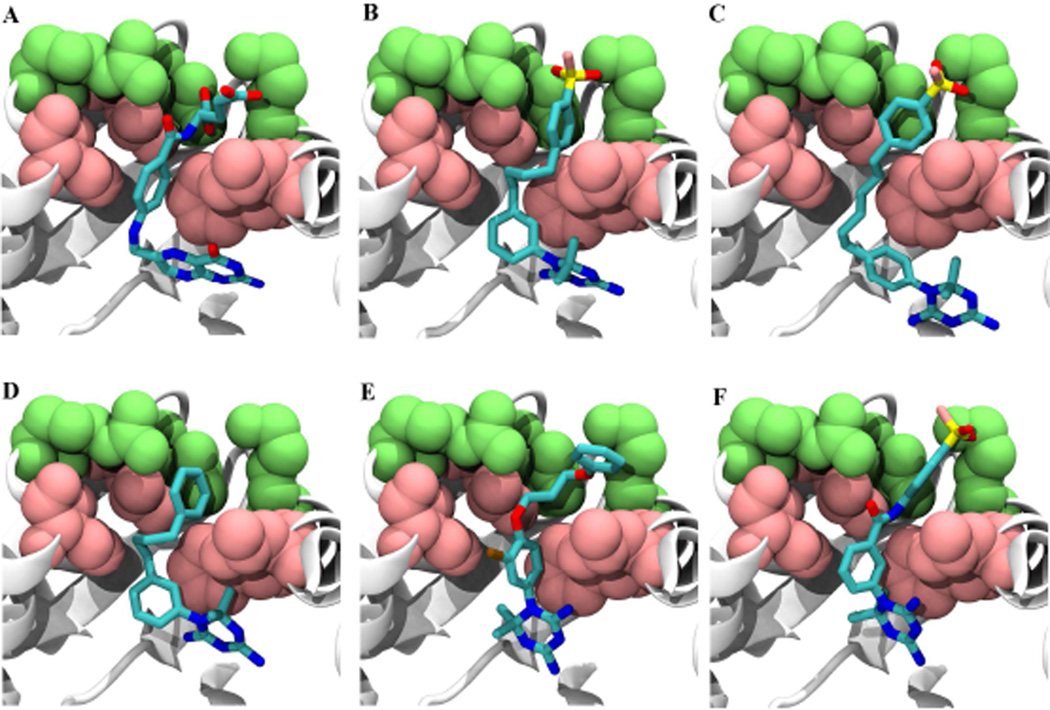
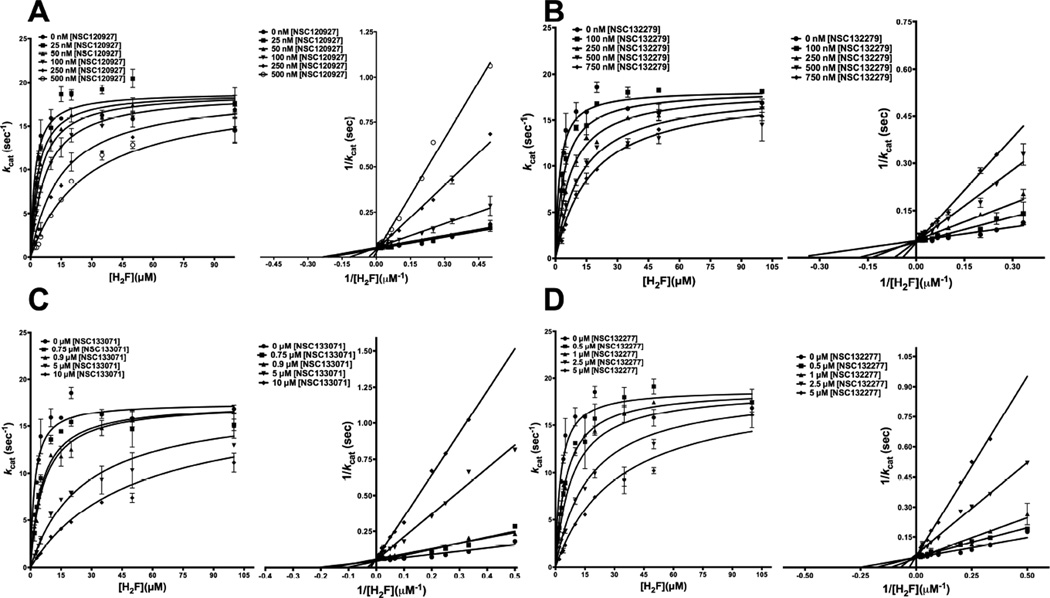
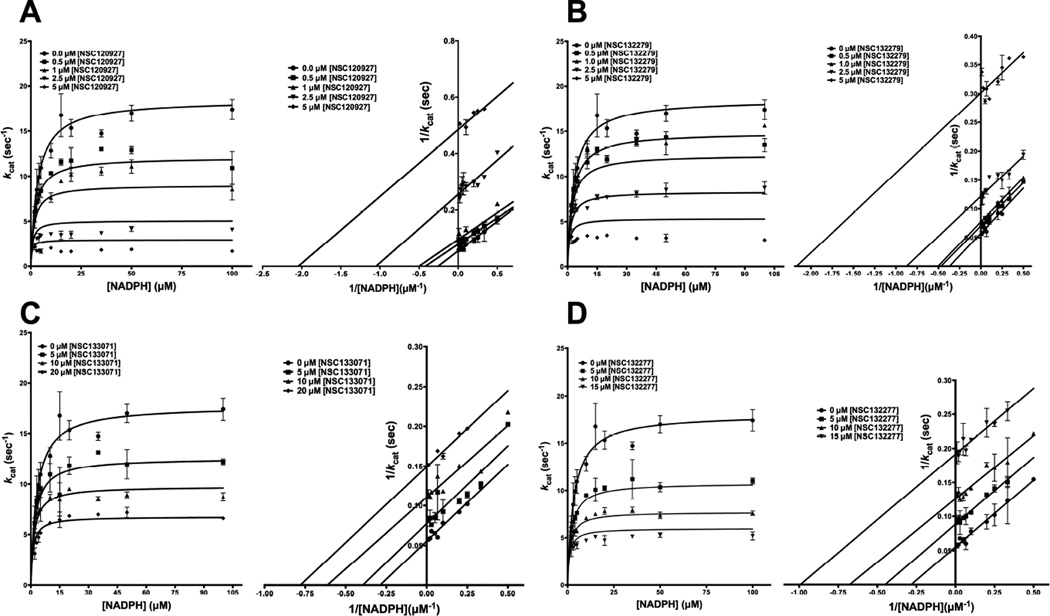
Gram-negative bacteria are implicated in the causation of life-threatening hospital-acquired infections. They acquire rapid resistance to multiple drugs and available antibiotics. Hence, there is the need to discover new antibacterial agents with novel scaffolds. For the first time, this study explores the 1,3,5-triazine-2,4-diamine and 1,2,4-triazine-2,4-diamine group of compounds as potential inhibitors of Escherichia coli DHFR, a pivotal enzyme in the thymidine and purine synthesis pathway. Using differential scanning fluorimetry, DSF, fifteen compounds with various substitutions on either the 3rd or 4th positions on the benzene group of 6,6-dimethyl-1-(benzene)-1,3,5-triazine-2,4-diamine were shown to bind to the enzyme with varying affinities. Then, the dose dependence of inhibition by these compounds was determined. Preliminary quantitative structure-activity relationship analysis and docking studies implicate the alkyl linker group and the sulfonyl fluoride group in increasing the potency of inhibition. 4-[4-[3-(4,6-diamino-2,2-dimethyl-1,3,5-triazin-1-yl)phenyl]butyl]benzenesulfonyl fluoride (NSC120927), the best hit from the study and a molecule with no reported inhibition of E. coli DHFR, potently inhibits the enzyme with a Ki value of 42.50 ± 5.34 nM, followed by 4-[6-[4-(4,6-diamino-2,2-dimethyl-1,3,5-triazin-1-yl)phenyl]hexyl]benzenesulfonyl fluoride (NSC132279), with a Ki value of 100.9 ± 12.7 nM. Detailed kinetic characterization of the inhibition brought about by five small-molecule hits shows that these inhibitors bind to the dihydrofolate binding site with preferential binding to the NADPH-bound binary form of the enzyme. Furthermore, in search of novel diaminotriazine scaffolds, it is shown that lamotrigine, a 1,2,4-triazine-3,5-diamine and a sodium-ion channel blocker class of antiepileptic drug, also inhibits E. coli DHFR. This is the first comprehensive study on the binding and inhibition brought about by diaminotriazines of a gram-negative prokaryotic enzyme and provides valuable insights into the SAR as an aid to the discovery of novel antibiotics.
革兰氏阴性菌与危及生命的医院获得性感染的发生有关。它们对多种药物和现有抗生素迅速产生耐药性。因此,需要发现具有新型骨架的新型抗菌剂。本研究首次探索了1,3,5-三嗪-2,4-二胺和1,2,4-三嗪-2,4-二胺类化合物作为大肠杆菌二氢叶酸还原酶(DHFR)的潜在抑制剂,该酶是胸苷和嘌呤合成途径中的关键酶。使用差示扫描荧光法(DSF),结果显示6,6-二甲基-1-(苯)-1,3,5-三嗪-2,4-二胺苯环上第3位或第4位具有各种取代基的15种化合物以不同亲和力与该酶结合。然后,确定了这些化合物抑制作用的剂量依赖性。初步的定量构效关系分析和对接研究表明,烷基连接基团和磺酰氟基团可提高抑制效力。4-[4-[3-(4,6-二氨基-2,2-二甲基-1,3,5-三嗪-1-基)苯基]丁基]苯磺酰氟(NSC120927)是该研究中效果最佳的化合物,且此前没有对大肠杆菌DHFR抑制作用的报道,它以42.50±5.34 nM的Ki值有效抑制该酶,其次是4-[6-[4-(4,6-二氨基-2,2-二甲基-1,3,5-三嗪-1-基)苯基]己基]苯磺酰氟(NSC132279),Ki值为100.9±12.7 nM。对5种小分子活性化合物所产生的抑制作用进行的详细动力学表征表明,这些抑制剂与二氢叶酸结合位点结合,优先结合到该酶的NADPH结合二元形式上。此外,在寻找新型二氨基三嗪骨架的过程中,发现拉莫三嗪,一种1,2,4-三嗪-3,5-二胺类抗癫痫药物且属于钠离子通道阻滞剂,也能抑制大肠杆菌DHFR。这是首次对革兰氏阴性原核酶的二氨基三嗪的结合和抑制作用进行的全面研究,并为构效关系提供了有价值的见解,有助于发现新型抗生素。