Hong Feng, Brizendine Richard K, Carter Michael S, Alcala Diego B, Brown Avery E, Chattin Amy M, Haldeman Brian D, Walsh Michael P, Facemyer Kevin C, Baker Josh E, Cremo Christine R
Department of Biochemistry and Molecular Biology, University of Nevada School of Medicine, Reno, NV 99557.
Department of Biochemistry and Molecular Biology, University of Calgary Faculty of Medicine, Calgary, Alberta T2N 4N1, Canada.
J Gen Physiol. 2015 Oct;146(4):267-80. doi: 10.1085/jgp.201511483.
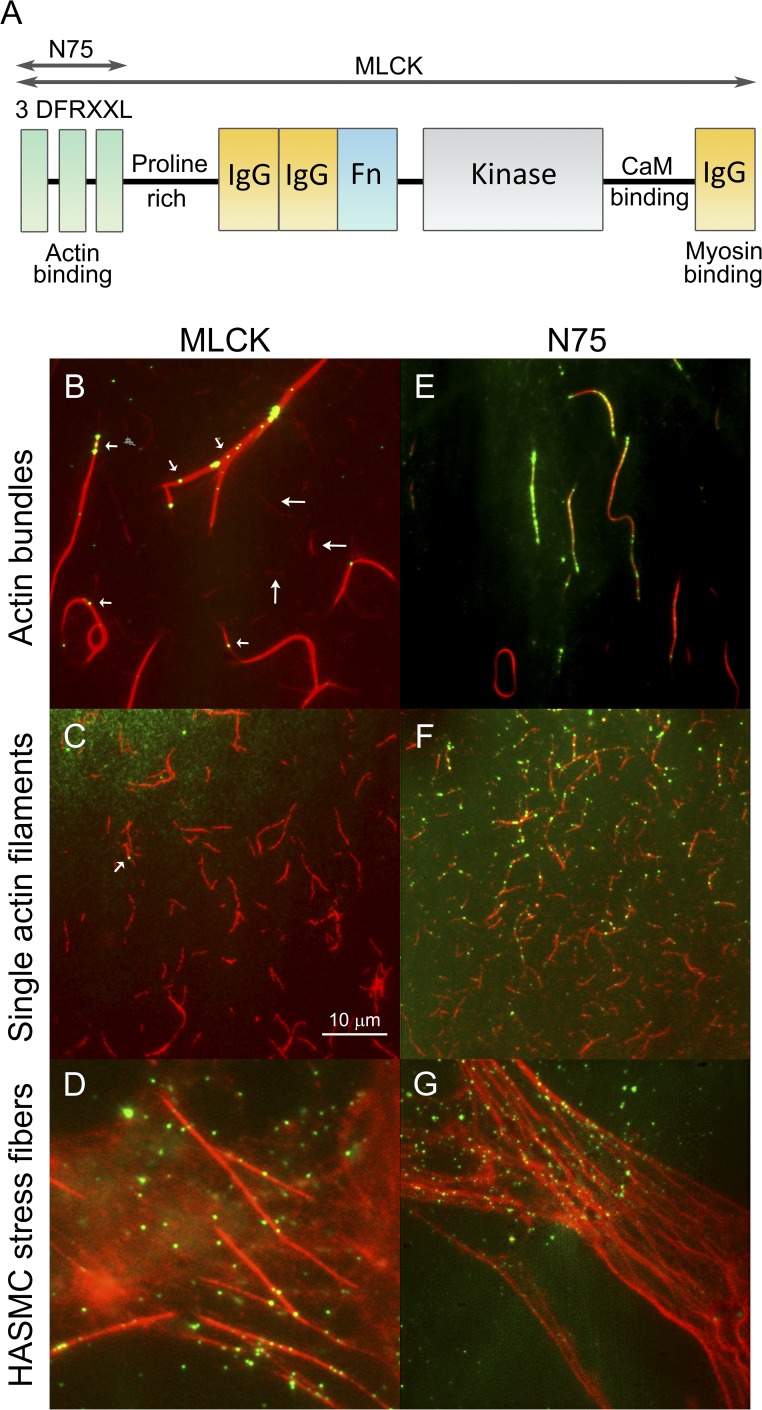
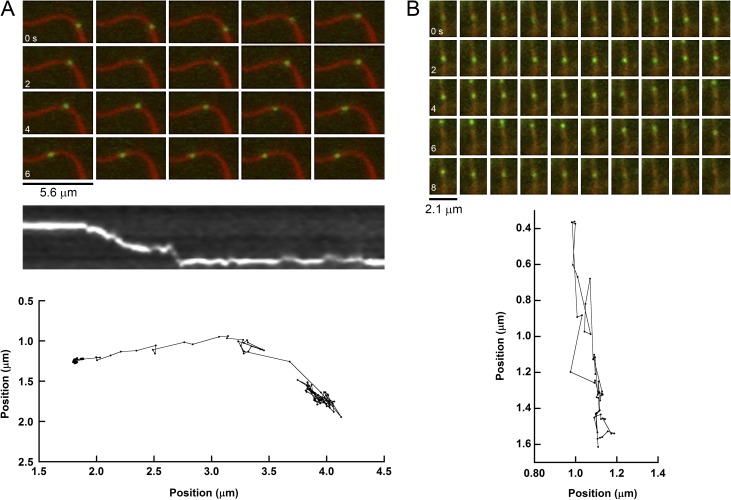
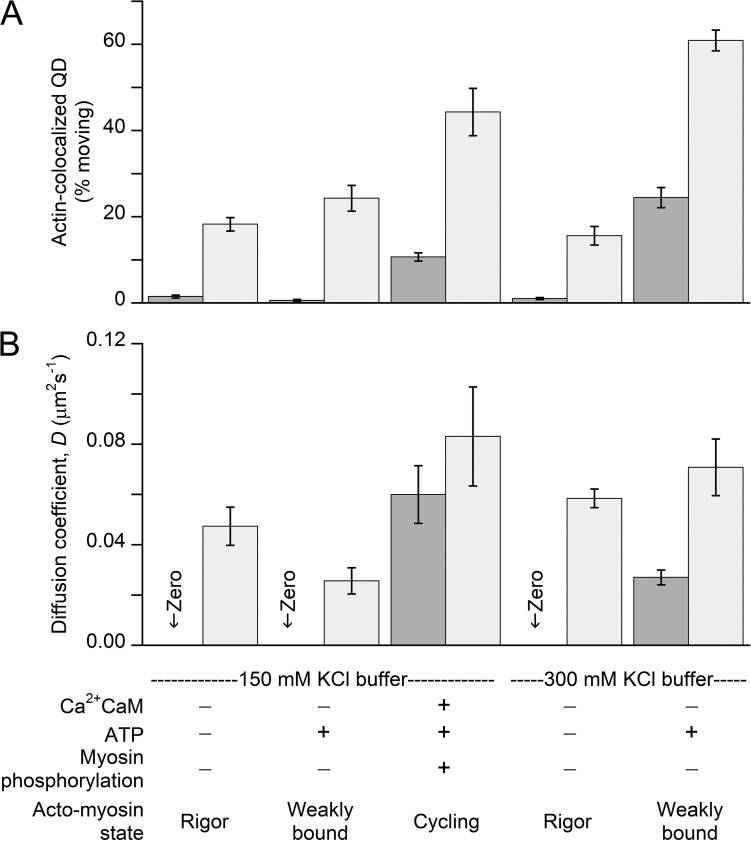
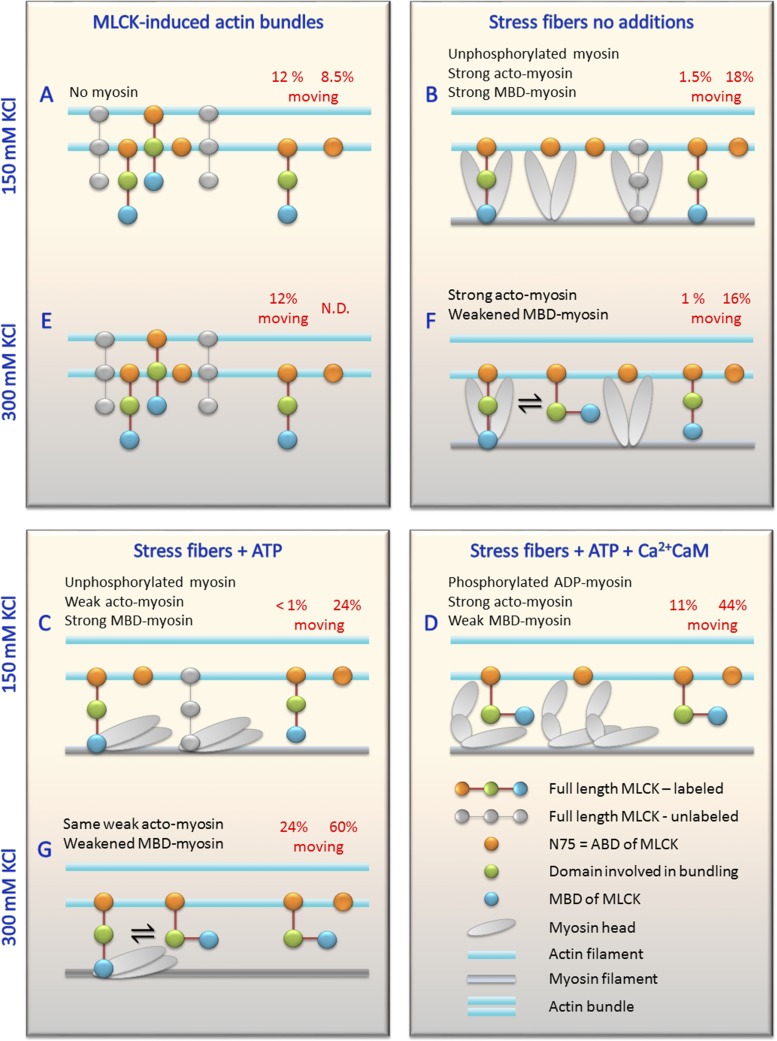
Smooth muscle myosin (SMM) light chain kinase (MLCK) phosphorylates SMM, thereby activating the ATPase activity required for muscle contraction. The abundance of active MLCK, which is tightly associated with the contractile apparatus, is low relative to that of SMM. SMM phosphorylation is rapid despite the low ratio of MLCK to SMM, raising the question of how one MLCK rapidly phosphorylates many SMM molecules. We used total internal reflection fluorescence microscopy to monitor single molecules of streptavidin-coated quantum dot-labeled MLCK interacting with purified actin, actin bundles, and stress fibers of smooth muscle cells. Surprisingly, MLCK and the N-terminal 75 residues of MLCK (N75) moved on actin bundles and stress fibers of smooth muscle cell cytoskeletons by a random one-dimensional (1-D) diffusion mechanism. Although diffusion of proteins along microtubules and oligonucleotides has been observed previously, this is the first characterization to our knowledge of a protein diffusing in a sustained manner along actin. By measuring the frequency of motion, we found that MLCK motion is permitted only if acto-myosin and MLCK-myosin interactions are weak. From these data, diffusion coefficients, and other kinetic and geometric considerations relating to the contractile apparatus, we suggest that 1-D diffusion of MLCK along actin (a) ensures that diffusion is not rate limiting for phosphorylation, (b) allows MLCK to locate to areas in which myosin is not yet phosphorylated, and (c) allows MLCK to avoid getting "stuck" on myosins that have already been phosphorylated. Diffusion of MLCK along actin filaments may be an important mechanism for enhancing the rate of SMM phosphorylation in smooth muscle.
平滑肌肌球蛋白(SMM)轻链激酶(MLCK)使SMM磷酸化,从而激活肌肉收缩所需的ATP酶活性。与收缩装置紧密相关的活性MLCK的丰度相对于SMM较低。尽管MLCK与SMM的比例较低,但SMM磷酸化速度很快,这就提出了一个问题,即一个MLCK如何快速磷酸化许多SMM分子。我们使用全内反射荧光显微镜来监测与纯化的肌动蛋白、肌动蛋白束和平滑肌细胞的应力纤维相互作用的链霉亲和素包被的量子点标记的MLCK单分子。令人惊讶的是,MLCK和MLCK的N端75个残基(N75)通过随机的一维(1-D)扩散机制在平滑肌细胞骨架的肌动蛋白束和应力纤维上移动。尽管此前已经观察到蛋白质沿着微管和寡核苷酸的扩散,但据我们所知,这是首次对一种蛋白质沿着肌动蛋白持续扩散的特性进行表征。通过测量运动频率,我们发现只有当肌动蛋白-肌球蛋白和MLCK-肌球蛋白的相互作用较弱时,MLCK的运动才会发生。根据这些数据、扩散系数以及与收缩装置相关的其他动力学和几何因素,我们认为MLCK沿着肌动蛋白的一维扩散(a)确保扩散不是磷酸化的限速因素,(b)使MLCK能够定位到肌球蛋白尚未磷酸化的区域,(c)使MLCK避免“卡住”在已经磷酸化的肌球蛋白上。MLCK沿着肌动蛋白丝的扩散可能是提高平滑肌中SMM磷酸化速率的重要机制。