Qiu Yiguo, Tao Lifei, Lei Chunyan, Wang Jiaming, Yang Peizeng, Li Qiuhong, Lei Bo
Department of Ophthalmology, the First Affiliated Hospital of Chongqing Medical University, Chongqing Key Laboratory of Ophthalmology, Chongqing Eye Institute, Chongqing, China.
Department of Ophthalmology, University of Florida, Gainesville, Florida, USA.
Sci Rep. 2015 Sep 29;5:14362. doi: 10.1038/srep14362.
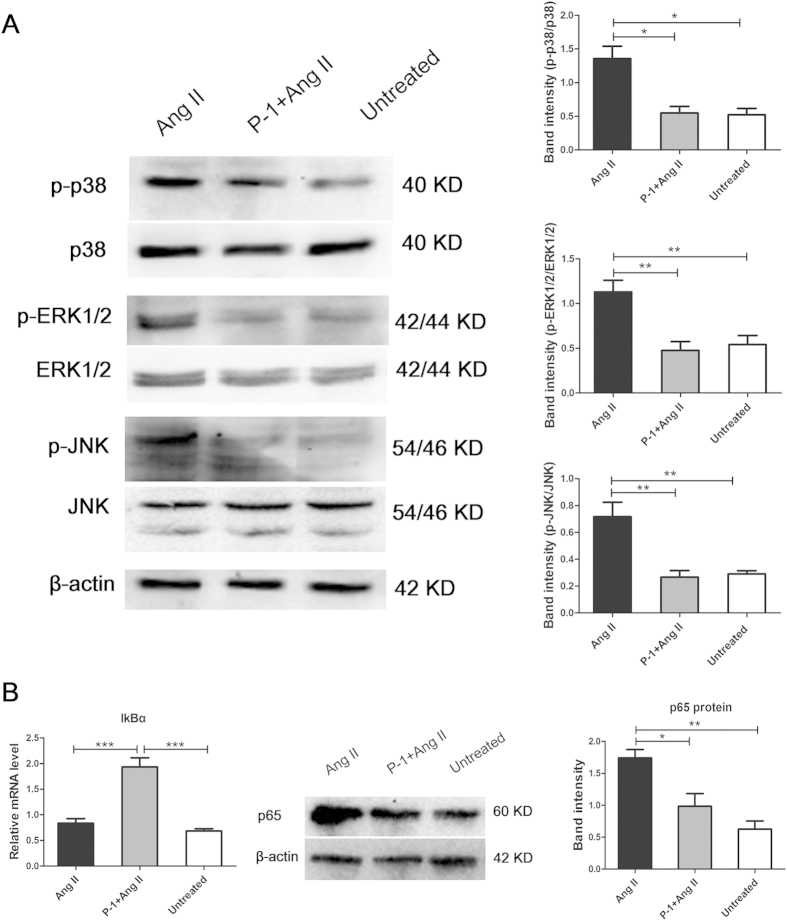
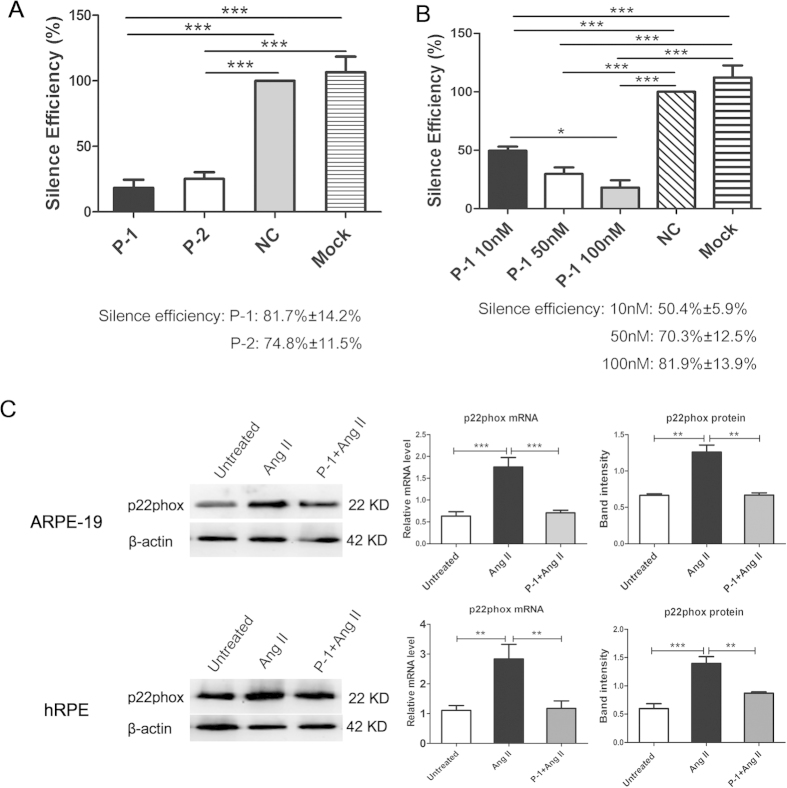
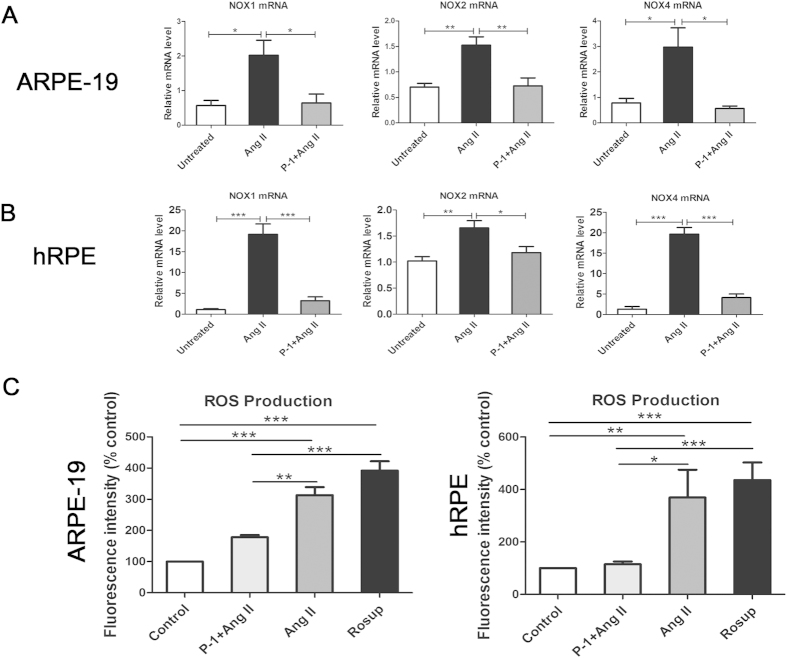
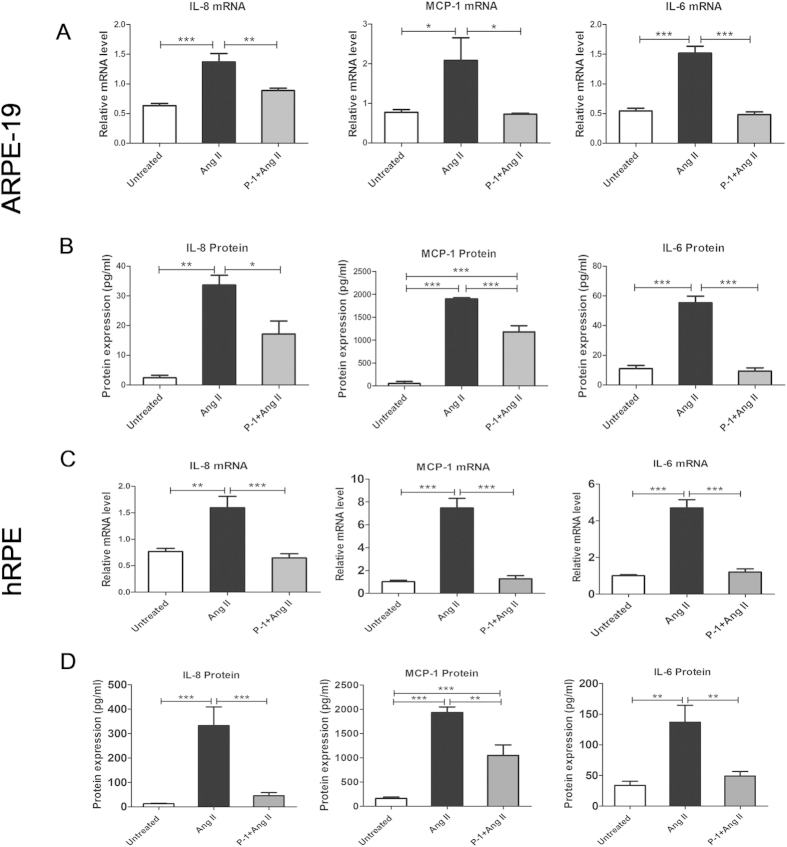
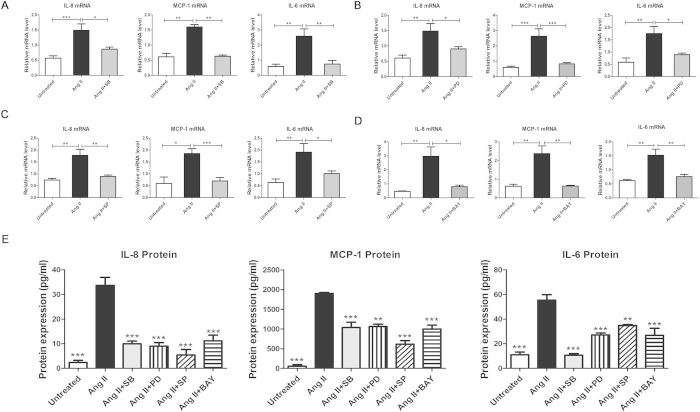
Oxidative stress and inflammation are two interrelated biological events implicated in the pathogenesis of many diseases. Reactive oxygen species (ROS) produced under oxidative stress play a key role in pathological conditions. Inhibition of p22phox, an indispensable component of the NADPH oxidase (NOX) complex comprising the main source of ROS, plays a protective role in many ocular conditions by inhibiting the activation of NOXs and the generation of ROS. However, little is understood regarding the role of p22phox in oxidative stress-related inflammation in the eye. We used a p22phox small interfering RNA (siRNA) to transfect the retinal pigment epithelium (RPE)-derived cell line ARPE-19, and human primary RPE (hRPE) cells, then stimulated with Ang II. We observed a potent anti-inflammatory effect and studied the underlying mechanism. Downregulating p22phox resulted in decreased ROS generation, a reduction of NOXs (NOX1, 2, 4) and a decrease in inflammatory cytokine. In addition, p22phox downregulation reduced the activation of the MAPK and NF-κB signaling pathways. We conclude that inhibition of p22phox has an anti-inflammatory effect in Ang II-induced oxidative stress. Suppressing the MAPK and NF-κB pathways is involved in this protective effect. These results suggest that p22phox may provide a promising therapeutic target for oxidative stress-induced ocular inflammation.
氧化应激和炎症是两个相互关联的生物学事件,与许多疾病的发病机制有关。氧化应激下产生的活性氧(ROS)在病理状况中起关键作用。p22phox是NADPH氧化酶(NOX)复合物不可或缺的组成部分,而NOX复合物是ROS的主要来源,抑制p22phox通过抑制NOXs的激活和ROS的产生,在许多眼部疾病中发挥保护作用。然而,关于p22phox在眼部氧化应激相关炎症中的作用,人们了解甚少。我们使用p22phox小干扰RNA(siRNA)转染视网膜色素上皮(RPE)来源的细胞系ARPE-19和人原代RPE(hRPE)细胞,然后用血管紧张素II刺激。我们观察到了显著的抗炎作用并研究了其潜在机制。下调p22phox导致ROS生成减少、NOXs(NOX1、2、4)减少以及炎性细胞因子减少。此外,p22phox下调降低了MAPK和NF-κB信号通路的激活。我们得出结论,抑制p22phox在血管紧张素II诱导的氧化应激中具有抗炎作用。抑制MAPK和NF-κB通路参与了这种保护作用。这些结果表明,p22phox可能为氧化应激诱导的眼部炎症提供一个有前景的治疗靶点。