McGovern Robert A, Chan Andrew K, Mikell Charles B, Sheehy John P, Ferrera Vincent P, McKhann Guy M
Department of Neurological Surgery, New York-Presbyterian Hospital, Columbia University Medical Center, New York, New York
Department of Neurological Surgery, New York-Presbyterian Hospital, Columbia University Medical Center, New York, New York.
Physiol Rep. 2015 Sep;3(9). doi: 10.14814/phy2.12422.
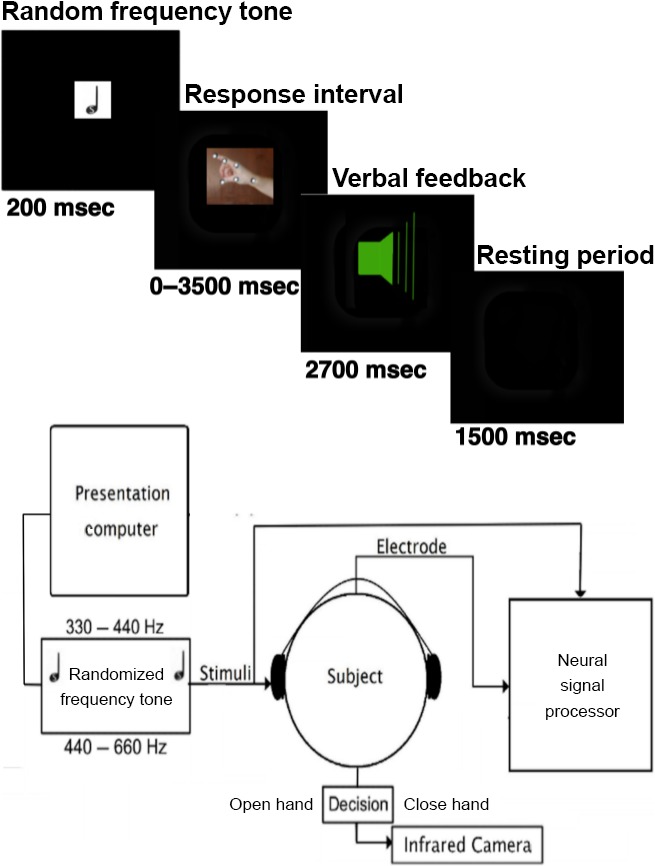
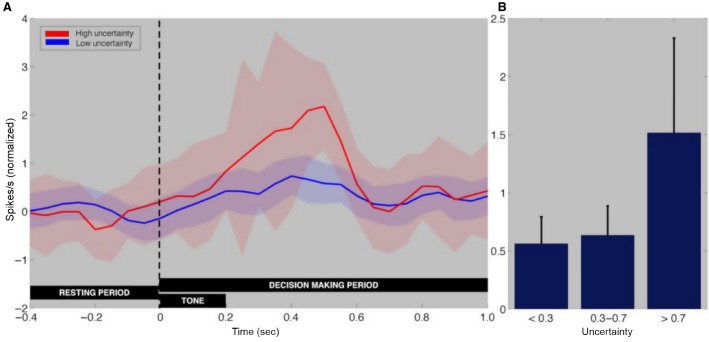
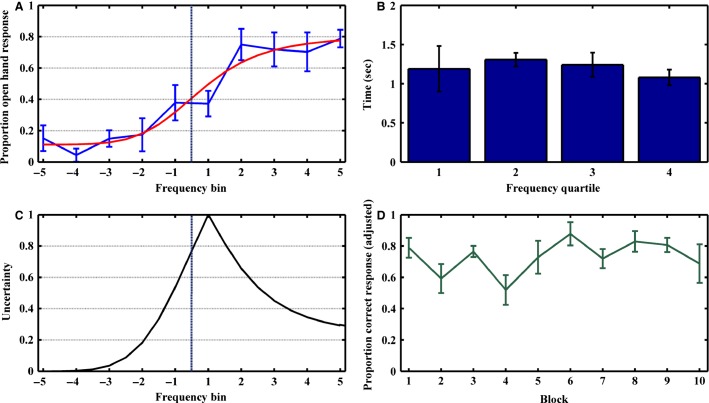
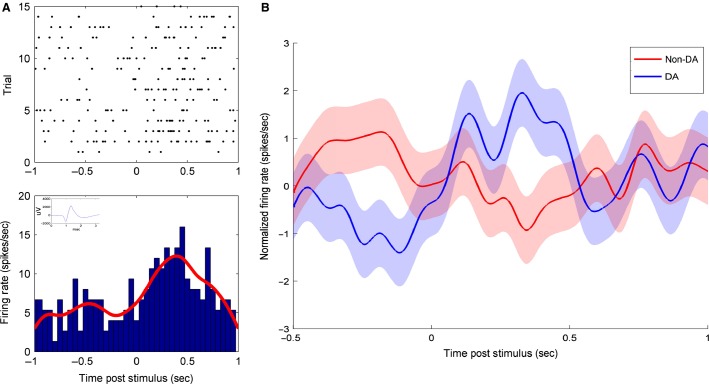
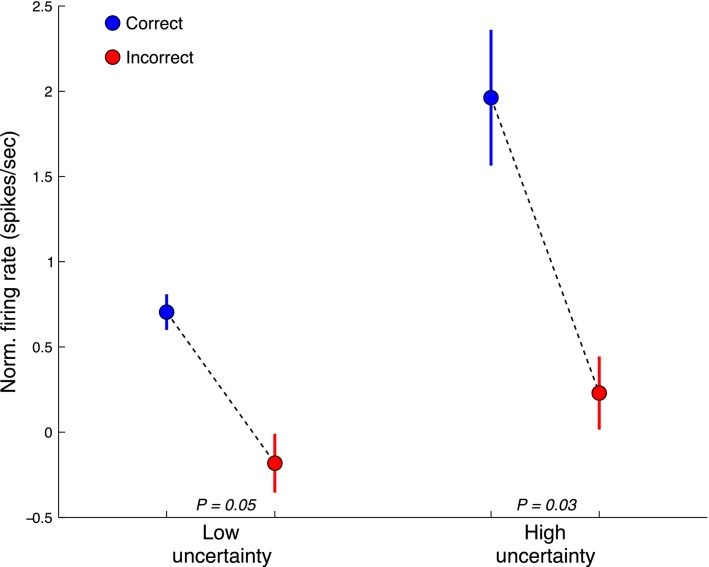
The ability to categorize stimuli - predator or prey, friend or foe - is an essential feature of the decision-making process. Underlying that ability is the development of an internally generated category boundary to generate decision outcomes. While classic temporal difference reinforcement models assume midbrain dopaminergic neurons underlie the prediction error required to learn boundary location, these neurons also demonstrate a robust response to nonreward incentive stimuli. More recent models suggest that this may reflect a motivational aspect to performing a task which should be accounted for when modeling dopaminergic neuronal behavior. To clarify the role of substantia nigra dopamine neurons in uncertain perceptual decision making, we investigated their behavior using single neuron extracellular recordings in patients with Parkinson's disease undergoing deep brain stimulation. Subjects underwent a simple auditory categorical decision-making task in which they had to classify a tone as either low- or high-pitched relative to an explicit threshold tone and received feedback but no reward. We demonstrate that the activity of human SN dopaminergic neurons is predictive of perceptual categorical decision outcome and is modulated by uncertainty. Neuronal activity was highest during difficult (uncertain) decisions that resulted in correct responses and lowest during easy decisions that resulted in incorrect responses. This pattern of results is more consistent with a "motivational" role with regards to perceptual categorization and suggests that dopamine neurons are most active when critical information - as represented by uncertainty - is available for learning decision boundaries.
对刺激进行分类的能力——捕食者或猎物、朋友或敌人——是决策过程的一个基本特征。这种能力的基础是形成一个内部生成的类别边界以产生决策结果。虽然经典的时间差分强化模型假设中脑多巴胺能神经元是学习边界位置所需预测误差的基础,但这些神经元对非奖励激励刺激也表现出强烈反应。最近的模型表明,这可能反映了执行任务的动机方面,在对多巴胺能神经元行为进行建模时应予以考虑。为了阐明黑质多巴胺神经元在不确定感知决策中的作用,我们使用深部脑刺激的帕金森病患者的单神经元细胞外记录来研究它们的行为。受试者进行了一项简单的听觉分类决策任务,在该任务中,他们必须根据明确的阈值音调将一个音调分类为低音调或高音调,并收到反馈但没有奖励。我们证明,人类黑质多巴胺能神经元的活动可预测感知分类决策结果,并受不确定性调节。在导致正确反应的困难(不确定)决策过程中,神经元活动最高,而在导致错误反应的容易决策过程中,神经元活动最低。这种结果模式在感知分类方面更符合“动机”作用,并表明当关键信息——以不确定性表示——可用于学习决策边界时,多巴胺神经元最活跃。