Souza Ana C P, Tsuji Takayuki, Baranova Irina N, Bocharov Alexander V, Wilkins Kenneth J, Street Jonathan M, Alvarez-Prats Alejandro, Hu Xuzhen, Eggerman Thomas, Yuen Peter S T, Star Robert A
Renal Diagnostics and Therapeutics Unit, NIDDK NIH, Bethesda, Maryland.
Department of Laboratory Medicine, Clinical Center NIH, Bethesda, Maryland.
Physiol Rep. 2015 Sep;3(9). doi: 10.14814/phy2.12558.
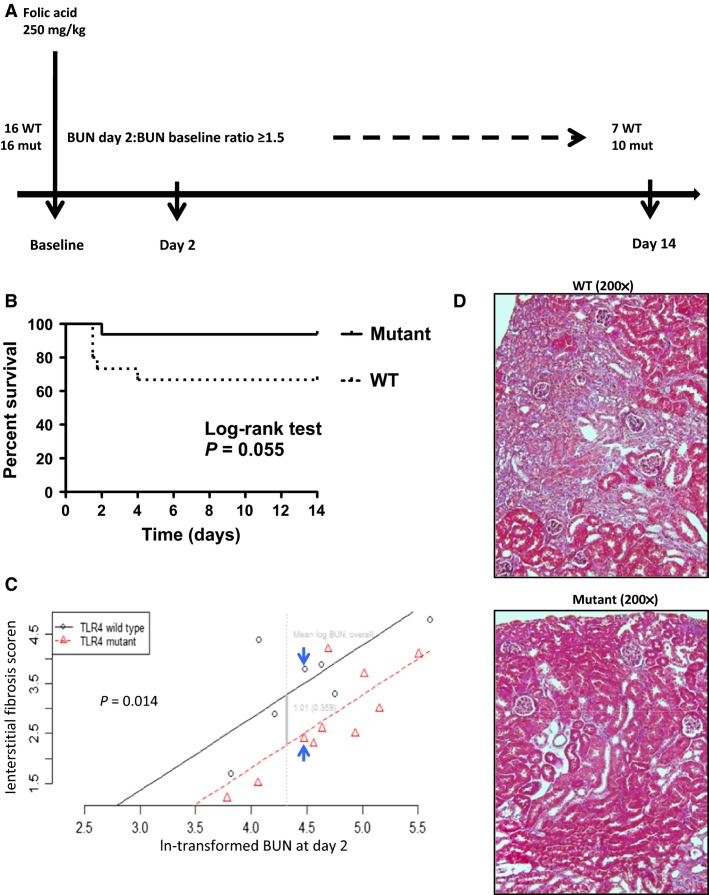
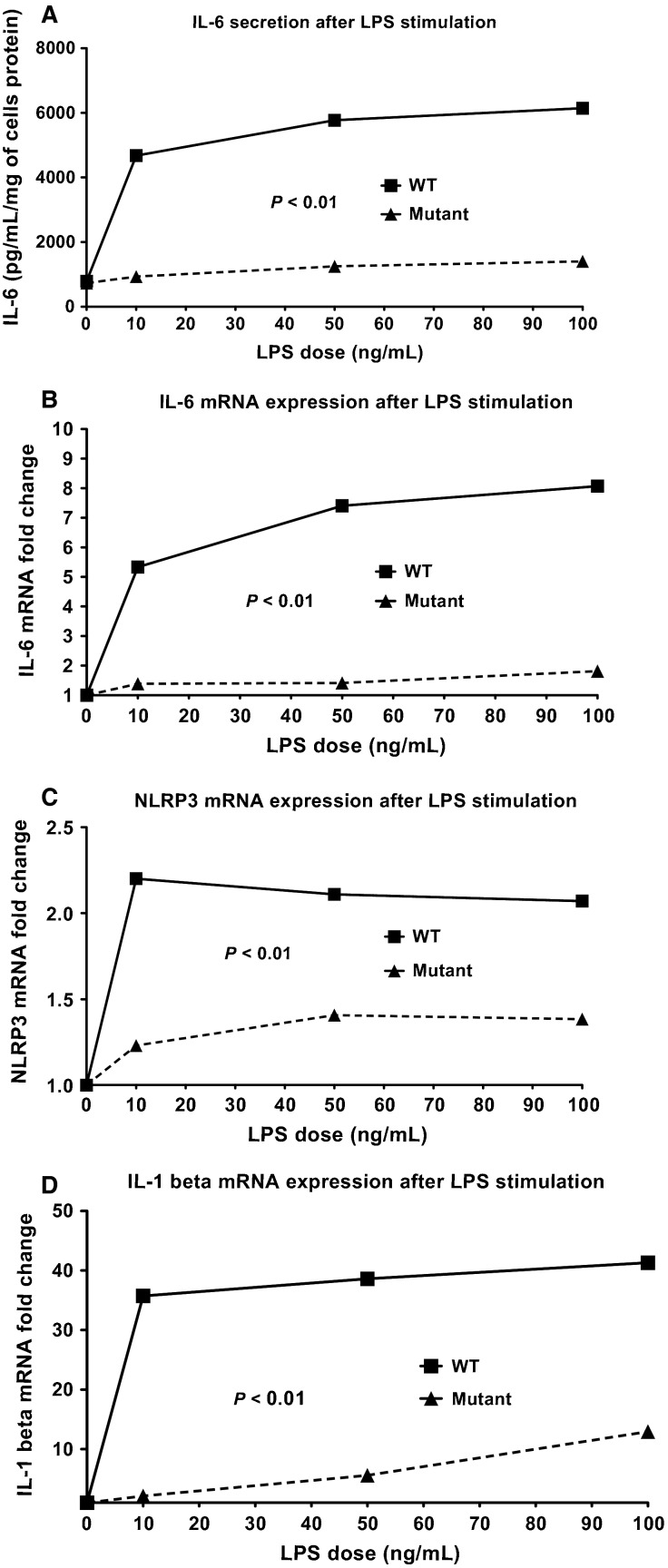
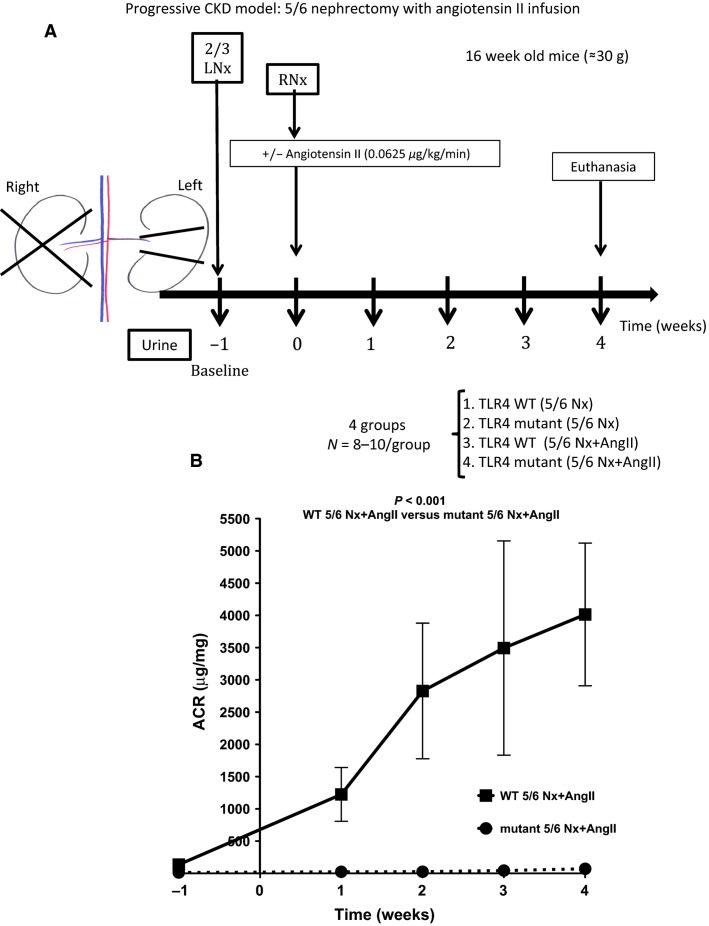
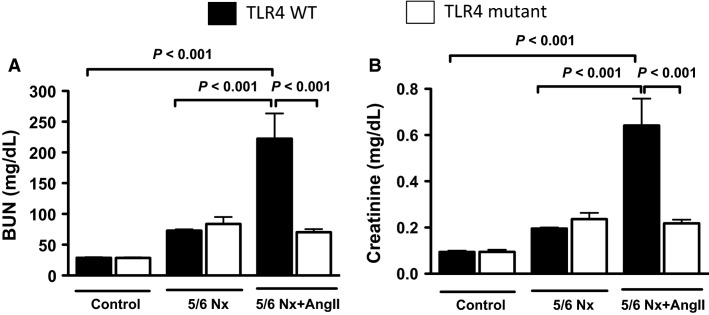
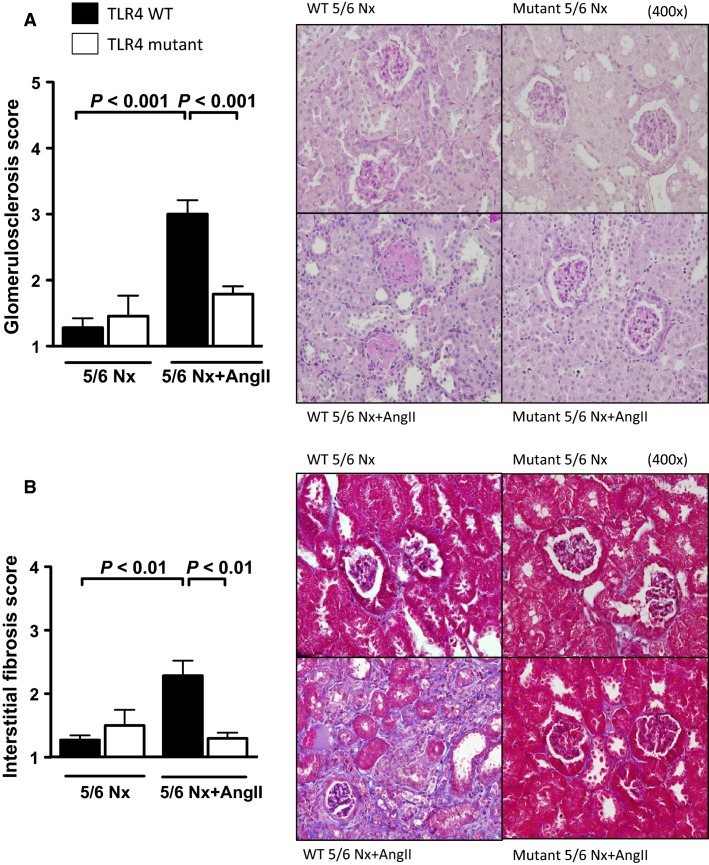
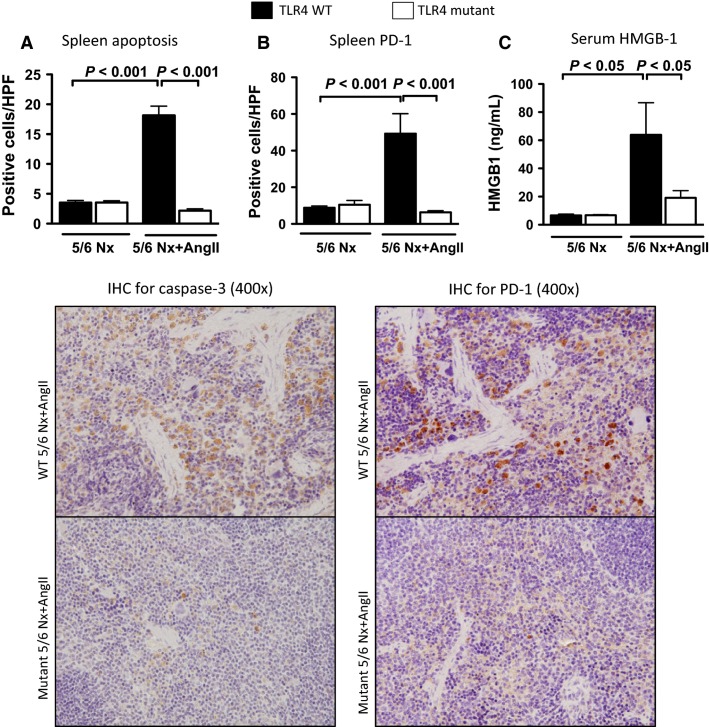
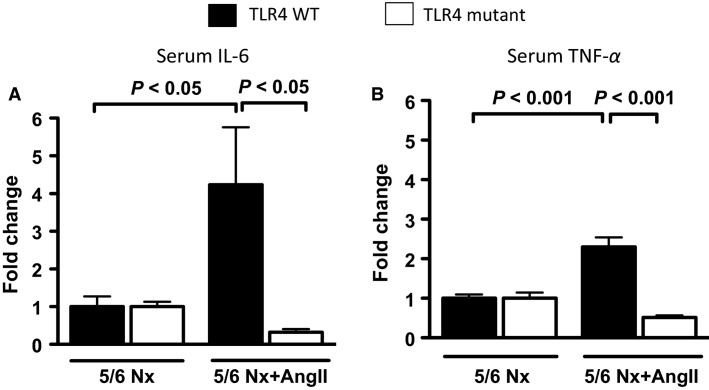
Chronic kidney disease (CKD) is associated with persistent low-grade inflammation and immunosuppression. In this study we tested the role of Toll-like receptor 4, the main receptor for endotoxin (LPS), in a mouse model of renal fibrosis and in a model of progressive CKD that better resembles the human disease. C3HeJ (TLR4 mutant) mice have a missense point mutation in the TLR4 gene, rendering the receptor nonfunctional. In a model of renal fibrosis after folic acid injection, TLR4 mutant mice developed less interstititial fibrosis in comparison to wild-type (WT) mice. Furthermore, 4 weeks after 5/6 nephrectomy with continuous low-dose angiotensin II infusion, C3HeOuJ (TLR4 WT) mice developed progressive CKD with albuminuria, increased serum levels of BUN and creatinine, glomerulosclerosis, and interstitial fibrosis, whereas TLR4 mutant mice were significantly protected from CKD progression. TLR4 WT mice also developed low-grade systemic inflammation, splenocyte apoptosis and increased expression of the immune inhibitory receptor PD-1 in the spleen, which were not observed in TLR4 mutant mice. In vitro, endotoxin (LPS) directly upregulated NLRP3 inflammasome expression in renal epithelial cells via TLR4. In summary, TLR4 contributes to renal fibrosis and CKD progression, at least in part, via inflammasome activation in renal epithelial cells, and may also participate in the dysregulated immune response that is associated with CKD.
慢性肾脏病(CKD)与持续性低度炎症和免疫抑制相关。在本研究中,我们在肾纤维化小鼠模型以及更类似于人类疾病的进行性CKD模型中,测试了内毒素(LPS)的主要受体Toll样受体4的作用。C3HeJ(TLR4突变体)小鼠的TLR4基因存在错义点突变,使该受体失去功能。在叶酸注射后的肾纤维化模型中,与野生型(WT)小鼠相比,TLR4突变体小鼠发生的间质纤维化更少。此外,在5/6肾切除并持续低剂量输注血管紧张素II 4周后,C3HeOuJ(TLR4野生型)小鼠出现了伴有蛋白尿、血清尿素氮和肌酐水平升高、肾小球硬化和间质纤维化的进行性CKD,而TLR4突变体小鼠在很大程度上免受CKD进展的影响。TLR4野生型小鼠还出现了低度全身炎症、脾细胞凋亡以及脾脏中免疫抑制受体PD-1表达增加,而TLR4突变体小鼠未观察到这些情况。在体外,内毒素(LPS)通过TLR4直接上调肾上皮细胞中NLRP3炎性小体的表达。总之,TLR4至少部分地通过激活肾上皮细胞中的炎性小体促进肾纤维化和CKD进展,并且可能还参与了与CKD相关的免疫反应失调。