Doktorova T Y, Yildirimman Reha, Ceelen Liesbeth, Vilardell Mireia, Vanhaecke Tamara, Vinken Mathieu, Ates Gamze, Heymans Anja, Gmuender Hans, Bort Roque, Corvi Raffaella, Phrakonkham Pascal, Li Ruoya, Mouchet Nicolas, Chesne Christophe, van Delft Joost, Kleinjans Jos, Castell Jose, Herwig Ralf, Rogiers Vera
Vrije Universiteit Brussel, Department of Toxicology, Center for Pharmaceutical Research, Brussels, Belgium.
Max Planck Institute for Molecular Genetics, Department Vertebrate Genomics, D-14195 Berlin, Germany.
EXCLI J. 2014 May 28;13:623-37. eCollection 2014.
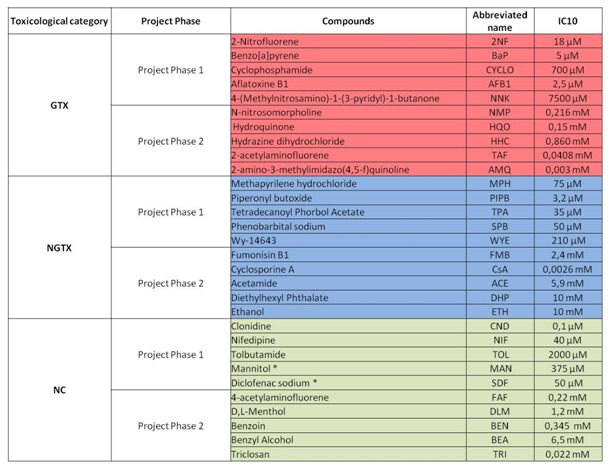
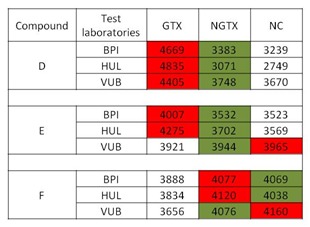
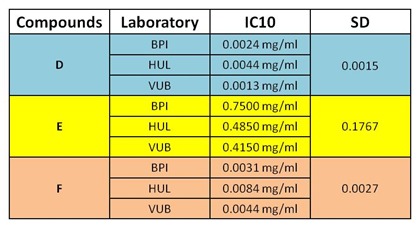
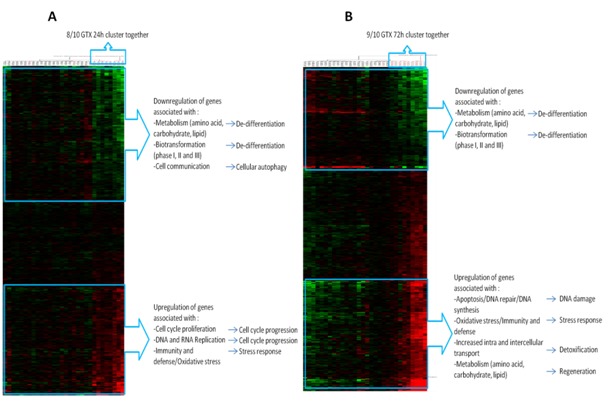
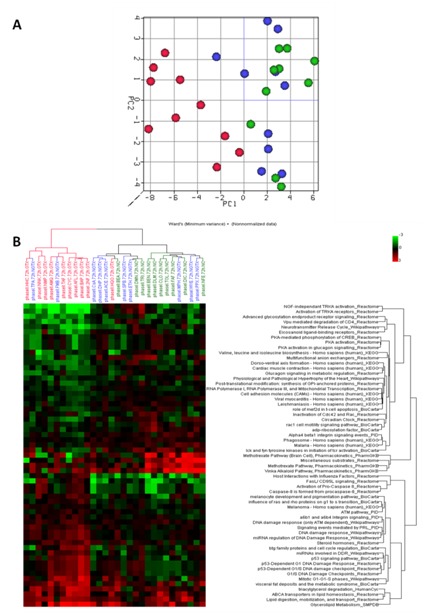
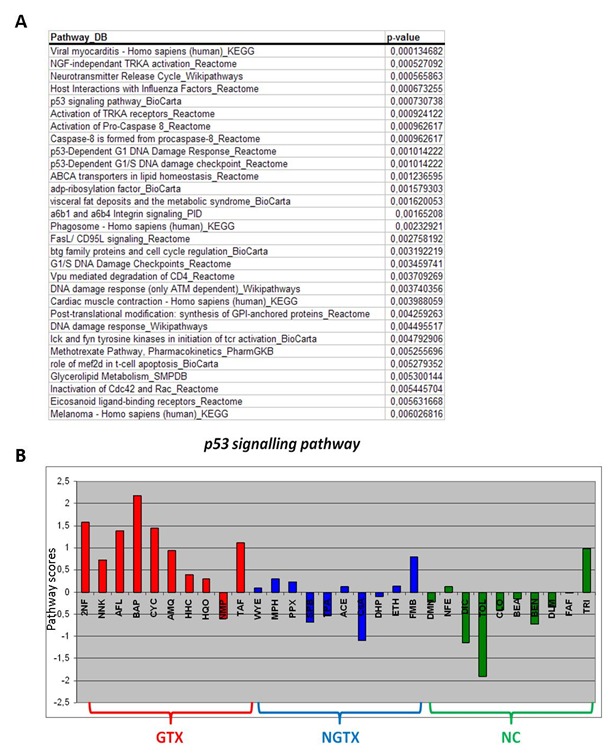
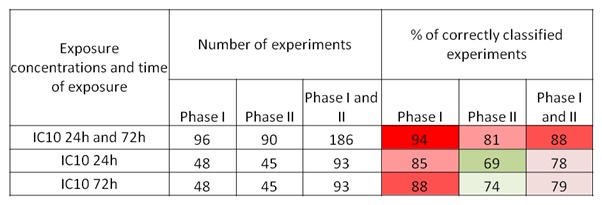
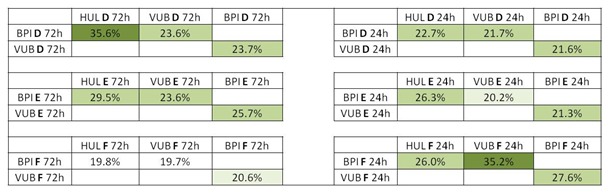
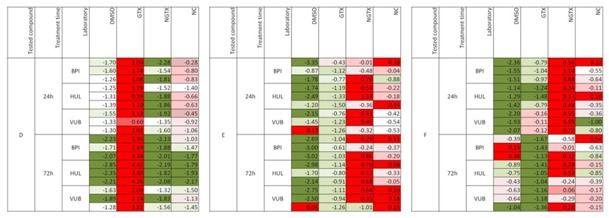
The EU FP6 project carcinoGENOMICS explored the combination of toxicogenomics and in vitro cell culture models for identifying organotypical genotoxic- and non-genotoxic carcinogen-specific gene signatures. Here the performance of its gene classifier, derived from exposure of metabolically competent human HepaRG cells to prototypical non-carcinogens (10 compounds) and hepatocarcinogens (20 compounds), is reported. Analysis of the data at the gene and the pathway level by using independent biostatistical approaches showed a distinct separation of genotoxic from non-genotoxic hepatocarcinogens and non-carcinogens (up to 88 % correct prediction). The most characteristic pathway responding to genotoxic exposure was DNA damage. Interlaboratory reproducibility was assessed by blindly testing of three compounds, from the set of 30 compounds, by three independent laboratories. Subsequent classification of these compounds resulted in correct prediction of the genotoxicants. As expected, results on the non-genotoxic carcinogens and the non-carcinogens were less predictive. In conclusion, the combination of transcriptomics with the HepaRG in vitro cell model provides a potential weight of evidence approach for the evaluation of the genotoxic potential of chemical substances.
欧盟第六框架计划项目“致癌基因组学”探索了毒理基因组学与体外细胞培养模型的结合,以识别器官特异性的遗传毒性和非遗传毒性致癌物特异性基因特征。本文报道了其基因分类器的性能,该分类器源自将具有代谢活性的人HepaRG细胞暴露于典型的非致癌物(10种化合物)和肝癌致癌物(20种化合物)。通过使用独立的生物统计学方法在基因和通路水平上对数据进行分析,结果表明遗传毒性肝癌致癌物与非遗传毒性肝癌致癌物和非致癌物之间有明显区分(预测正确率高达88%)。对遗传毒性暴露最具特征性的反应通路是DNA损伤。通过三个独立实验室对30种化合物中的三种化合物进行盲测,评估了实验室间的可重复性。随后对这些化合物进行分类,结果正确预测了遗传毒性物质。不出所料,对非遗传毒性致癌物和非致癌物的预测结果较差。总之,转录组学与HepaRG体外细胞模型的结合为评估化学物质的遗传毒性潜力提供了一种潜在的证据权重方法。