Ye Shengfa, Xue Genqiang, Krivokapic Itana, Petrenko Taras, Bill Eckhard, Que Lawrence, Neese Frank
Max-Planck Institut für Chemische Energiekonversion, Stiftstraße 34-36, D-45470 Mülheim an der Ruhr, Germany.
Department of Chemistry and Center for Metals in Biocatalysis, University of Minnesota, 207 Pleasant St. SE, Minneapolis, Minnesota 55455, United States.
Chem Sci. 2015 May 1;6(5):2909-2921. doi: 10.1039/C4SC03268C. Epub 2015 Feb 26.
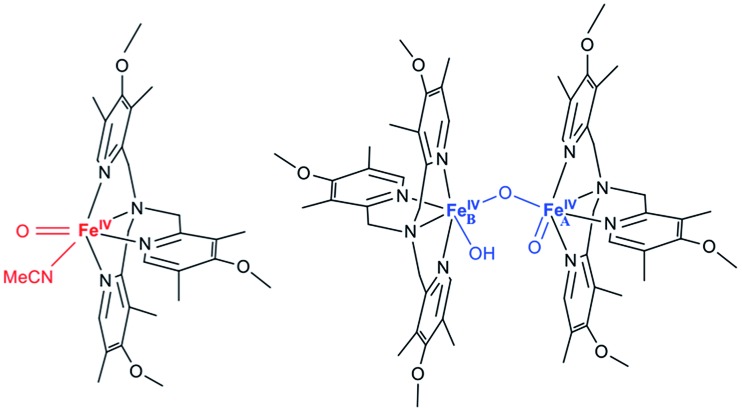
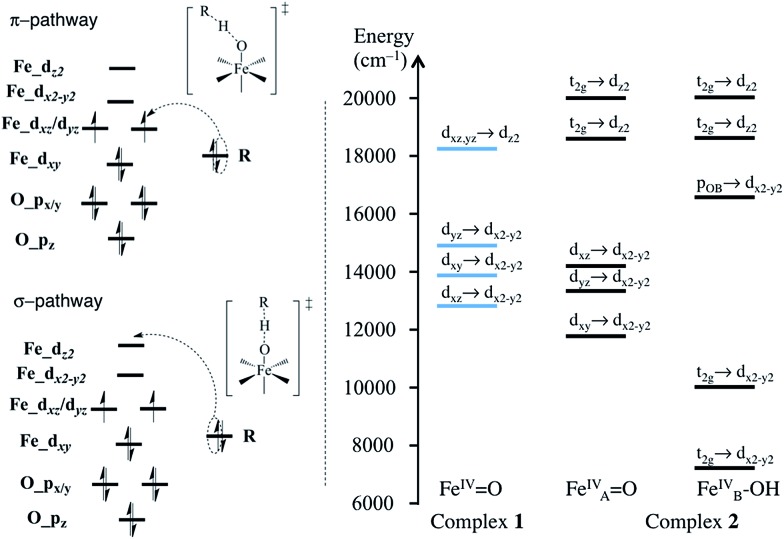
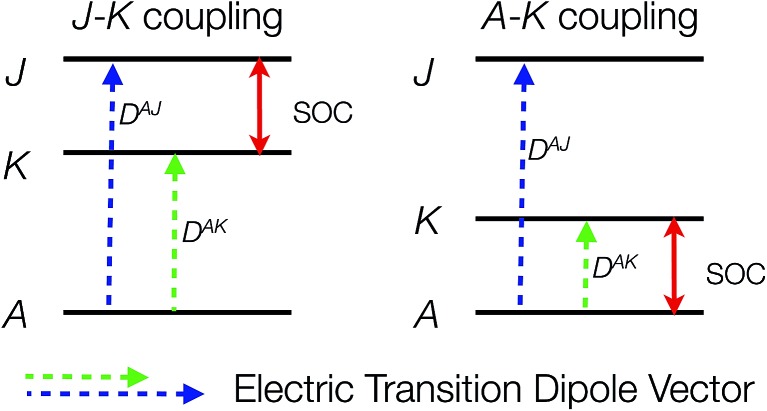
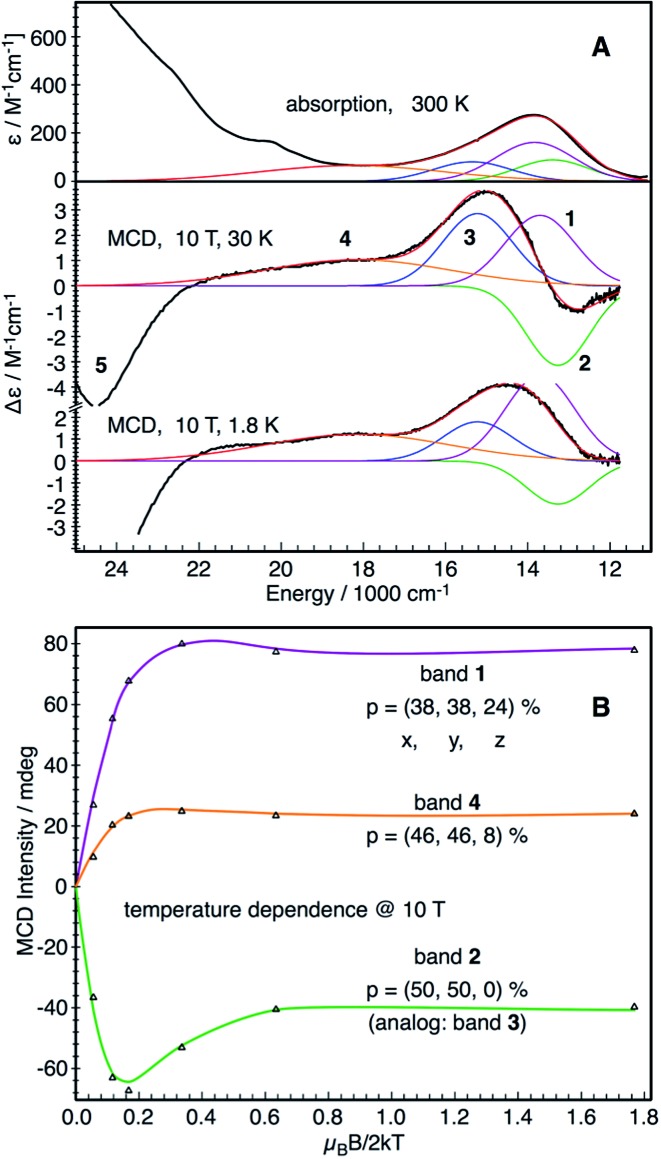
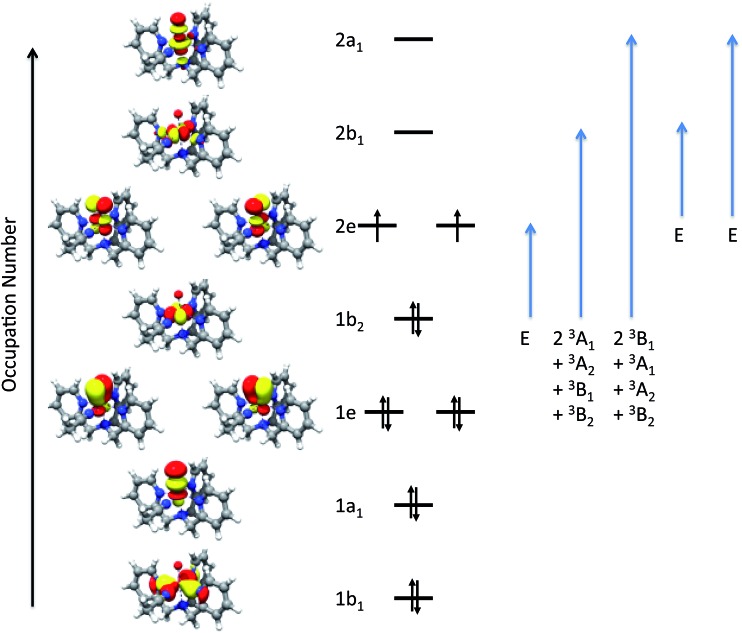
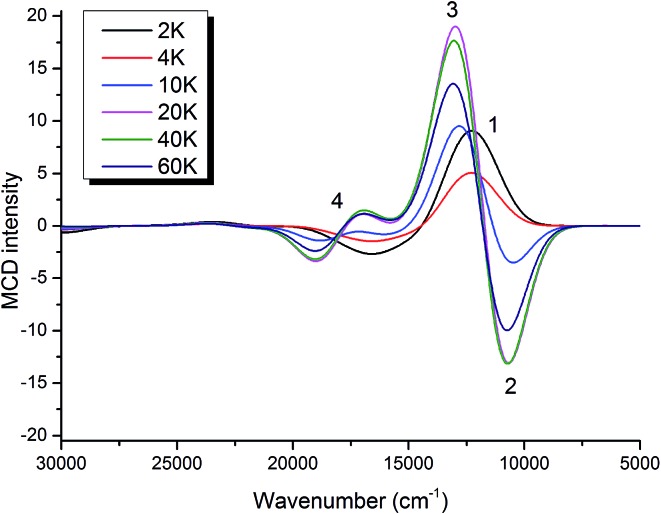
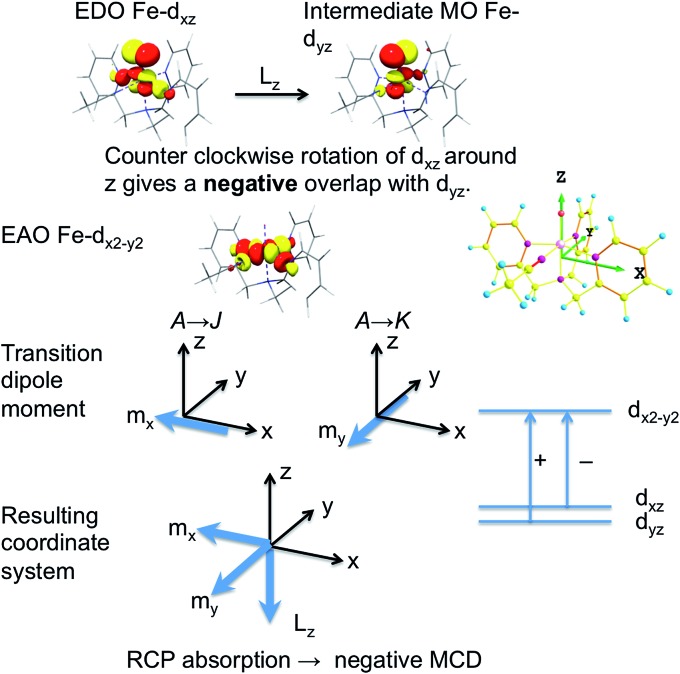
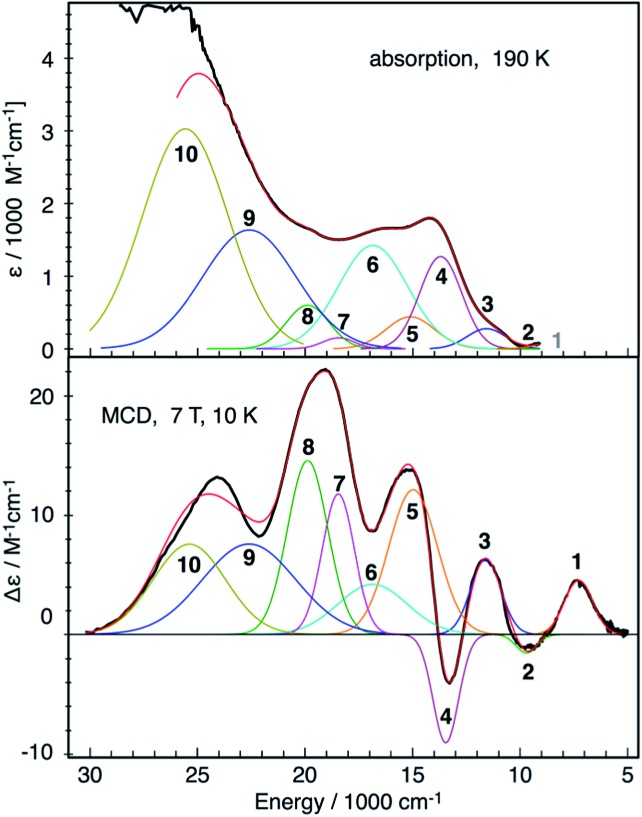
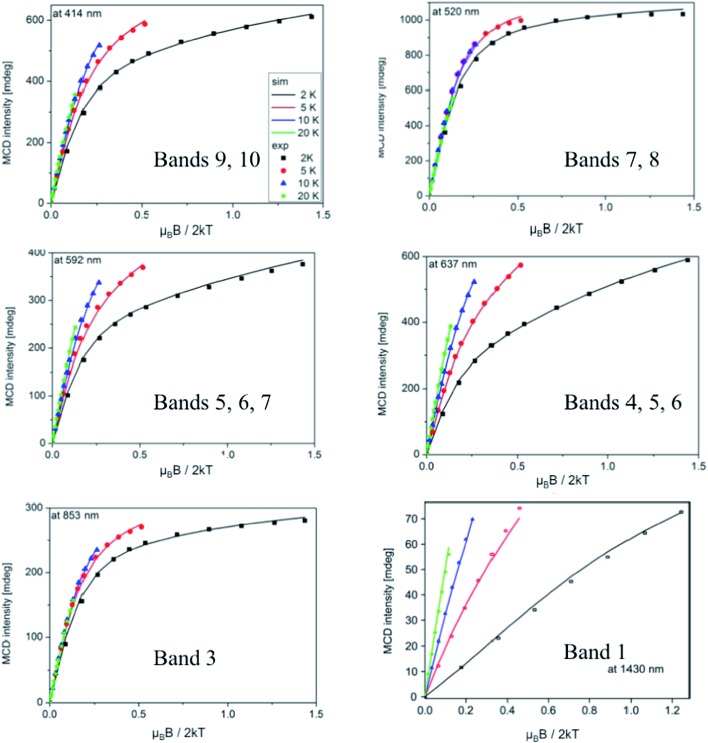
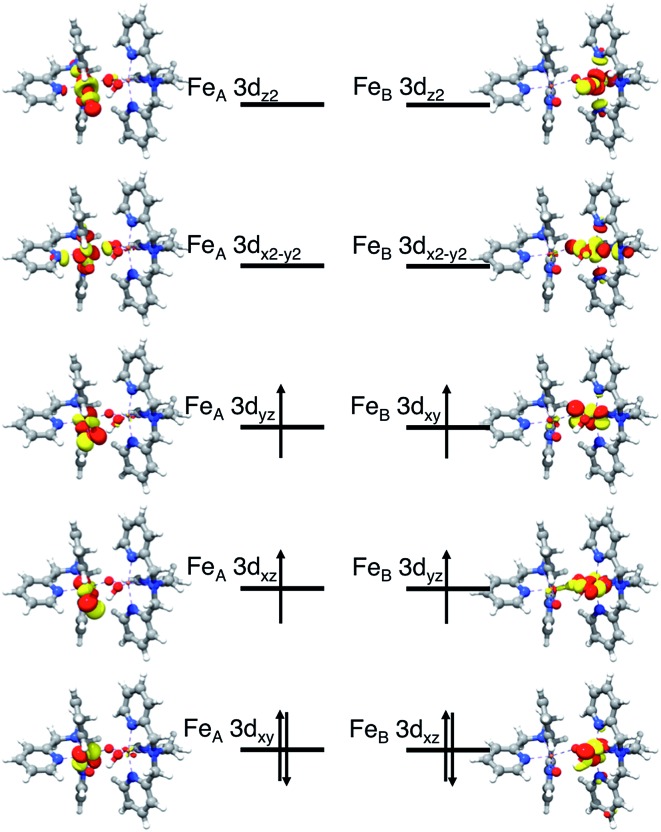
High-valent iron(IV)-oxo species are key intermediates in the catalytic cycles of a range of O-activating iron enzymes. This work presents a detailed study of the electronic structures of mononuclear ([Fe(O)(L)(NCMe)], , L = tris(3,5-dimethyl-4-methoxylpyridyl-2-methyl)amine) and dinuclear ([(L)Fe(O)(μ-O)Fe(OH)(L)], ) iron(IV) complexes using absorption (ABS), magnetic circular dichroism (MCD) spectroscopy and wave-function-based quantum chemical calculations. For complex , the experimental MCD spectra at 2-10 K are dominated by a broad positive term band between 12000 and 18000 cm. As the temperature increases up to ~20 K, this feature is gradually replaced by a derivative-shaped signal. The computed MCD spectra are in excellent agreement with experiment, which reproduce not only the excitation energies and the MCD signs of key transitions but also their temperature-dependent intensity variations. To further corroborate the assignments suggested by the calculations, the individual MCD sign for each transition is independently determined from the corresponding electron donating and accepting orbitals. Thus, unambiguous assignments can be made for the observed transitions in . The ABS/MCD data of complex exhibit ten features that are assigned as ligand-field transitions or oxo- or hydroxo-to-metal charge transfer bands, based on MCD/ABS intensity ratios, calculated excitation energies, polarizations, and MCD signs. In comparison with complex , the electronic structure of the Fe=O site is not significantly perturbed by the binding to another iron(IV) center. This may explain the experimental finding that complexes and have similar reactivities toward C-H bond activation and O-atom transfer.
高价铁(IV)-氧物种是一系列氧活化铁酶催化循环中的关键中间体。这项工作使用吸收光谱(ABS)、磁圆二色光谱(MCD)和基于波函数的量子化学计算,对单核([Fe(O)(L)(NCMe)], ,L = 三(3,5-二甲基-4-甲氧基吡啶基-2-甲基)胺)和双核([(L)Fe(O)(μ-O)Fe(OH)(L)], )铁(IV)配合物的电子结构进行了详细研究。对于配合物 ,2-10 K下的实验MCD光谱主要由12000至18000 cm之间的一个宽正项带主导。随着温度升高至约20 K,这一特征逐渐被一个导数形状的信号取代。计算得到的MCD光谱与实验结果高度吻合,不仅再现了关键跃迁的激发能和MCD符号,还再现了它们随温度变化的强度变化。为了进一步证实计算结果所建议的归属,每个跃迁的单独MCD符号由相应的给体和受体轨道独立确定。因此,可以对 中观察到的跃迁进行明确的归属。基于MCD/ABS强度比、计算得到的激发能、极化和MCD符号,配合物 的ABS/MCD数据显示出十个特征,这些特征被归属为配体场跃迁或氧或羟基到金属的电荷转移带。与配合物 相比,Fe=O位点的电子结构并未因与另一个铁(IV)中心结合而受到显著扰动。这可能解释了实验发现,即配合物 和 对C-H键活化和O原子转移具有相似的反应性。