Omine Yuya, Hinata Nobuyuki, Yamamoto Masahito, Kasahara Masaaki, Matsunaga Satoru, Murakami Gen, Abe Shin-Ichi
Department of Anatomy, Tokyo Dental College, Tokyo, Japan.
Department of Urology, Kobe University Graduate School of Medicine, Kobe, Japan.
Anat Cell Biol. 2015 Sep;48(3):177-87. doi: 10.5115/acb.2015.48.3.177. Epub 2015 Sep 22.
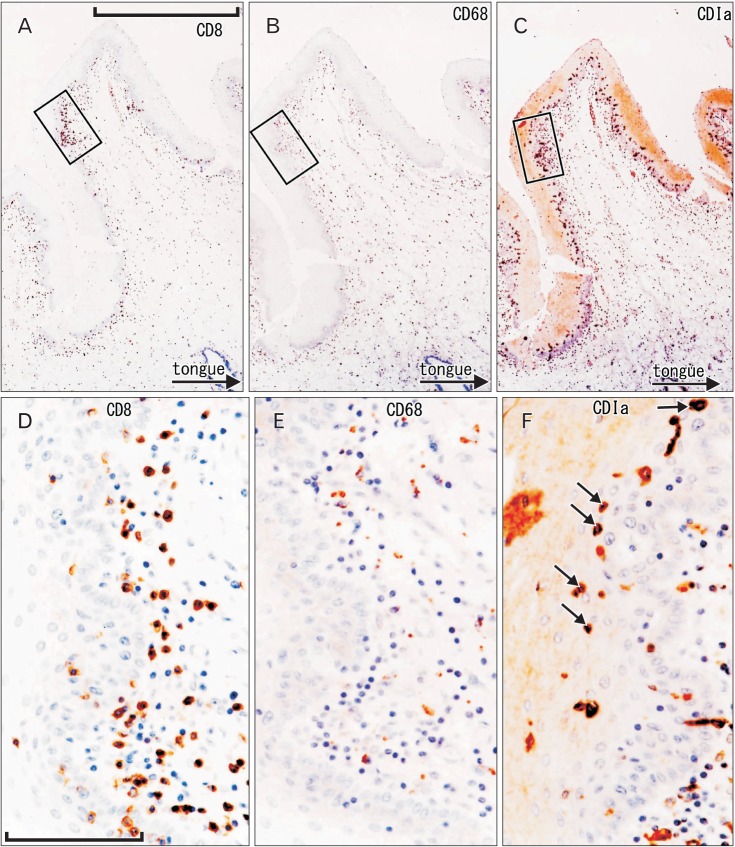
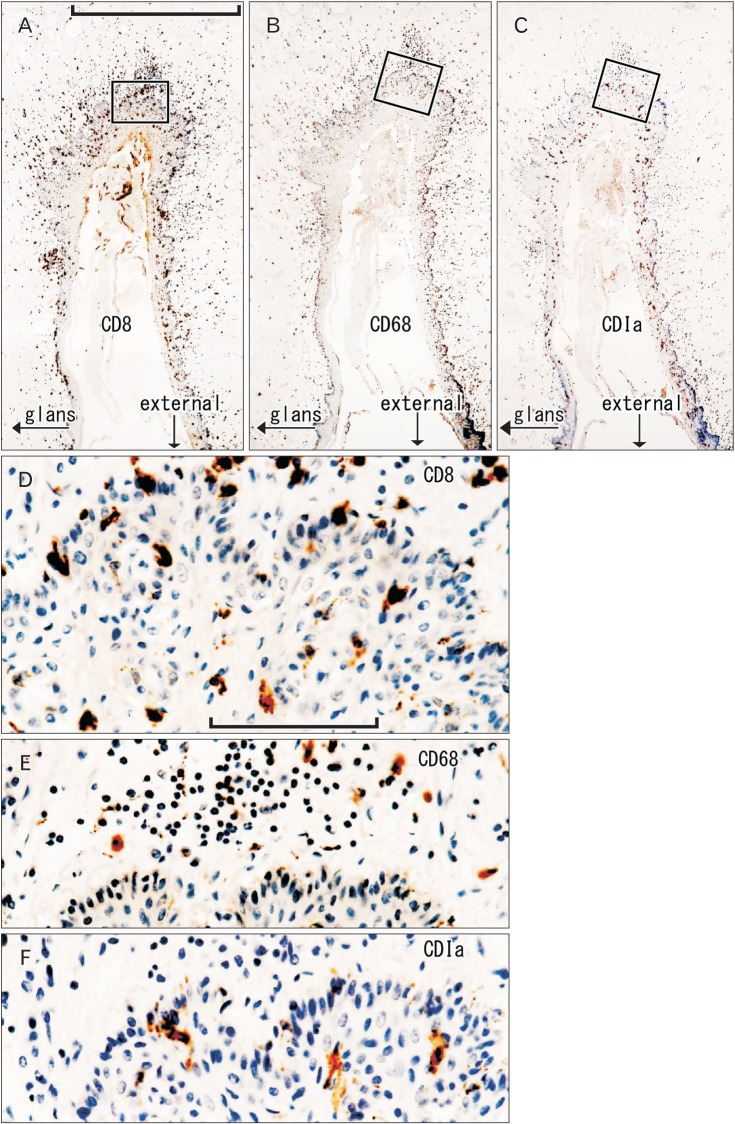
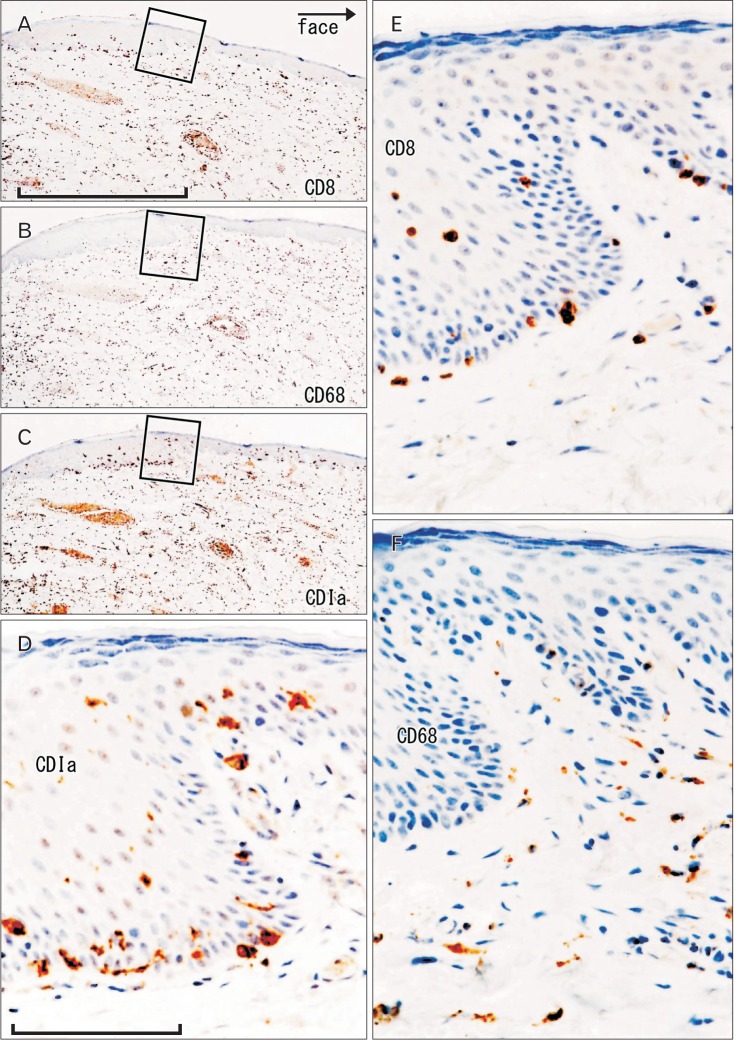
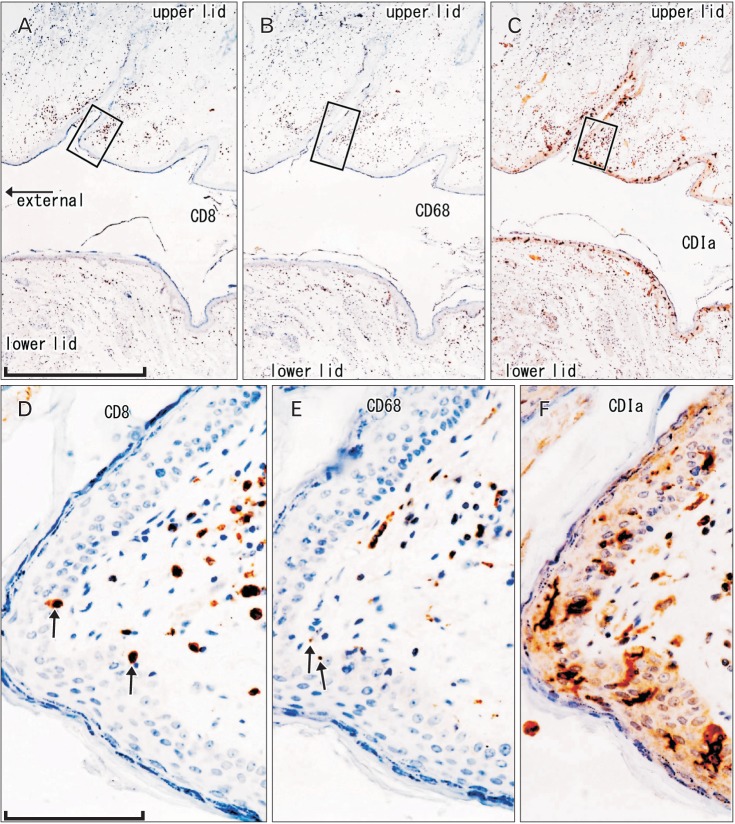
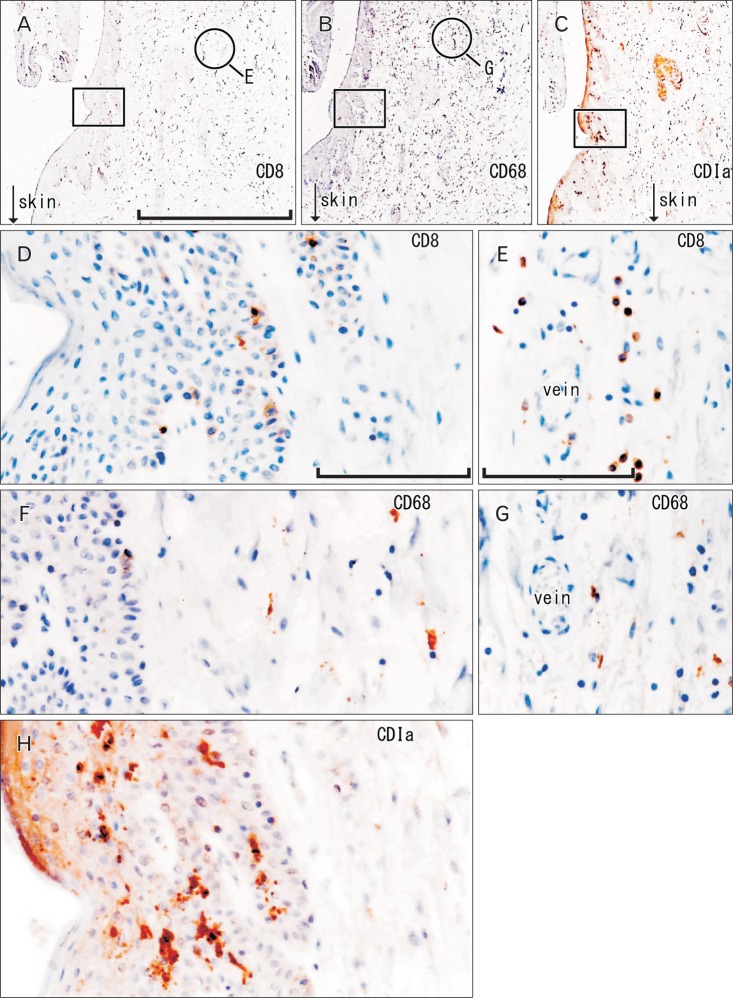
To provide a better understanding of the local immune system in the face and external genitalia, i.e., the oral floor, lower lip, palpebral conjunctiva, anus and penis, we examined the distribution and density of CD1a-positve Langerhans cells, CD8-positive suppressor T lymphocytes and CD68-positive macrophages using specimens from 8 male elderly cadavers. The density of Langerhans cells showed an individual difference of more than (or almost) 10-fold in the lip (oral floor). In the oral floor, Langerhans cells were often spherical. Submucosal or subcutaneous suppressor lymphocytes, especially rich in the oral floor and penile skin, migrated into the epithelium at 4 sites, except for the anus. In the conjunctiva, macrophage migration into the epithelium was seen in all 8 specimens. The density of suppressor lymphocytes showed a significant correlation between the oral floor and the lip (r=0.78). In contrast, the anal and penile skins showed no positive correlation in the density of all three types of immunoreactive cells examined. Overall, irrespective of the wide individual differences, the oral floor and conjunctiva seemed to be characterized by a rich content of all three cell types, whereas the penile skin was characterized by an abundance of suppressor lymphocytes. Based on the tables, as mean value, the relative abundance of three different cell types were as follows; CD1a-positive Langerhans cells (anus), CD8-positive lymphocytes (penis), and CD68-positive macrophages (lip). The present observations suggest that the local immune response is highly site-dependent, with a tendency for tolerance rather than rejection.
为了更好地了解面部和外生殖器(即口底、下唇、睑结膜、肛门和阴茎)的局部免疫系统,我们使用8具老年男性尸体的标本,检查了CD1a阳性朗格汉斯细胞、CD8阳性抑制性T淋巴细胞和CD68阳性巨噬细胞的分布及密度。朗格汉斯细胞的密度在唇部(口底)显示出超过(或几乎)10倍的个体差异。在口底,朗格汉斯细胞常呈球形。黏膜下或皮下抑制性淋巴细胞,尤其在口底和阴茎皮肤中丰富,除肛门外,在4个部位迁移至上皮内。在结膜中,8个标本均可见巨噬细胞迁移至上皮内。抑制性淋巴细胞的密度在口底和唇部之间显示出显著相关性(r = 0.78)。相比之下,肛门和阴茎皮肤在所检查的所有三种免疫反应性细胞的密度方面均无正相关。总体而言,尽管个体差异很大,但口底和结膜似乎以所有三种细胞类型的丰富含量为特征,而阴茎皮肤则以大量抑制性淋巴细胞为特征。根据表格,作为平均值,三种不同细胞类型的相对丰度如下:CD1a阳性朗格汉斯细胞(肛门)、CD8阳性淋巴细胞(阴茎)和CD68阳性巨噬细胞(唇部)。目前的观察结果表明,局部免疫反应高度依赖部位,具有耐受而非排斥的倾向。