Vyas Vijay S, Haase Frederik, Stegbauer Linus, Savasci Gökcen, Podjaski Filip, Ochsenfeld Christian, Lotsch Bettina V
Max Planck Institute for Solid State Research, Heisenbergstr. 1, 70569 Stuttgart, Germany.
Department of Chemistry, University of Munich (LMU), Butenandtstr. 5-13, 81377 Munich, Germany.
Nat Commun. 2015 Sep 30;6:8508. doi: 10.1038/ncomms9508.
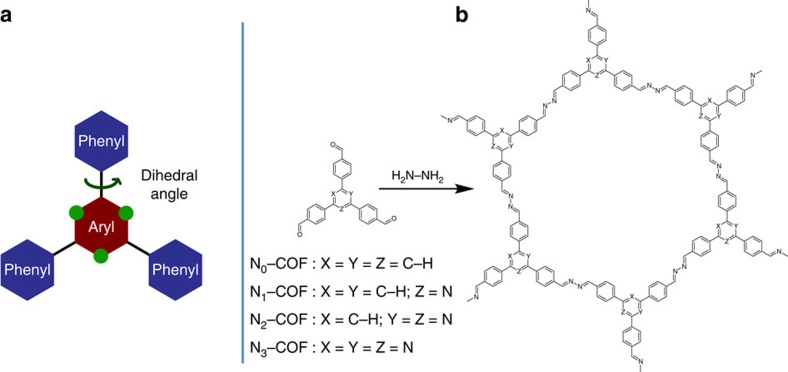
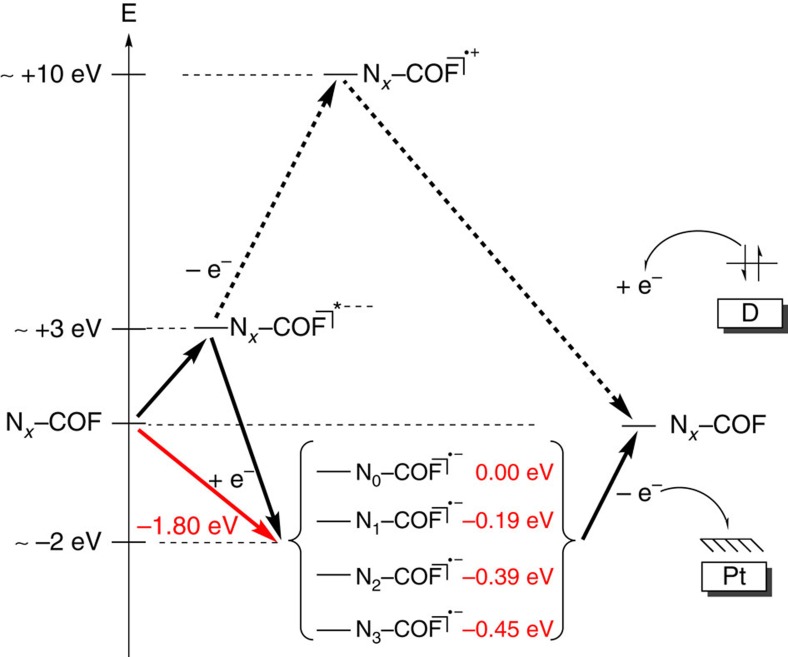
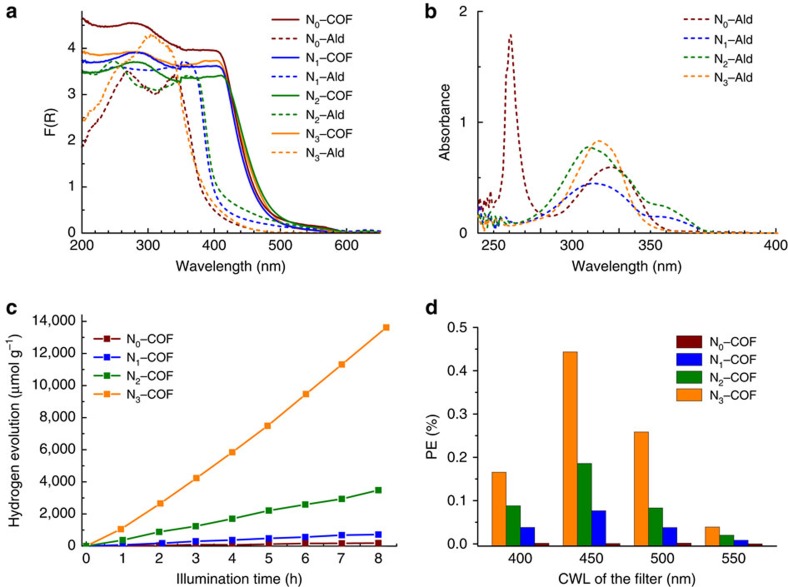
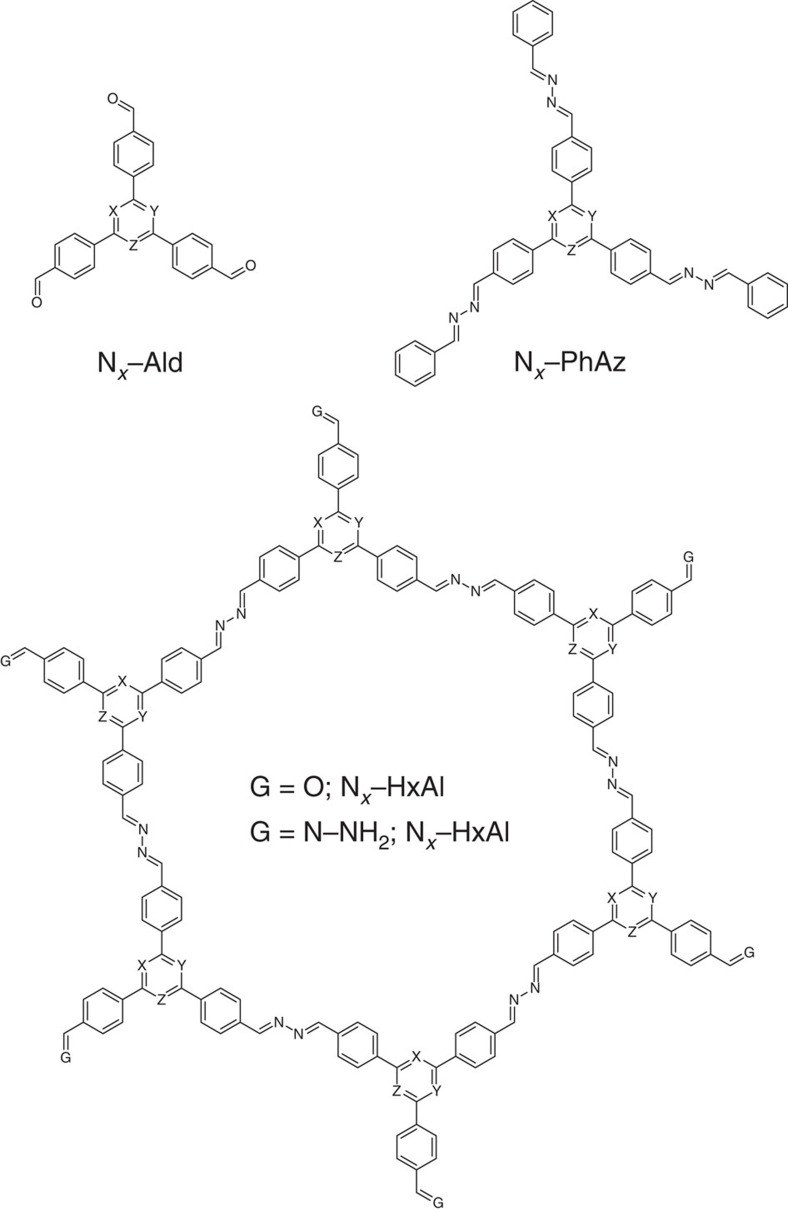
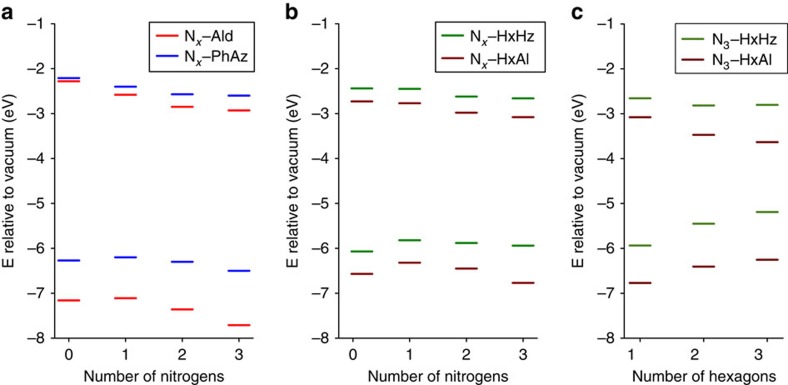
Hydrogen evolution from photocatalytic reduction of water holds promise as a sustainable source of carbon-free energy. Covalent organic frameworks (COFs) present an interesting new class of photoactive materials, which combine three key features relevant to the photocatalytic process, namely crystallinity, porosity and tunability. Here we synthesize a series of water- and photostable 2D azine-linked COFs from hydrazine and triphenylarene aldehydes with varying number of nitrogen atoms. The electronic and steric variations in the precursors are transferred to the resulting frameworks, thus leading to a progressively enhanced light-induced hydrogen evolution with increasing nitrogen content in the frameworks. Our results demonstrate that by the rational design of COFs on a molecular level, it is possible to precisely adjust their structural and optoelectronic properties, thus resulting in enhanced photocatalytic activities. This is expected to spur further interest in these photofunctional frameworks where rational supramolecular engineering may lead to new material applications.
通过光催化还原水析氢有望成为一种可持续的无碳能源来源。共价有机框架(COF)是一类有趣的新型光活性材料,它结合了与光催化过程相关的三个关键特性,即结晶性、孔隙率和可调节性。在此,我们用肼和具有不同氮原子数的三苯基芳烃醛合成了一系列水稳定且光稳定的二维嗪连接COF。前体中的电子和空间变化传递到所得框架中,从而随着框架中氮含量的增加导致光诱导析氢逐渐增强。我们的结果表明,通过在分子水平上对COF进行合理设计,可以精确调节其结构和光电性质,从而提高光催化活性。这有望激发对这些光功能框架的进一步兴趣,在其中合理的超分子工程可能会带来新的材料应用。