Song Yanpei, Ma Shengqian
Department of Chemistry, University of North Texas Denton TX 76201 USA
Chem Sci. 2025 Jun 14. doi: 10.1039/d5sc01635e.
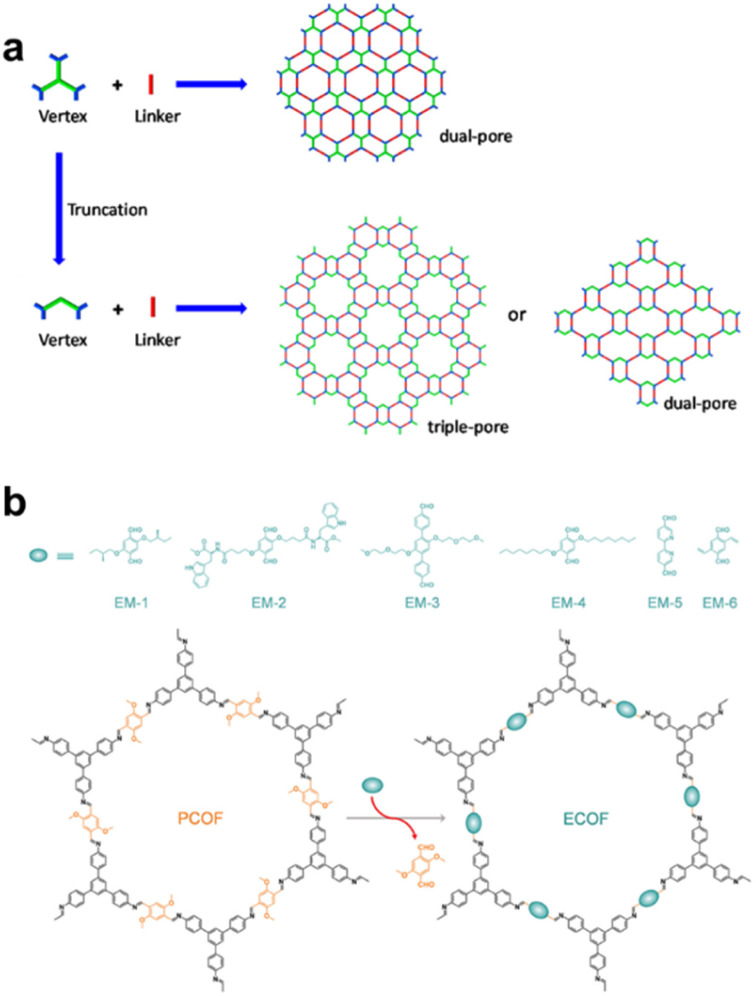
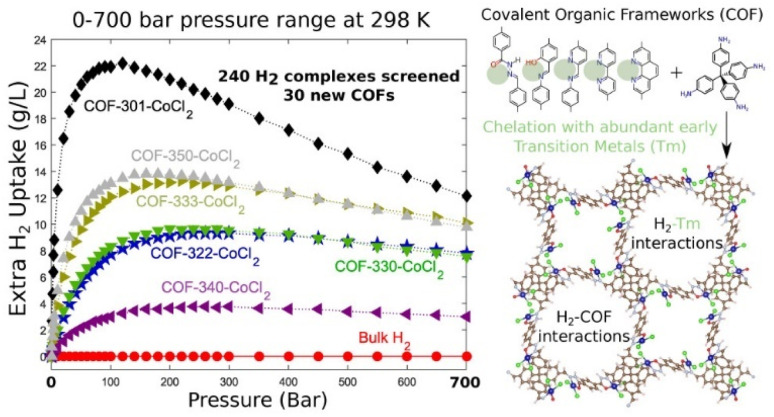
Crystalline porous materials, particularly metal-organic frameworks (MOFs) and covalent organic frameworks (COFs), have garnered significant attention for advanced applications due to their tunable pore environments and versatile functionalities. By precisely controlling factors such as size, shape, functional sites, and pore distribution, MOFs and COFs can be tailored to exhibit high selectivity for specific molecules, making them ideal for applications in gas storage and separation, catalysis, and water remediation. This review provides a background overview, beginning with an introduction to pore surface engineering strategies and the design features of MOFs and COFs. It then highlights recent advancements in three key research areas that our group has investigated in-depth over the past decade, discussing the strategies and principles involved. Finally, we outline the remaining challenges and offer our perspectives on future opportunities for pore-engineered MOFs and COFs.
晶体多孔材料,特别是金属有机框架材料(MOFs)和共价有机框架材料(COFs),因其可调节的孔环境和多样的功能,在先进应用领域备受关注。通过精确控制尺寸、形状、功能位点和孔分布等因素,MOFs和COFs可以被定制为对特定分子具有高选择性,使其成为气体存储与分离、催化和水净化等应用的理想选择。本综述提供了一个背景概述,首先介绍了孔表面工程策略以及MOFs和COFs的设计特点。然后重点介绍了我们团队在过去十年中深入研究的三个关键研究领域的最新进展,讨论了其中涉及的策略和原理。最后,我们概述了 remaining challenges,并对孔工程化MOFs和COFs的未来机遇提出了我们的看法。 (注:原文中“remaining challenges”未翻译,因为不清楚具体含义,可能是有遗漏信息,正常应准确翻译其具体内容)