Castillo Pablo R, Del Brutto Oscar H, Andrade María de la Luz, Zambrano Mauricio, Nader Juan A
Division of Sleep Medicine, Mayo Clinic, 4500 San Pablo Rd, Jacksonville, FL, 32224, USA.
School of Medicine, Universidad Espíritu Santo-Ecuador, Guayaquil, Ecuador.
BMC Res Notes. 2015 Sep 29;8:500. doi: 10.1186/s13104-015-1481-5.
In a population-based sampling study conducted in community-dwelling older adults living in rural Ecuador, we aimed to assess the relation among sleep-disordered breathing, cerebral pulsatility index, and diffuse small vessel disease.
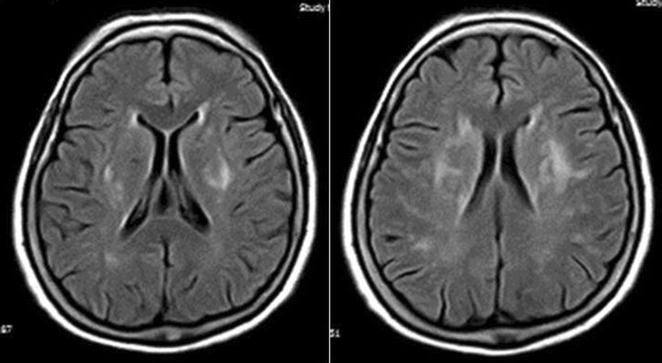
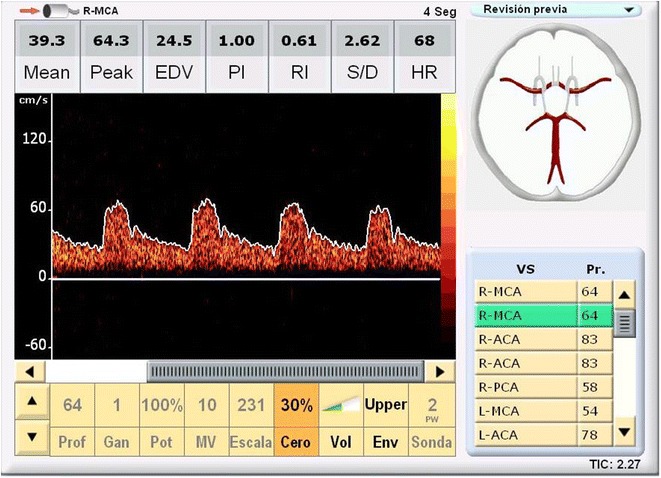
Of 25 participants, 9 (36%) had moderate-to-severe sleep-disordered breathing, characterized by an apnea/hypopnea index ≥15 per hour, and 10 (40%) had moderate-to-severe white matter hyperintensities, graded according to the modified Fazekas scale. Mean (SD) pulsatility index in the middle cerebral artery was 1.18 (0.19) and positively correlated with the apnea/hypopnea index (R = .445, P = .03, [Pearson's correlation coefficient]). The middle cerebral artery pulsatility index was increased in persons with moderate-to-severe sleep-disordered breathing compared with persons who had none-to-mild sleep-disordered breathing (mean [SD] 1.11 [0.12] vs. 1.3 [0.23], P = .01). No significant differences were found in the prevalence of moderate-to-severe white matter hyperintensities across groups of sleep-disordered breathing (P = .40) or in the mean apnea/hypopnea index across groups of persons with none-to-mild or moderate-to-severe white matter hyperintensities (P = .16).
This pilot study shows that moderate-to-severe sleep-disordered breathing correlates with cerebral pulsatility, but such association might be independent of diffuse small vessel disease.
在一项针对厄瓜多尔农村社区居住的老年人进行的基于人群的抽样研究中,我们旨在评估睡眠呼吸障碍、脑搏动指数和弥漫性小血管疾病之间的关系。
25名参与者中,9名(36%)患有中度至重度睡眠呼吸障碍,其特征为呼吸暂停/低通气指数≥每小时15次,10名(40%)患有中度至重度白质高信号,根据改良的 Fazekas 量表分级。大脑中动脉的平均(标准差)搏动指数为1.18(0.19),与呼吸暂停/低通气指数呈正相关(R = 0.445,P = .03,[Pearson 相关系数])。与无至轻度睡眠呼吸障碍的人相比,中度至重度睡眠呼吸障碍的人大脑中动脉搏动指数升高(平均[标准差]1.11[0.12]对1.3[0.23],P = .01)。在睡眠呼吸障碍组中,中度至重度白质高信号的患病率无显著差异(P = .40),在无至轻度或中度至重度白质高信号的人群组中,平均呼吸暂停/低通气指数也无显著差异(P = .16)。
这项初步研究表明,中度至重度睡眠呼吸障碍与脑搏动相关,但这种关联可能独立于弥漫性小血管疾病。