Quibod Ian Lorenzo, Grande Genelou, Oreiro Eula Gems, Borja Frances Nikki, Dossa Gerbert Sylvestre, Mauleon Ramil, Cruz Casiana Vera, Oliva Ricardo
Plant Breeding, Genetics, and Biotechnology Division, International Rice Research Institute, Los Baños, Philippines.
T.T. Chang- Genetic Resources Center, International Rice Research Institute, Los Baños, Philippines.
PLoS One. 2015 Sep 30;10(9):e0139256. doi: 10.1371/journal.pone.0139256. eCollection 2015.
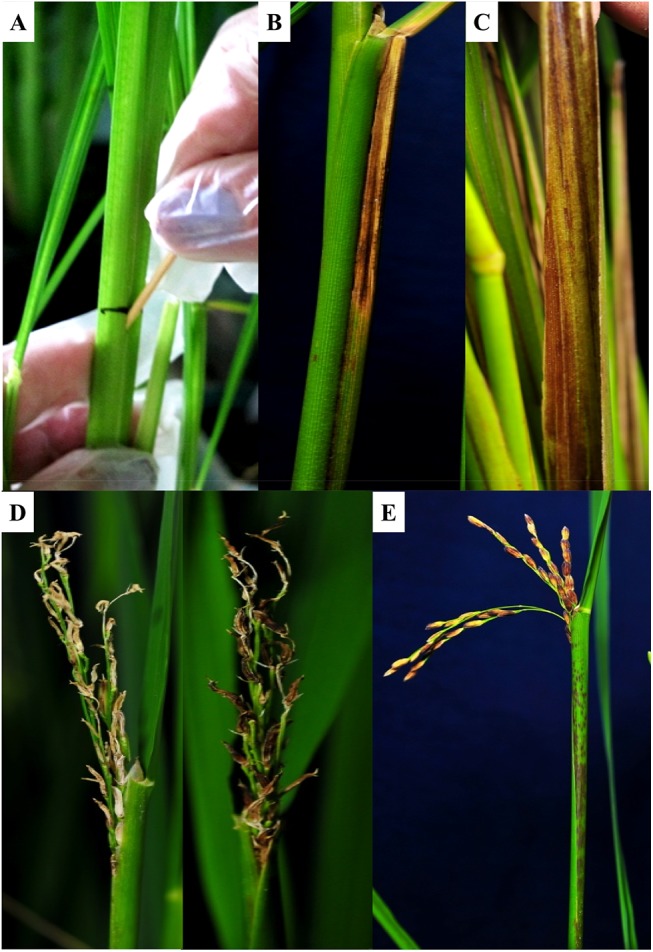
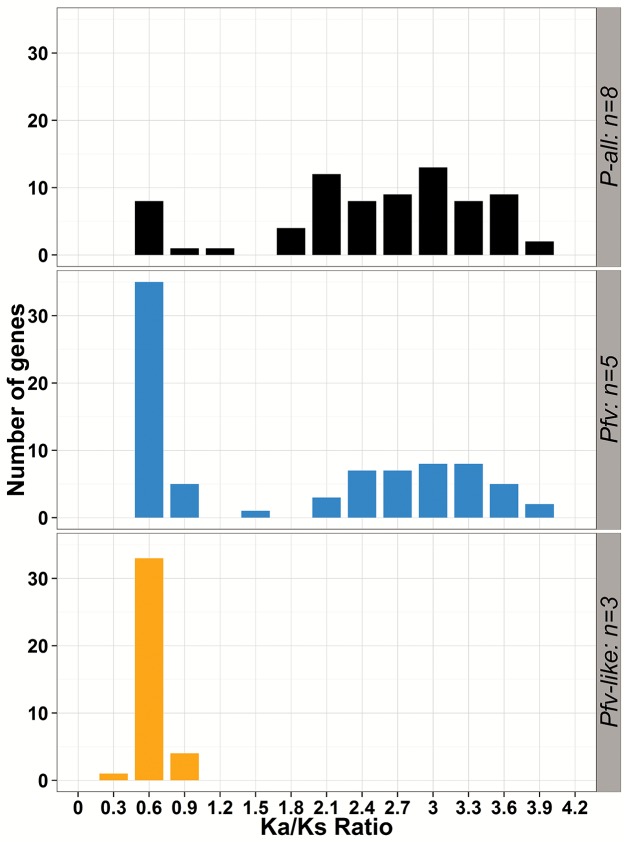
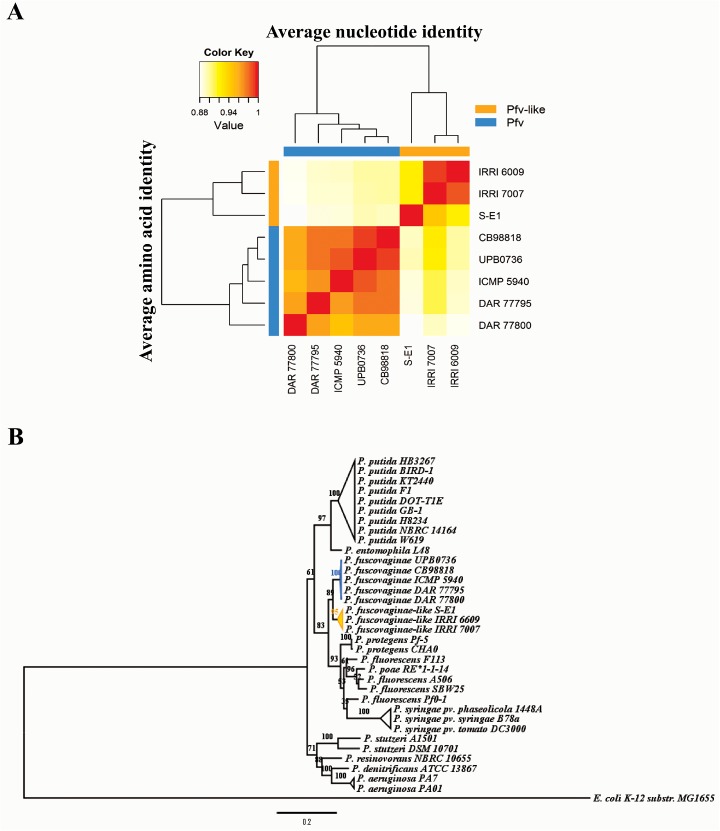
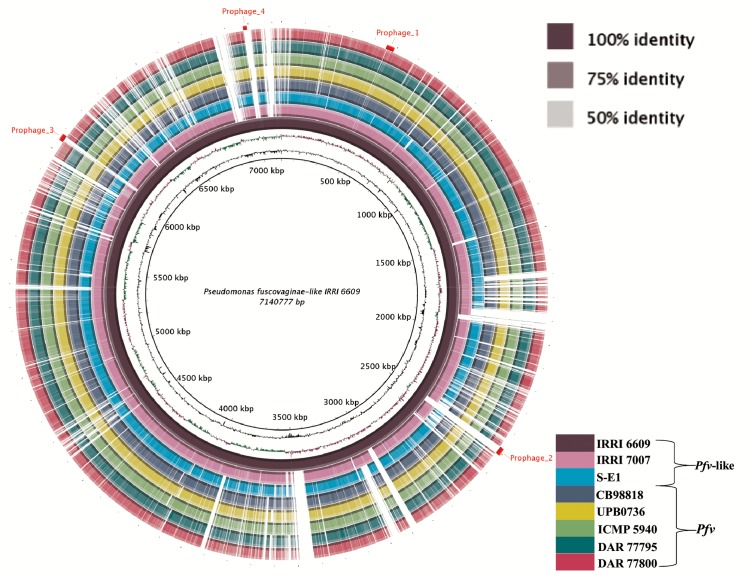
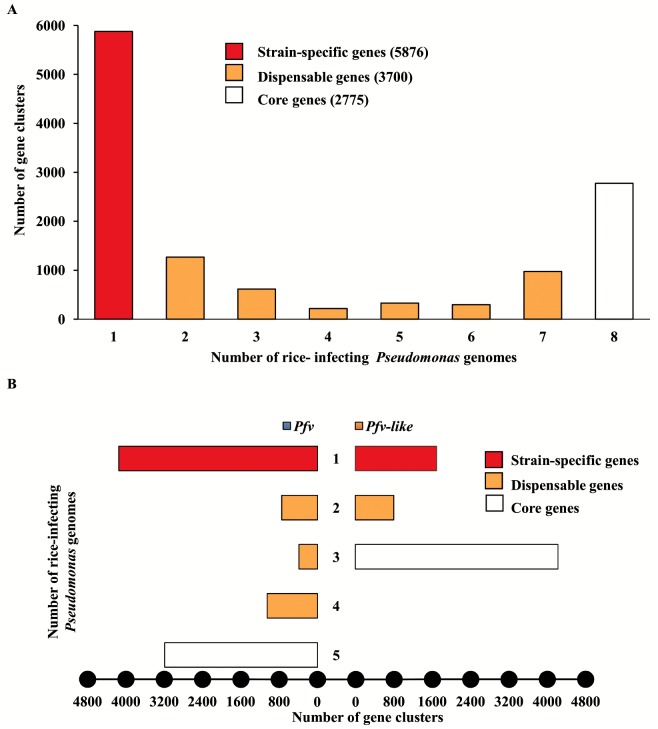
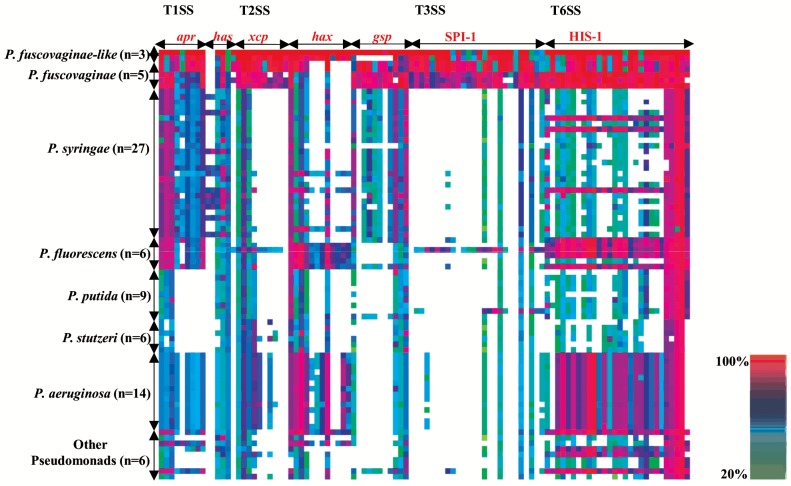
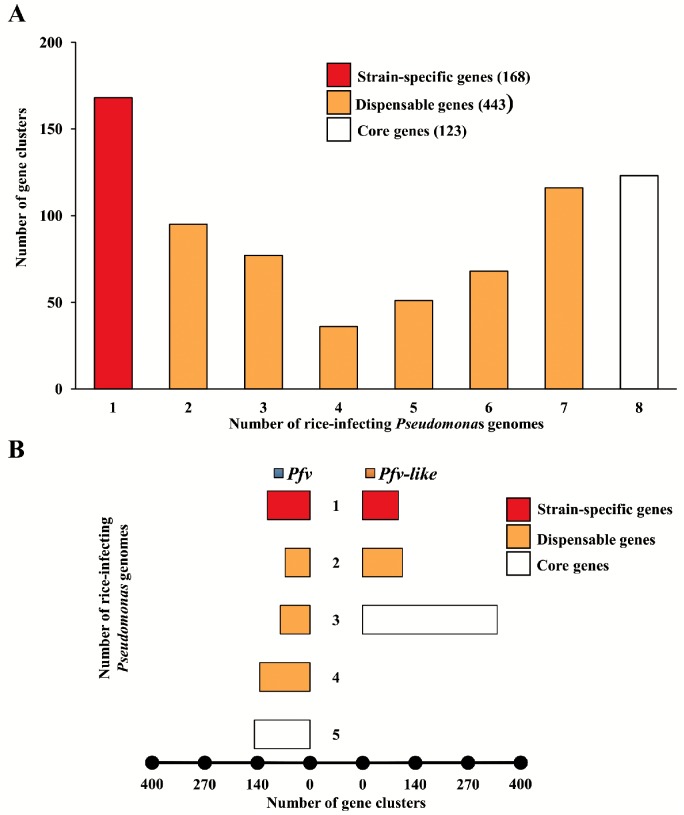
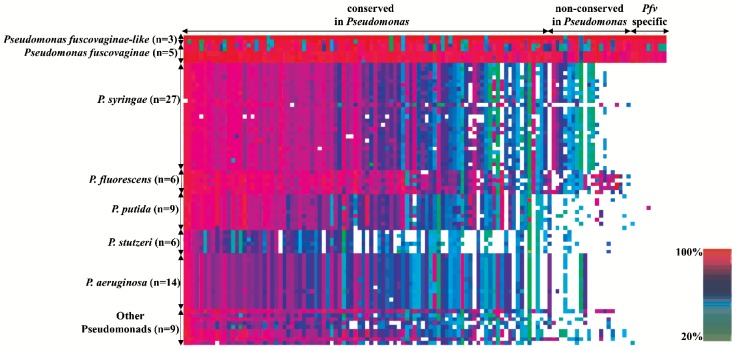
Sheath rot complex and seed discoloration in rice involve a number of pathogenic bacteria that cannot be associated with distinctive symptoms. These pathogens can easily travel on asymptomatic seeds and therefore represent a threat to rice cropping systems. Among the rice-infecting Pseudomonas, P. fuscovaginae has been associated with sheath brown rot disease in several rice growing areas around the world. The appearance of a similar Pseudomonas population, which here we named P. fuscovaginae-like, represents a perfect opportunity to understand common genomic features that can explain the infection mechanism in rice. We showed that the novel population is indeed closely related to P. fuscovaginae. A comparative genomics approach on eight rice-infecting Pseudomonas revealed heterogeneous genomes and a high number of strain-specific genes. The genomes of P. fuscovaginae-like harbor four secretion systems (Type I, II, III, and VI) and other important pathogenicity machinery that could probably facilitate rice colonization. We identified 123 core secreted proteins, most of which have strong signatures of positive selection suggesting functional adaptation. Transcript accumulation of putative pathogenicity-related genes during rice colonization revealed a concerted virulence mechanism. The study suggests that rice-infecting Pseudomonas causing sheath brown rot are intrinsically diverse and maintain a variable set of metabolic capabilities as a potential strategy to occupy a range of environments.
水稻中的鞘腐病复合体和种子变色涉及多种致病细菌,这些细菌不会引发明显症状。这些病原体能够轻易地通过无症状种子传播,因此对水稻种植系统构成威胁。在侵染水稻的假单胞菌中,褐鞘假单胞菌在世界上多个水稻种植区与鞘褐腐病有关。一种类似假单胞菌群体的出现,我们在此将其命名为类褐鞘假单胞菌,这是一个绝佳机会,可用于了解能够解释水稻感染机制的共同基因组特征。我们发现这个新群体确实与褐鞘假单胞菌密切相关。对八种侵染水稻的假单胞菌进行的比较基因组学研究揭示了基因组的异质性以及大量菌株特异性基因。类褐鞘假单胞菌的基因组含有四种分泌系统(I型、II型、III型和VI型)以及其他可能有助于在水稻中定殖的重要致病机制。我们鉴定出123种核心分泌蛋白,其中大多数具有强烈的正选择特征,表明其功能适应性。水稻定殖过程中假定的致病相关基因的转录积累揭示了一种协同的致病机制。该研究表明,引起鞘褐腐病的侵染水稻的假单胞菌本质上具有多样性,并保持一系列可变的代谢能力,作为占据一系列环境的潜在策略。