Mackos A R, Galley J D, Eubank T D, Easterling R S, Parry N M, Fox J G, Lyte M, Bailey M T
Biosciences, College of Dentistry, The Ohio State University, Columbus, Ohio, USA.
Division of Pulmonary, Allergy, Critical Care, and Sleep Medicine, Wexner Medical Center, The Ohio State University, Columbus, Ohio, USA.
Mucosal Immunol. 2016 Mar;9(2):515-26. doi: 10.1038/mi.2015.81. Epub 2015 Sep 30.
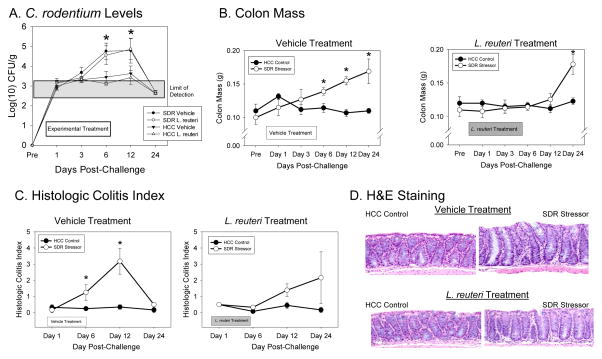
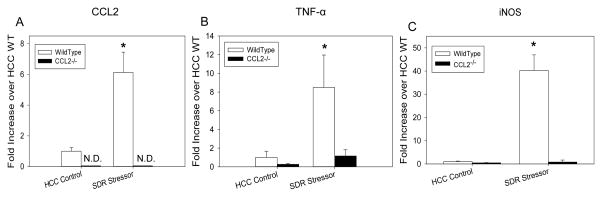
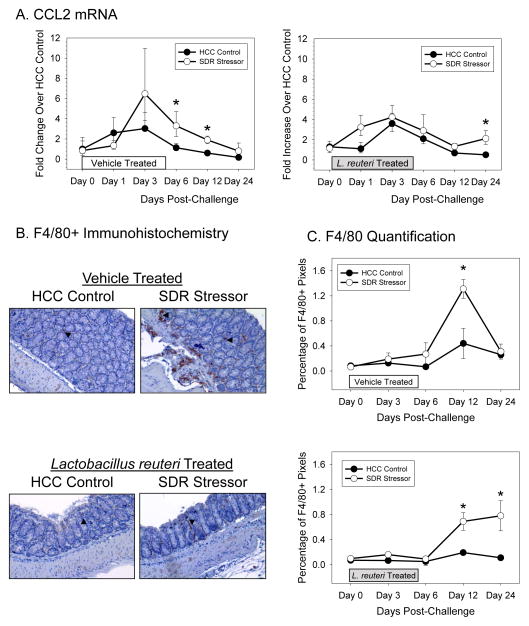
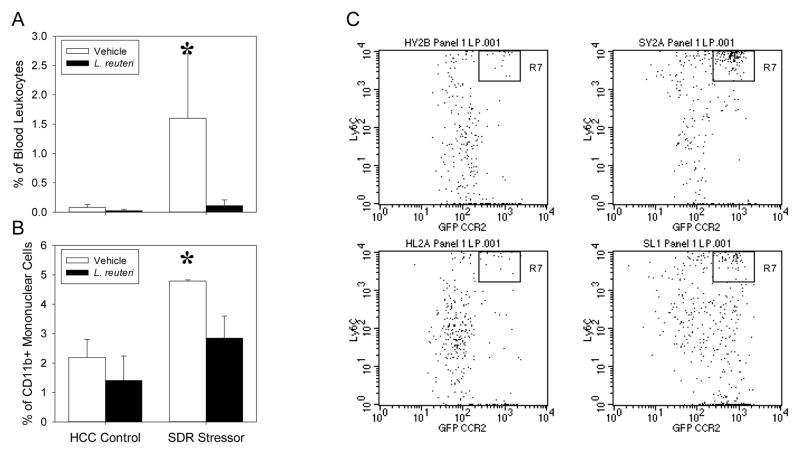
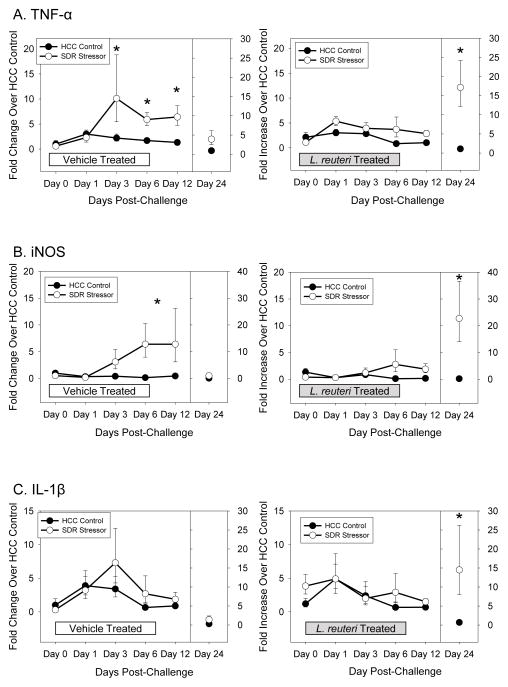
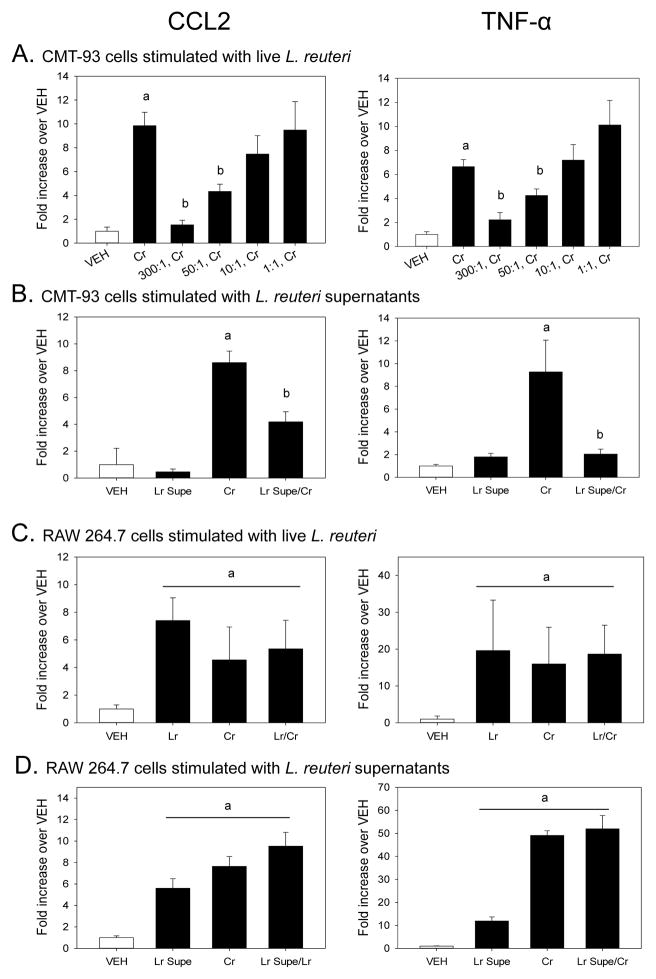
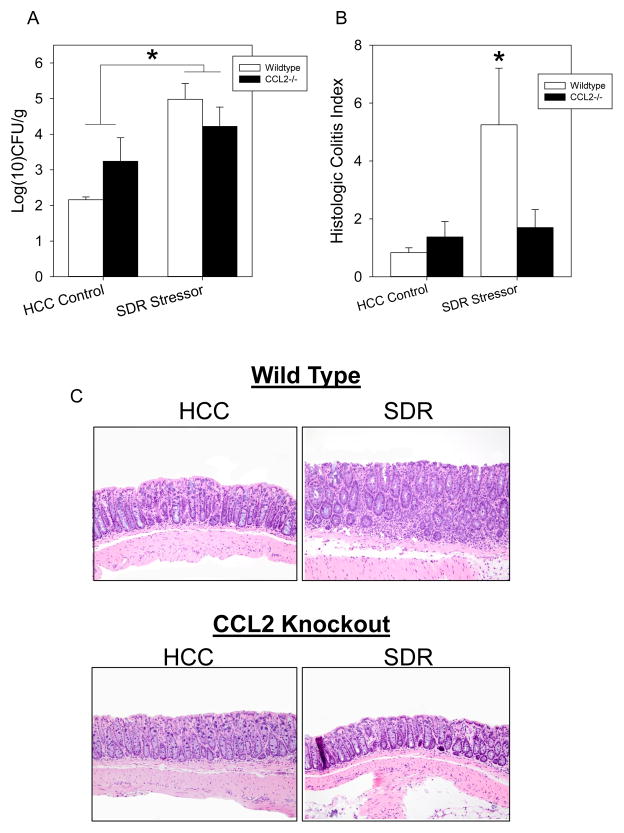
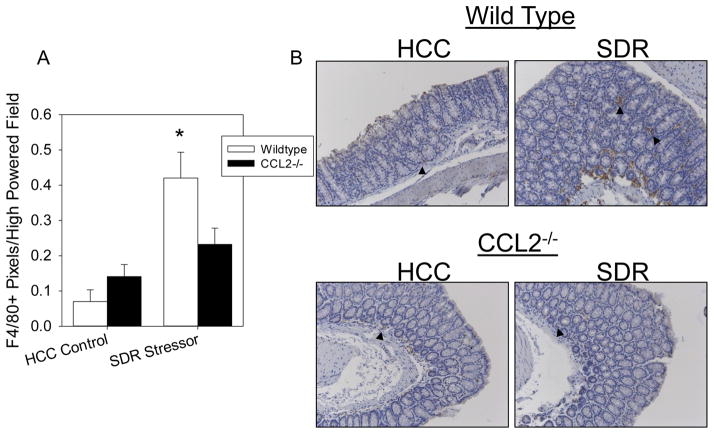
Psychological stressors are known to affect colonic diseases but the mechanisms by which this occurs, and whether probiotics can prevent stressor effects, are not understood. Because inflammatory monocytes that traffic into the colon can exacerbate colitis, we tested whether CCL2, a chemokine involved in monocyte recruitment, was necessary for stressor-induced exacerbation of infectious colitis. Mice were exposed to a social disruption stressor that entails repeated social defeat. During stressor exposure, mice were orally challenged with Citrobacter rodentium to induce a colonic inflammatory response. Exposure to the stressor during challenge resulted in significantly higher colonic pathogen levels, translocation to the spleen, increases in colonic macrophages, and increases in inflammatory cytokines and chemokines. The stressor-enhanced severity of C. rodentium-induced colitis was not evident in CCL2(-/-) mice, indicating the effects of the stressor are CCL2-dependent. In addition, we tested whether probiotic intervention could attenuate stressor-enhanced infectious colitis by reducing monocyte/macrophage accumulation. Treating mice with probiotic Lactobacillus reuteri reduced CCL2 mRNA levels in the colon and attenuated stressor-enhanced infectious colitis. These data demonstrate that probiotic L. reuteri can prevent the exacerbating effects of stressor exposure on pathogen-induced colitis, and suggest that one mechanism by which this occurs is through downregulation of the chemokine CCL2.
已知心理应激源会影响结肠疾病,但这种影响发生的机制以及益生菌是否能预防应激源的影响尚不清楚。由于进入结肠的炎性单核细胞会加重结肠炎,我们测试了参与单核细胞募集的趋化因子CCL2是否是应激源诱导的感染性结肠炎加重所必需的。将小鼠暴露于一种社会破坏应激源,即反复遭受社会挫败。在应激源暴露期间,给小鼠口服鼠柠檬酸杆菌以诱导结肠炎症反应。在感染期间暴露于应激源会导致结肠病原体水平显著升高、病原体转移至脾脏、结肠巨噬细胞增加以及炎性细胞因子和趋化因子增加。在CCL2基因敲除小鼠中,应激源增强的鼠柠檬酸杆菌诱导的结肠炎严重程度并不明显,这表明应激源的作用是依赖CCL2的。此外,我们测试了益生菌干预是否可以通过减少单核细胞/巨噬细胞的积聚来减轻应激源增强的感染性结肠炎。用益生菌罗伊氏乳杆菌治疗小鼠可降低结肠中CCL2的mRNA水平,并减轻应激源增强的感染性结肠炎。这些数据表明,益生菌罗伊氏乳杆菌可以预防应激源暴露对病原体诱导的结肠炎的加重作用,并表明其发生的一种机制是通过下调趋化因子CCL2。