Fan Xue-Yu, Tian Chan, Wang Hui, Xu Yin, Ren Ke, Zhang Bao-Yun, Gao Chen, Shi Qi, Meng Ge, Zhang Lu-Bin, Zhao Yang-Jing, Shao Qi-Xiang, Dong Xiao-Ping
Department of Immunology, and Jiangsu Key Laboratory of Medical Science and Laboratory Medicine, School of Medicine, Jiangsu University, Zhenjiang 212013, Jiangsu, China.
State Key Laboratory for Infectious Disease Prevention and Control, Collaborative Innovation Center for Diagnosis and Treatment of Infectious Diseases (Zhejiang University, Hangzhou 310003), National Institute for Viral Disease Control and Prevention, Chinese Center for Disease Control and Prevention, Chang-Bai Rd 155, Beijing 102206, China.
Sci Rep. 2015 Oct 1;5:14728. doi: 10.1038/srep14728.
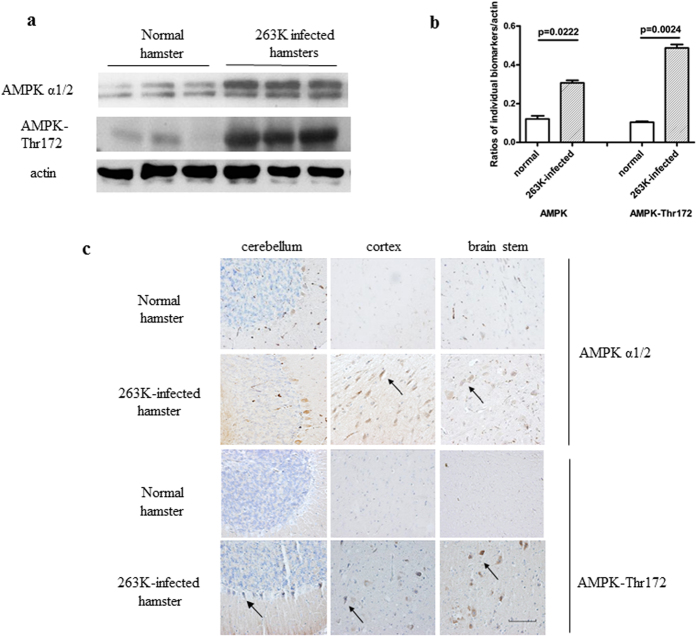
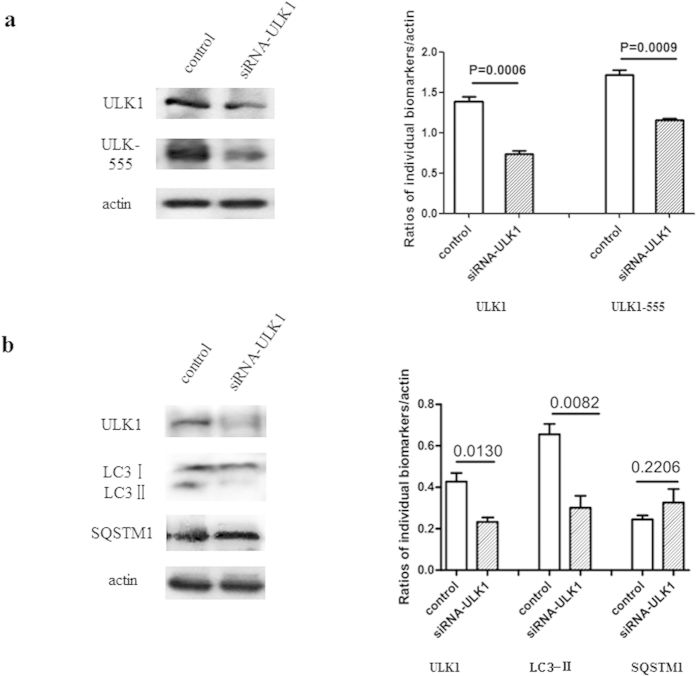
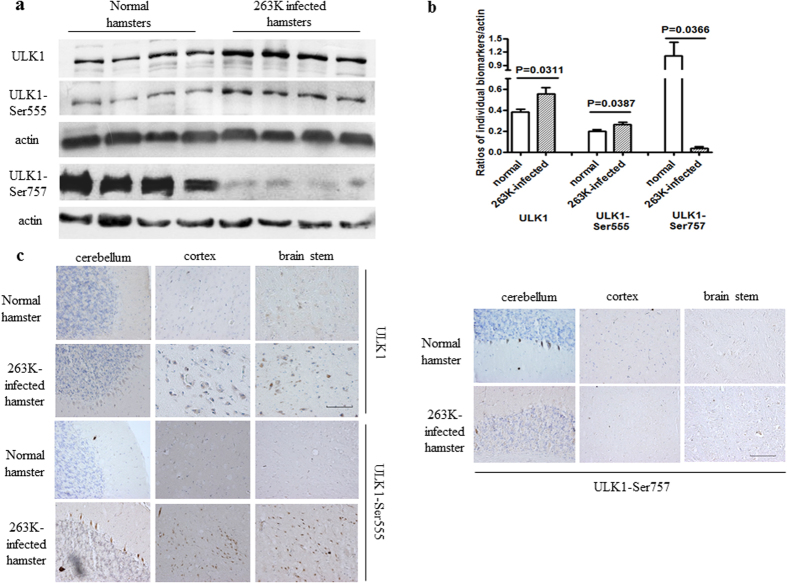
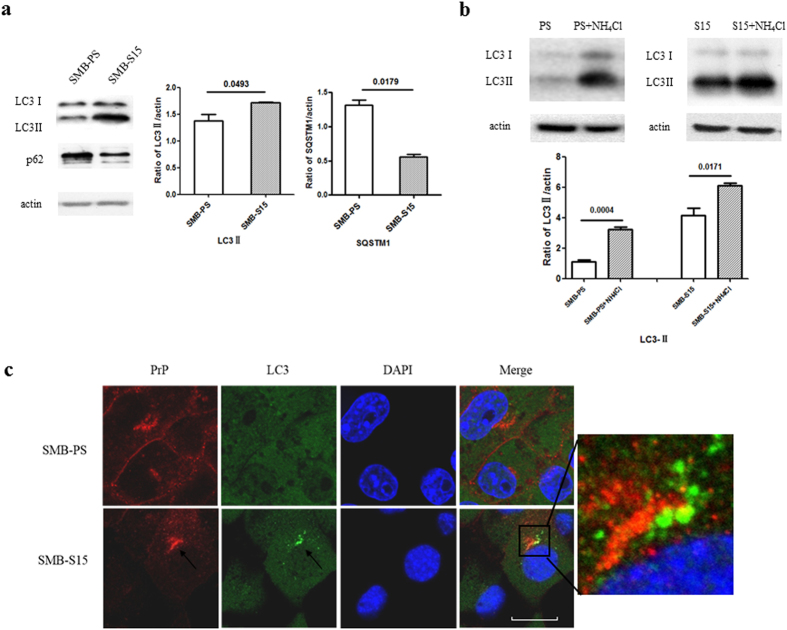
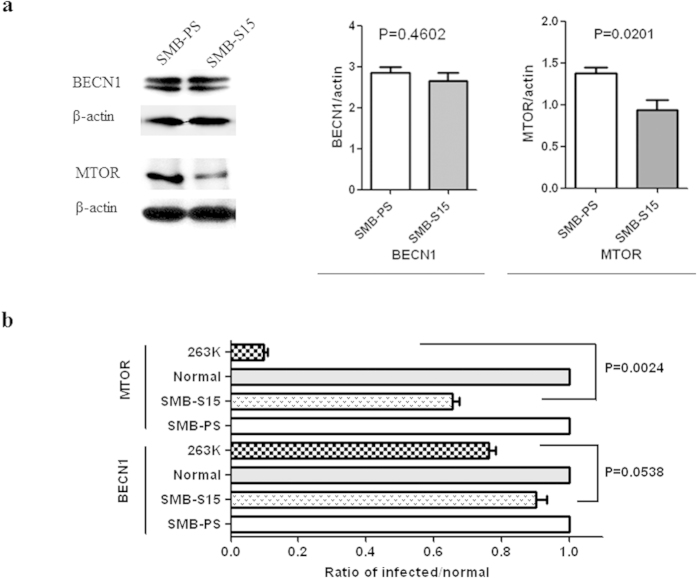
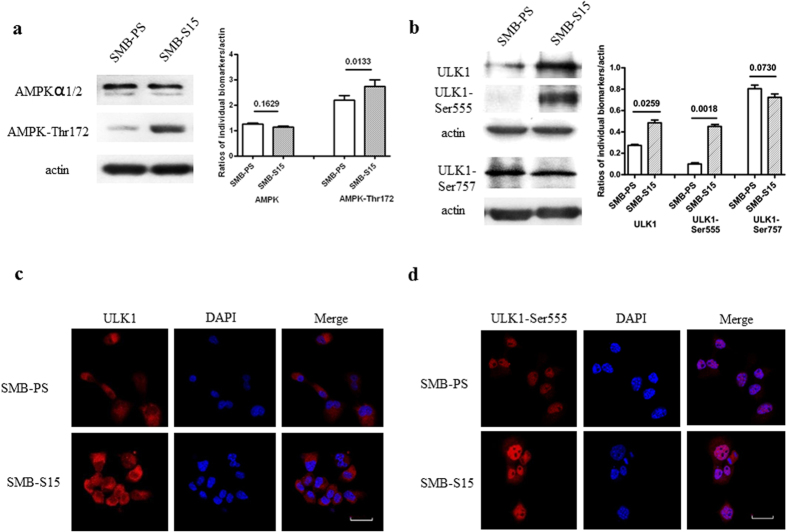
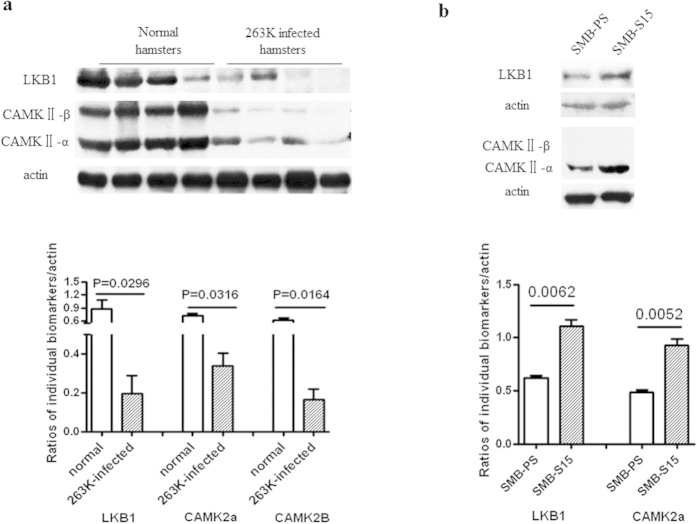
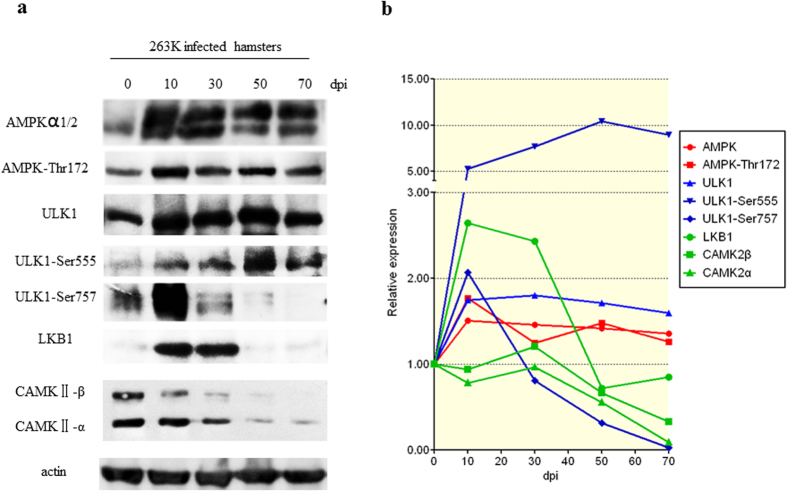
AMPK is a serine/threonine protein kinase that acts as a positive regulator of autophagy, by phosphorylating ULK1 at specific sites. A previous study demonstrated activation of the macroautophagic system in scrapie-infected experimental rodents and in certain human prion diseases, in which the essential negative regulator mTOR is severely inhibited. In this study, AMPK and ULK1 in the brains of hamsters infected with scrapie strain 263 K and in the scrapie-infected cell line SMB-S15 were analysed. The results showed an up-regulated trend of AMPK and AMPK-Thr172, ULK1 and ULK1-Ser555. Increases in brain AMPK and ULK1 occurred at an early stage of agent 263 K infection. The level of phosphorylated ULK1-Ser757 decreased during mid-infection and was only negligibly present at the terminal stage, a pattern that suggested a close relationship of the phosphorylated protein with altered endogenous mTOR. In addition, the level of LKB1 associated with AMPK activation was selectively increased at the early and middle stages of infection. Knockdown of endogenous ULK1 in SMB-S15 cells inhibited LC3 lipidation. These results showed that, in addition to the abolishment of the mTOR regulatory pathway, activation of the AMPK-ULK1 pathway during prion infection contributes to autophagy activation in prion-infected brain tissues.
AMPK是一种丝氨酸/苏氨酸蛋白激酶,通过在特定位点磷酸化ULK1而作为自噬的正向调节因子。先前的一项研究表明,在感染羊瘙痒病的实验啮齿动物和某些人类朊病毒疾病中,自噬系统被激活,其中关键的负向调节因子mTOR受到严重抑制。在本研究中,分析了感染羊瘙痒病263K毒株的仓鼠大脑以及感染羊瘙痒病的细胞系SMB-S15中的AMPK和ULK1。结果显示,AMPK、AMPK-Thr172、ULK1和ULK1-Ser555呈上调趋势。脑内AMPK和ULK1的增加发生在263K毒株感染的早期阶段。在感染中期,磷酸化的ULK1-Ser757水平下降,在终末期仅微量存在,这种模式表明该磷酸化蛋白与内源性mTOR改变密切相关。此外,与AMPK激活相关的LKB1水平在感染的早期和中期选择性增加。在SMB-S15细胞中敲低内源性ULK1可抑制LC3脂化。这些结果表明,除了mTOR调节途径的丧失外,朊病毒感染期间AMPK-ULK1途径的激活有助于朊病毒感染的脑组织中的自噬激活。