Andersson Annica, Bernardi Angelina I, Stubelius Alexandra, Nurkkala-Karlsson Merja, Ohlsson Claes, Carlsten Hans, Islander Ulrika
Centre for Bone and Arthritis Research, Department of Rheumatology and Inflammation Research and
Centre for Bone and Arthritis Research, Department of Rheumatology and Inflammation Research and.
Rheumatology (Oxford). 2016 Mar;55(3):553-63. doi: 10.1093/rheumatology/kev355. Epub 2015 Sep 30.
RA predominantly affects post-menopausal women and is strongly associated with development of generalised osteoporosis. To find treatments that target both joint manifestations and osteoporosis in RA is desirable. The third generation of selective oestrogen receptor modulators (SERMs) [lasofoxifene (LAS) and bazedoxifene (BZA)] are new treatment options for post-menopausal osteoporosis. The aim of this study was to investigate the effects of LAS and BZA on arthritic disease and inflammation-associated bone loss using CIA in mice.
Female DBA/1 mice were ovariectomised and subjected to CIA as a model of post-menopausal RA. Mice received treatment with LAS, BZA, 17β-estradiol (E2) as reference or vehicle. Arthritis development was assessed and BMD was determined by peripheral quantitative CT of the femurs. Serologic markers of inflammation and cartilage destruction were analysed. Immune cells in lymph nodes were studied by flow cytometry.
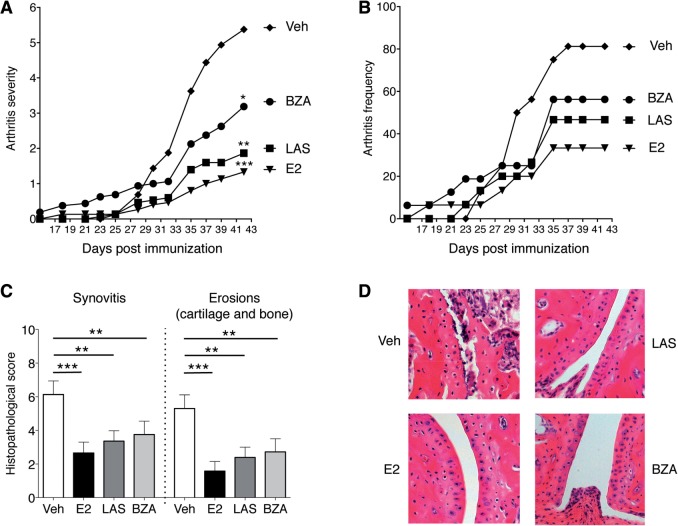
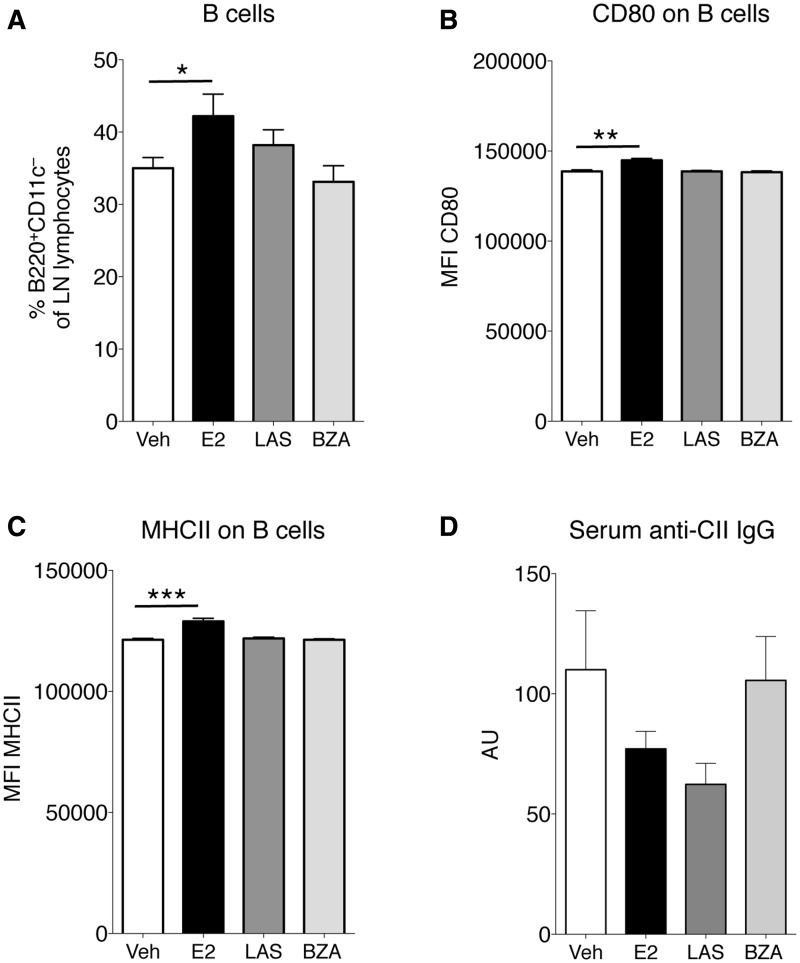
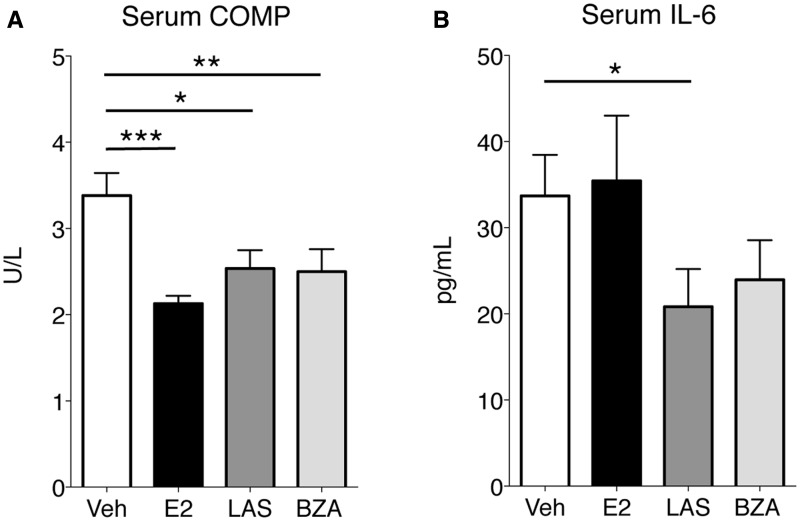
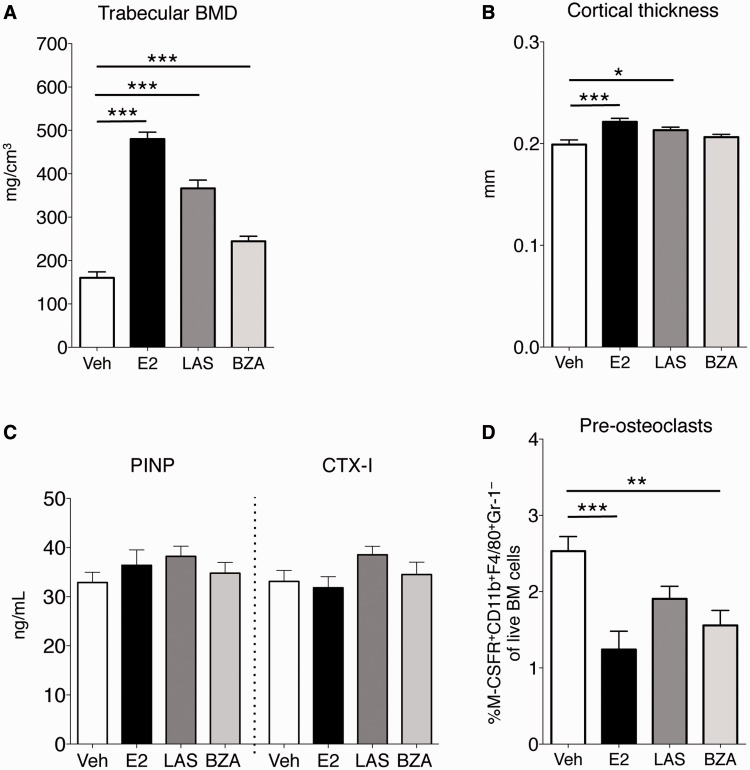
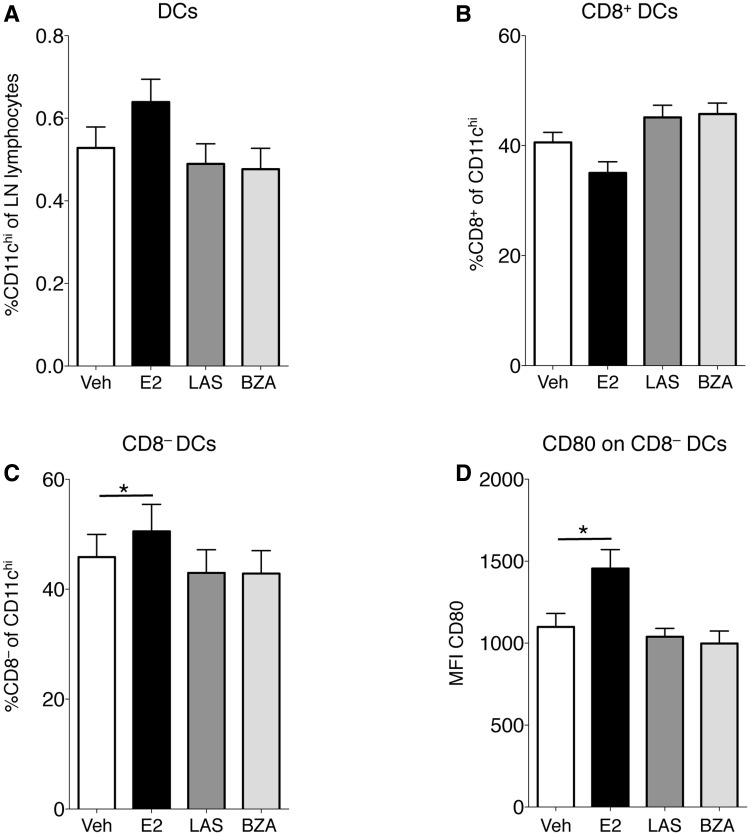
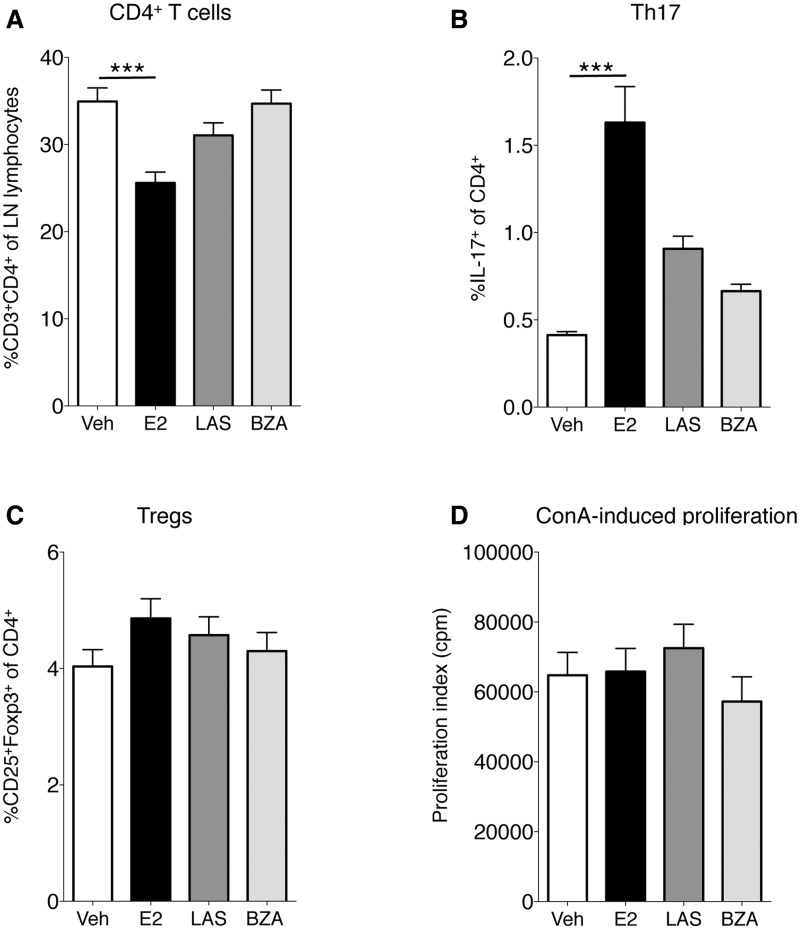
LAS and BZA reduced the clinical severity of arthritis as well as the grade of histologic synovitis and erosions on cartilage and bone. Moreover, SERMs protected against generalised bone loss in CIA by increasing trabecular BMD. Both SERMs decreased serum marker of cartilage destruction and LAS reduced serum IL-6 levels. SERMs did not alter Th17 cells in lymph nodes as E2 did.
The anti-osteoporotic drugs LAS and BZA were found to be potent inhibitors of joint inflammation and bone destruction in experimental arthritis. This study provides new important knowledge regarding the treatment regimen of post-menopausal women with RA who suffer from increased risk for osteoporosis.
类风湿关节炎(RA)主要影响绝经后女性,且与全身性骨质疏松的发生密切相关。找到针对RA关节表现和骨质疏松的治疗方法是很有必要的。第三代选择性雌激素受体调节剂(SERM)[拉索昔芬(LAS)和巴多昔芬(BZA)]是绝经后骨质疏松的新治疗选择。本研究的目的是使用小鼠胶原诱导性关节炎(CIA)模型来研究LAS和BZA对关节炎疾病以及炎症相关骨质流失的影响。
雌性DBA/1小鼠接受卵巢切除术,并作为绝经后RA模型接受CIA诱导。小鼠接受LAS、BZA、17β-雌二醇(E2)作为对照或赋形剂治疗。评估关节炎的发展情况,并通过股骨外周定量CT测定骨密度。分析炎症和软骨破坏的血清学标志物。通过流式细胞术研究淋巴结中的免疫细胞。
LAS和BZA降低了关节炎的临床严重程度以及组织学滑膜炎的分级和软骨与骨的侵蚀程度。此外,SERM通过增加小梁骨密度来预防CIA中的全身性骨质流失。两种SERM均降低了软骨破坏的血清标志物水平,且LAS降低了血清白细胞介素-6水平。SERM不像E2那样改变淋巴结中的Th17细胞。
发现抗骨质疏松药物LAS和BZA是实验性关节炎中关节炎症和骨质破坏的有效抑制剂。本研究为患有骨质疏松风险增加的绝经后RA女性的治疗方案提供了新的重要知识。