Division of Viral Products, Office of Vaccines Research and Review, Center for Biologics Evaluation and Research, Food and Drug Administration, 10903 New Hampshire Ave, Silver Spring, MD 20993, United States.
EBioMedicine. 2015 Jun 30;2(8):859-67. doi: 10.1016/j.ebiom.2015.06.021. eCollection 2015 Aug.
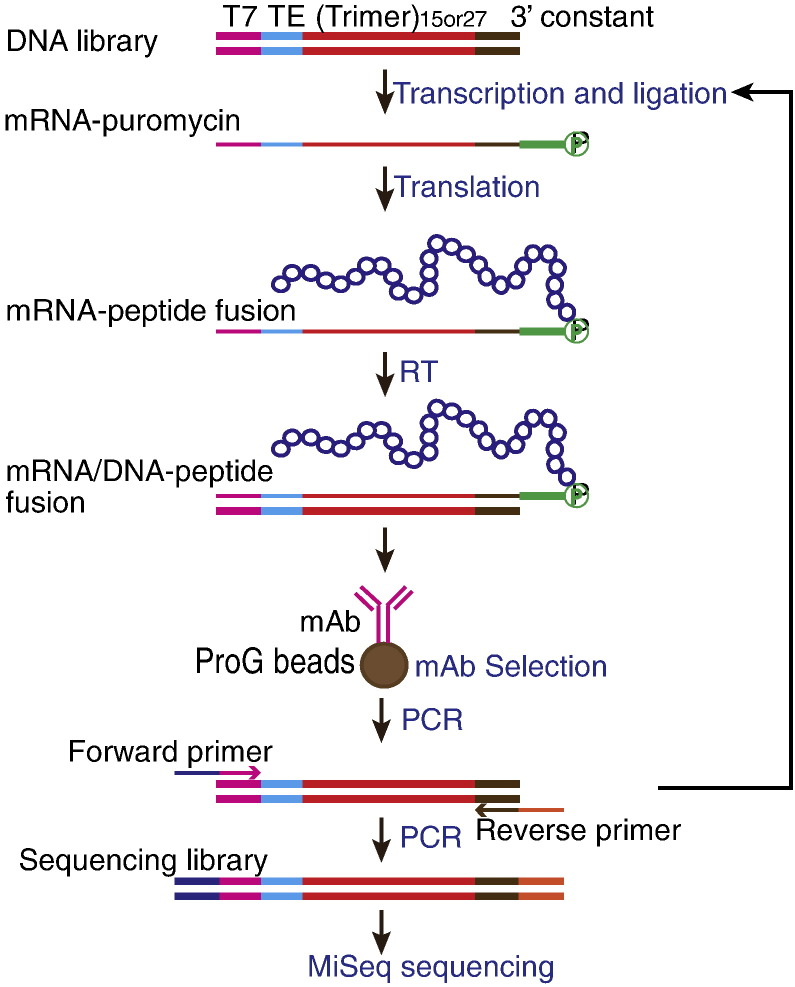
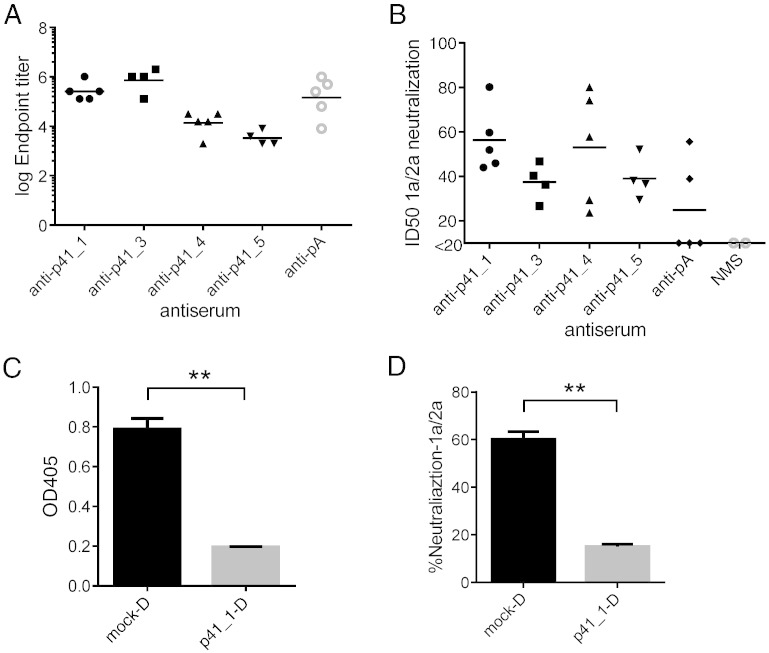
Vaccine reverse engineering is emerging as an important approach to vaccine antigen identification, recently focusing mainly on structural characterization of interactions between neutralizing monoclonal antibodies (mAbs) and antigens. Using mAbs that bind unknown antigen structures, we sought to probe the intrinsic features of antibody antigen-binding sites with a high complexity peptide library, aiming to identify conformationally optimized mimotope antigens that capture mAb-specific epitopes. Using a high throughput sequencing-enhanced messenger ribonucleic acid (mRNA) display approach, we identified high affinity binding peptides for a hepatitis C virus neutralizing mAb. Immunization with the selected peptides induced neutralizing activity similar to that of the original mAb. Antibodies elicited by the most commonly selected peptides were predominantly against specific epitopes. Thus, using mRNA display to interrogate mAbs permits high resolution identification of functional peptide antigens that direct targeted immune responses, supporting its use in vaccine reverse engineering for pathogens against which potent neutralizing mAbs are available.
We used a large number of randomly produced small proteins ("peptides") to identify peptides containing specific protein sequences that bind efficiently to an antibody that can prevent hepatitis C virus infection in cell culture. After the identified peptides were injected into mice, the mice produced their own antibodies with characteristics similar to the original antibody. This approach can provide previously unavailable information about antibody binding and could also be useful in developing new vaccines.
疫苗反向工程作为一种鉴定疫苗抗原的重要方法,最近主要集中在中和单克隆抗体 (mAb) 与抗原之间相互作用的结构特征上。我们使用与未知抗原结构结合的 mAb,试图用高复杂度的肽文库探测抗体抗原结合部位的固有特征,旨在识别构象优化的模拟抗原,以捕获 mAb 特异性表位。我们采用高通量测序增强的信使核糖核酸 (mRNA) 展示方法,鉴定了针对丙型肝炎病毒中和 mAb 的高亲和力结合肽。用选定的肽免疫可诱导与原始 mAb 相似的中和活性。最常选择的肽诱导的抗体主要针对特定的表位。因此,使用 mRNA 展示来研究 mAb 可以高分辨率鉴定功能肽抗原,指导靶向免疫反应,支持其在针对具有有效中和 mAb 的病原体的疫苗反向工程中的应用。
我们使用大量随机产生的小蛋白(“肽”)来鉴定含有可与可有效预防细胞培养中丙型肝炎病毒感染的抗体结合的特定蛋白质序列的肽。鉴定出的肽被注入小鼠后,小鼠产生了与原始抗体相似特征的自身抗体。这种方法可以提供以前无法获得的关于抗体结合的信息,也可能对开发新疫苗有用。