Polanski R, Vincent J, Polanska U M, Petreus T, Tang E K Y
AstraZeneca, Oncology Bioscience iMed, Alderley Park, Macclesfield, UK.
Cell Death Dis. 2015 Oct 1;6(10):e1893. doi: 10.1038/cddis.2015.234.
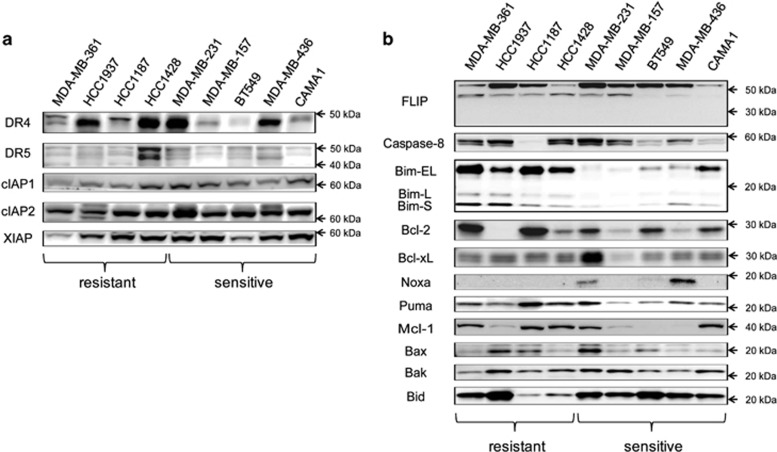
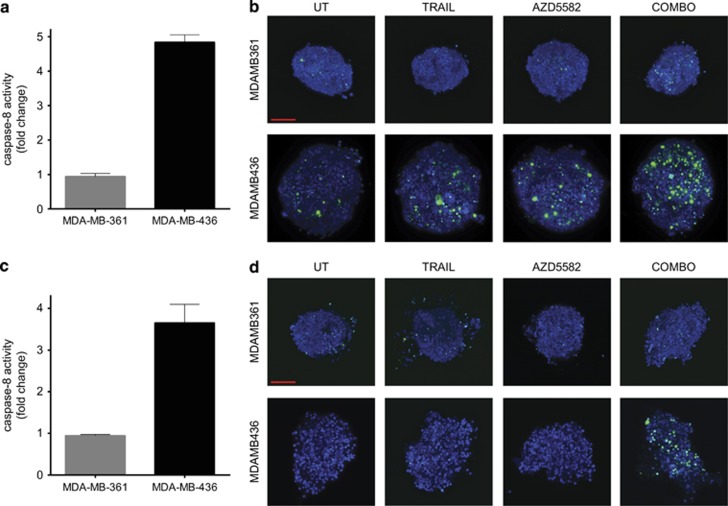
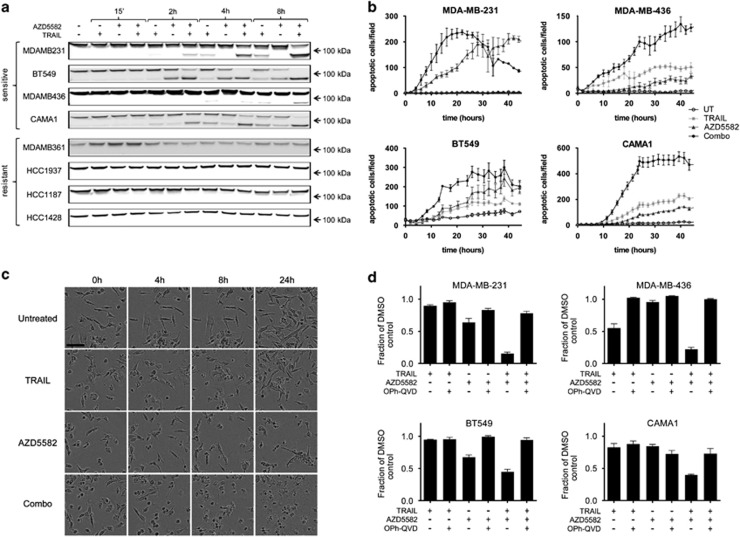
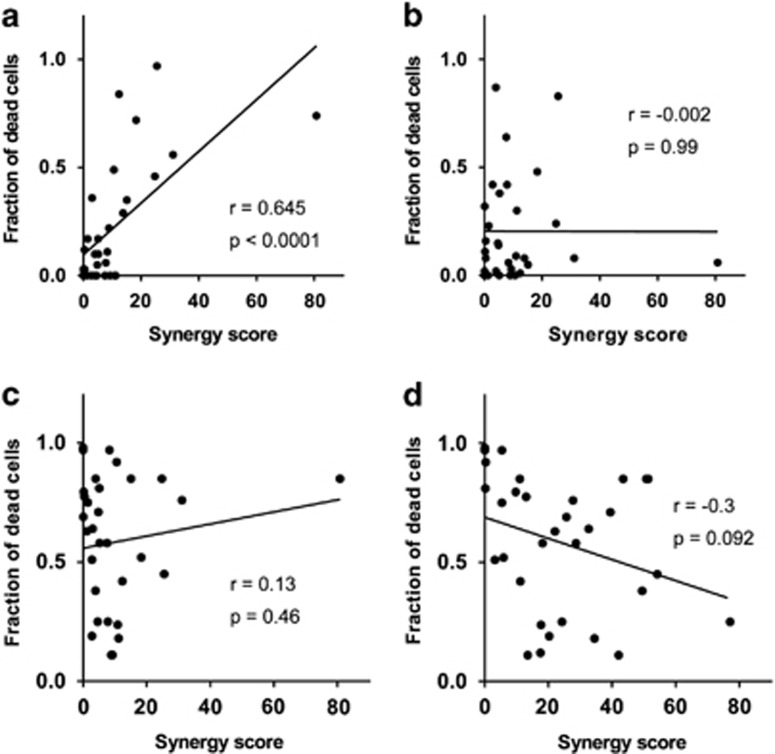
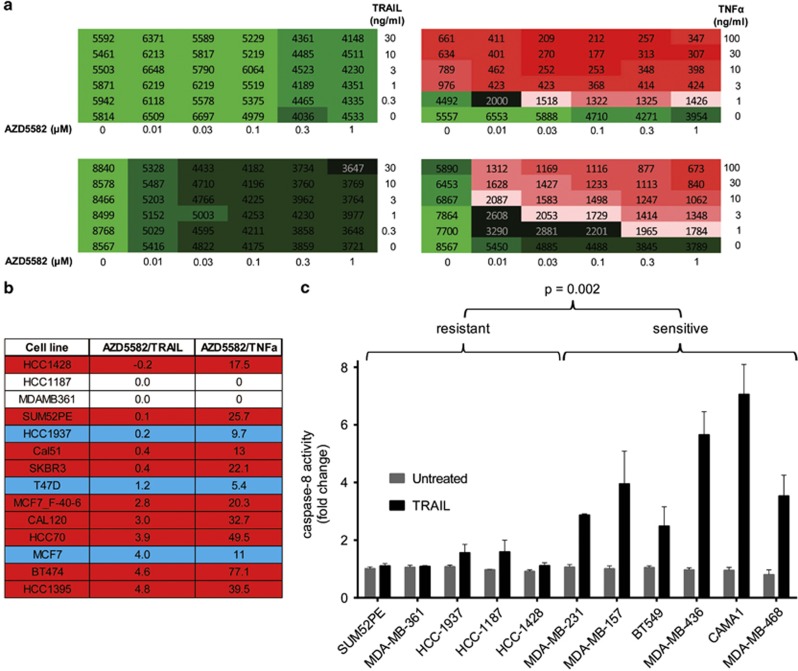
The discovery of cancer cell-selective tumour necrosis factor-related apoptosis inducing ligand (TRAIL)-induced apoptosis generated broad excitement and development of TRAIL receptor agonists (TRA) as potential cancer therapy. Studies demonstrating the synergistic combination effect of SMAC mimetics and TRA further suggested potentially effective treatment in multiple tumour settings. However, predictive biomarkers allowing identification of patients that could respond to treatment are lacking. Here, we described a high throughput combination screen conducted across a panel of 31 breast cancer cell lines in which we observed highly synergistic activity between TRAIL and the inhibitors of apoptosis proteins (IAP) inhibitor (IAPi) AZD5582 in ~30% of cell lines. We detected no difference in the expression levels of the IAPi or TRAIL-targeted proteins or common modulators of the apoptotic pathway between the sensitive and resistant cell lines. Synergistic combination effect of AZD5582 and TRAIL correlated with sensitivity to TRAIL, but not to AZD5582 as a single agent. TRAIL treatment led to significantly greater activity of Caspase-8 in sensitive than in resistant cell lines (P=0.002). The majority (12/14) of AZD5582+TRAIL-resistant cell lines retained a functional cell death pathway, as they were sensitive to AZD5582+TNFα combination treatment. This suggested that failure of the TRAIL receptor complex to transduce the death signal to Caspase-8 underlies AZD5582+TRAIL resistance. We developed a 3D spheroid assay and demonstrated its suitability for the ex vivo analysis of the Caspase-8 activity as a predictive biomarker. Altogether, our study demonstrated a link between the functionality of the TRAIL receptor pathway and the synergistic activity of the IAPi+TRA combination treatment. It also provided a rationale for development of the Caspase-8 activity assay as a functional predictive biomarker that could allow better prediction of the response to IAPi+TRA-based therapies than the analysis of expression levels of protein biomarkers.
癌细胞选择性肿瘤坏死因子相关凋亡诱导配体(TRAIL)诱导凋亡的发现引发了广泛关注,TRAIL受体激动剂(TRA)作为潜在的癌症治疗方法也得到了进一步发展。研究表明,SMAC模拟物与TRA具有协同联合效应,这进一步提示了其在多种肿瘤环境中可能具有有效的治疗作用。然而,目前缺乏能够识别可能对治疗有反应的患者的预测性生物标志物。在此,我们描述了一项针对31种乳腺癌细胞系进行的高通量联合筛选,在其中约30%的细胞系中,我们观察到TRAIL与凋亡蛋白(IAP)抑制剂(IAPi)AZD5582之间具有高度协同活性。我们检测到敏感细胞系和耐药细胞系之间,IAPi或TRAIL靶向蛋白的表达水平以及凋亡途径的常见调节因子并无差异。AZD5582与TRAIL的协同联合效应与对TRAIL的敏感性相关,但与AZD5582单药的敏感性无关。TRAIL处理后,敏感细胞系中Caspase-8的活性显著高于耐药细胞系(P = 0.002)。大多数(12/14)对AZD5582 + TRAIL耐药的细胞系保留了功能性细胞死亡途径,因为它们对AZD5582 + TNFα联合治疗敏感。这表明TRAIL受体复合物无法将死亡信号转导至Caspase-8是AZD5582 + TRAIL耐药的基础。我们开发了一种三维球体检测方法,并证明其适用于体外分析Caspase-8活性作为预测性生物标志物。总之,我们的研究证明了TRAIL受体途径的功能与IAPi + TRA联合治疗的协同活性之间存在联系。它还为开发Caspase-8活性检测作为功能性预测生物标志物提供了理论依据,相较于分析蛋白质生物标志物的表达水平,该检测方法能够更好地预测基于IAPi + TRA的治疗反应。