Behnaz Ebadian, Ramin Mosharraf, Abbasi Samaneh, Pouya Memar Ardestani, Mahmood Farzin
Dental Implant Research Center, Department of Prosthodontics, School of Dentistry, Isfahan University of Medical Sciences, Isfahan, Iran.
Dental Materialt Research Center and Department of Prosthodontics, School of Dentistry, Isfahan University of Medical Sciences, Isfahan, Iran.
Eur J Dent. 2015 Jul-Sep;9(3):311-318. doi: 10.4103/1305-7456.163235.
The aim of this study was to investigate the influence of implant crown splinting and the use of angulated abutment on stress distribution in implant body and surrounding bone by three-dimensional finite element analysis.
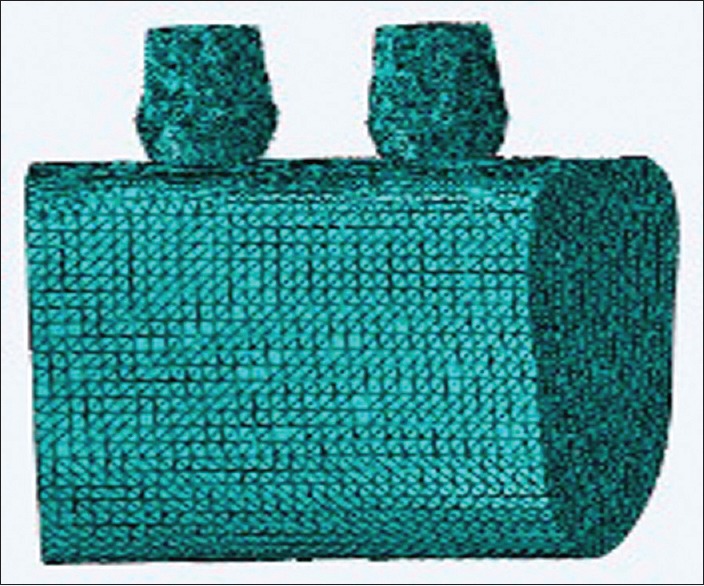
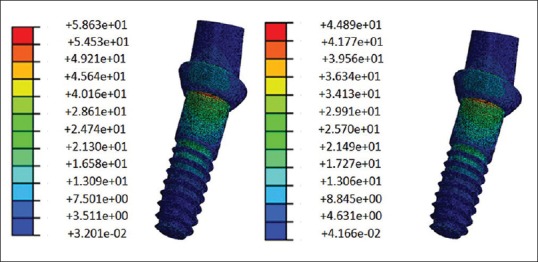
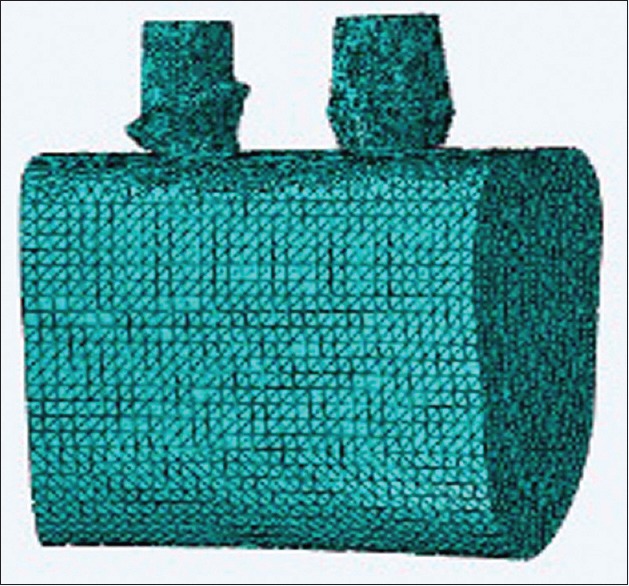
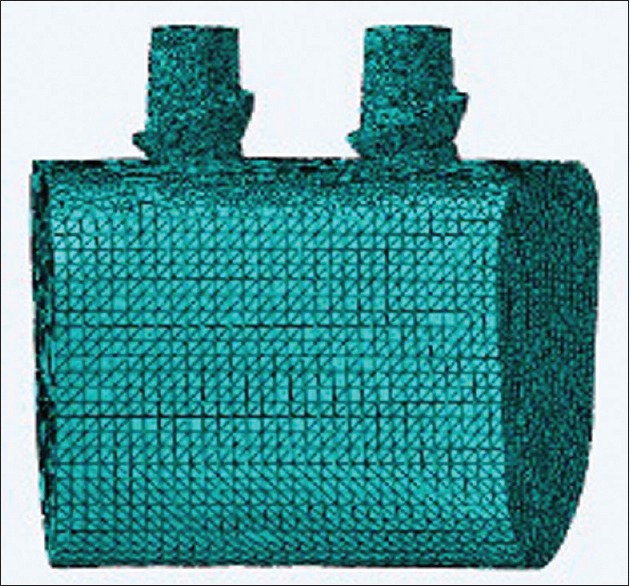
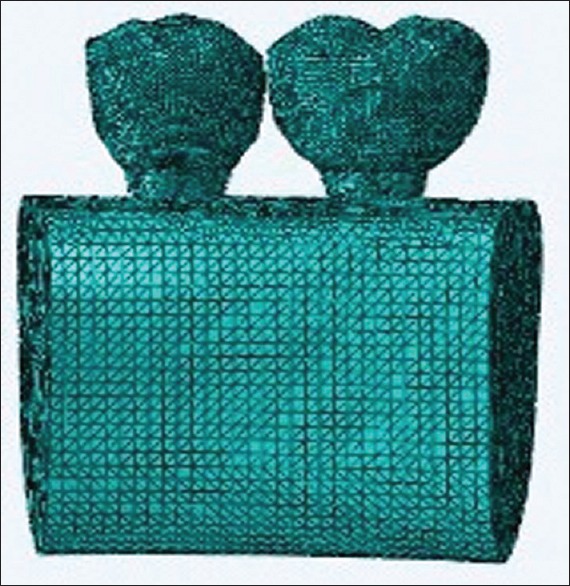
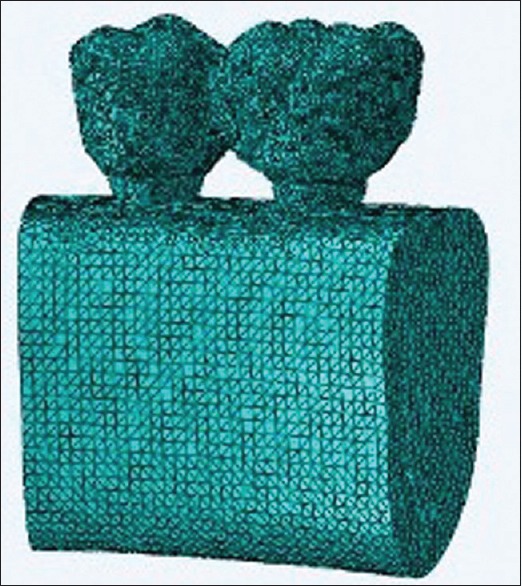
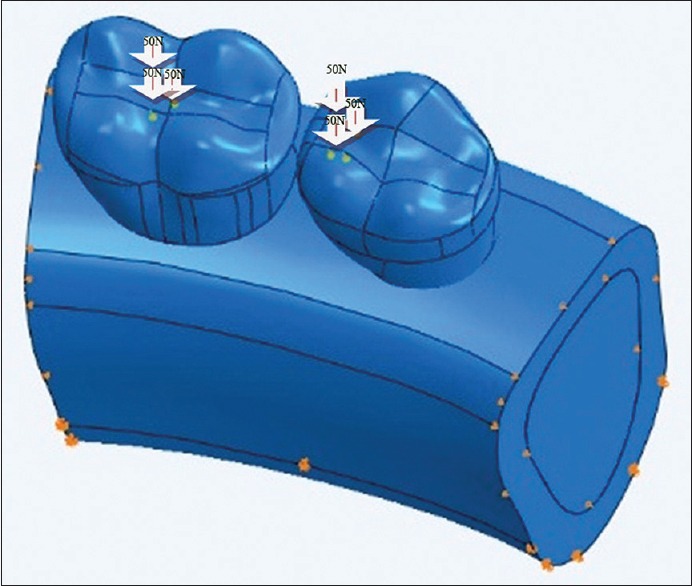
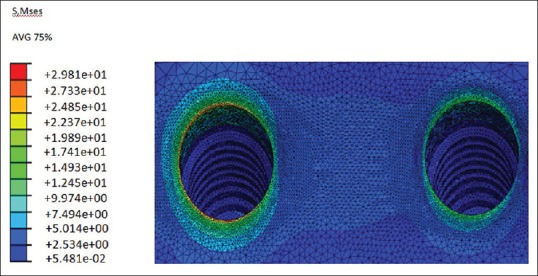
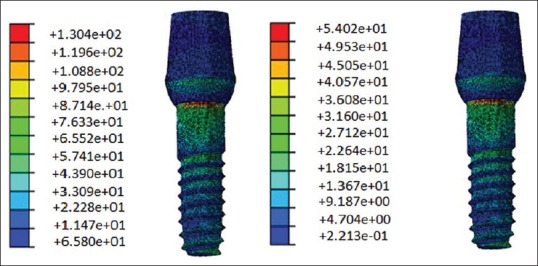
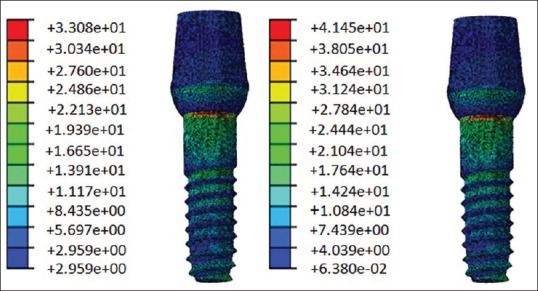
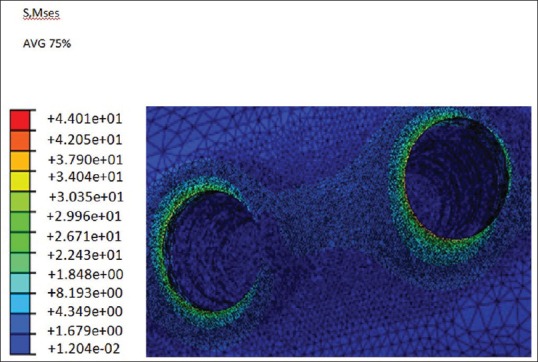
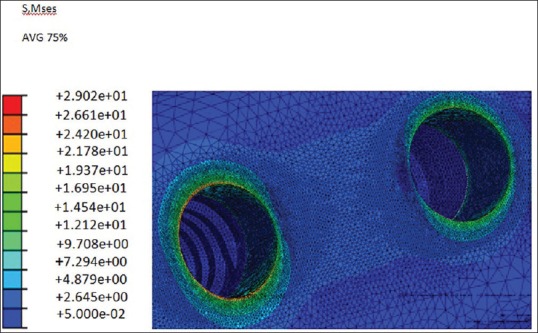
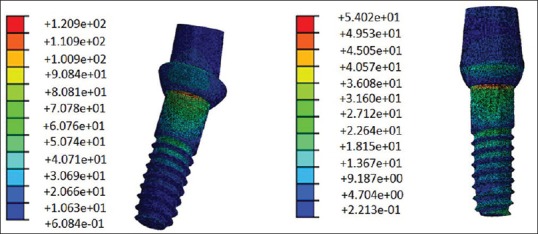
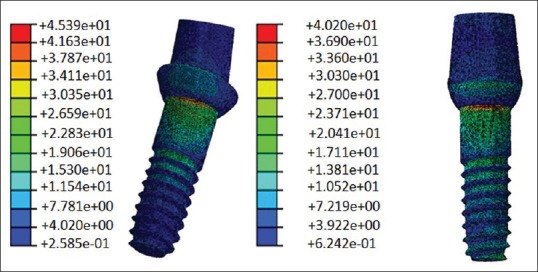
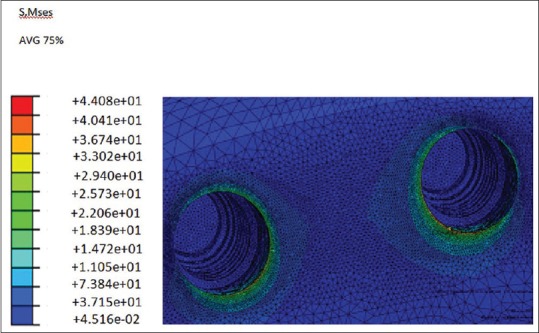
For this study, three models with two implants at the site of mandibular right second premolar and first molar were designed (1): Both implants, parallel to adjacent teeth, with straight abutments (2): Anterior implant with 15 mesial angulations and posterior implant were placed parallel to adjacent tooth, (3): Both implants with 15 mesial angulations and parallel to each other with 15° angulated abutments. Restorations were modeled in two shapes (splinted and nonsplinted). Loading in tripod manner as each point 50 N and totally 300 N was applied. Stress distribution in relation to splinting or nonsplinting restorations and angulations was done with ABAQUS6.13.
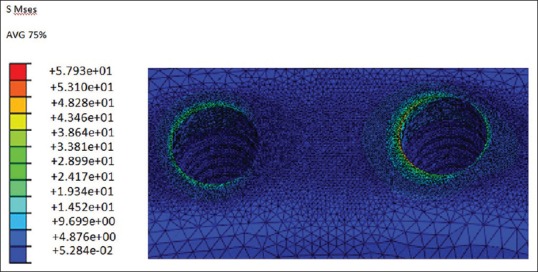
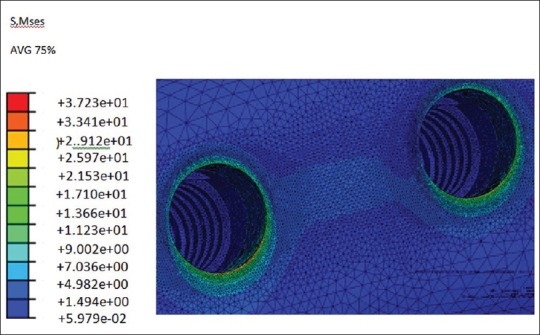
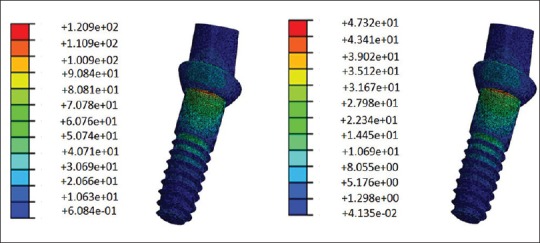
Splinting the restorations in all situations, led to lower stresses in all implant bodies, cortical bone and spongy bone except for the spongy bone around angulated first molar. Angulated implant in nonsplinted restoration cause lower stresses in implant body and bone but in splinted models more stresses were seen in implant body in comparison with straight abutment (model 2). Stresses in nonsplinted and splinted restorations in cortical bone of angulated molar region were more than what was observed in straight molar implant (model 3).
Implant restorations splinting lead to a better distribution of stresses in implant bodies and bone in comparison with nonsplinted restorations, especially when the load is applied off center to implant body. Angulations of implant can reduce stresses when the application of the load is in the same direction as the implant angulation.
本研究旨在通过三维有限元分析,探讨种植体冠桥联冠及使用角度基台对种植体及其周围骨组织应力分布的影响。
本研究设计了在下颌右侧第二前磨牙和第一磨牙部位植入两颗种植体的三种模型(1):两颗种植体均与邻牙平行,采用直基台;(2):前牙种植体近中倾斜15°,后牙种植体与邻牙平行;(3):两颗种植体均近中倾斜15°,并相互平行,采用15°角度基台。修复体模拟为两种形式(联冠和非联冠)。采用三点加载方式,每个加载点施加50 N的力,总加载力为300 N。使用ABAQUS6.13软件分析联冠或非联冠修复体及种植体倾斜角度对应力分布的影响。
在所有情况下,联冠修复均能降低所有种植体、皮质骨和松质骨中的应力,但倾斜的第一磨牙周围的松质骨除外。非联冠修复体中的倾斜种植体在种植体和骨组织中产生的应力较低,但在联冠模型中,与直基台相比,种植体中的应力更大(模型2)。倾斜磨牙区域皮质骨中非联冠和联冠修复体的应力均高于直磨牙种植体(模型3)。
与非联冠修复相比,种植体修复联冠可使种植体及其周围骨组织的应力分布更均匀,尤其是当载荷偏心作用于种植体时。当载荷方向与种植体倾斜方向一致时,种植体倾斜可降低应力。