Kang Jia, Chong Stephen Jun Fei, Ooi Vignette Zi Qi, Vali Shireen, Kumar Ansu, Kapoor Shweta, Abbasi Taher, Hirpara Jayshree L, Loh Thomas, Goh Boon Cher, Pervaiz Shazib
Department of Physiology, Yong Loo Lin School of Medicine, National University of Singapore, Singapore, Singapore.
Cellworks Group Inc., San Jose, CA, USA.
Oncotarget. 2015 Oct 27;6(33):34191-205. doi: 10.18632/oncotarget.5763.
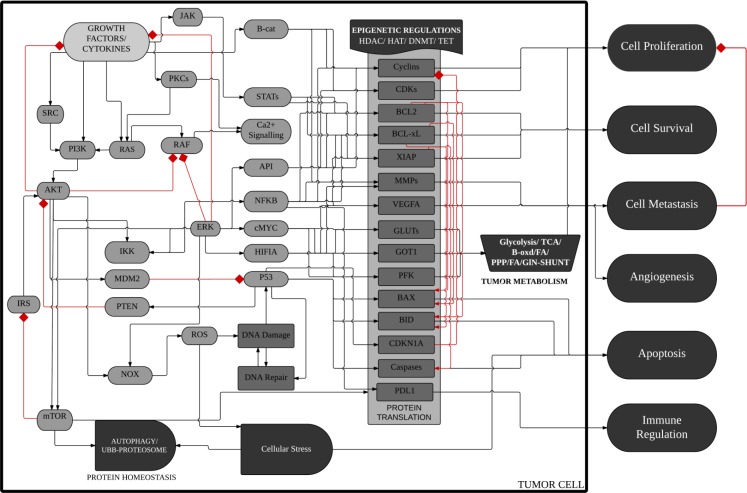
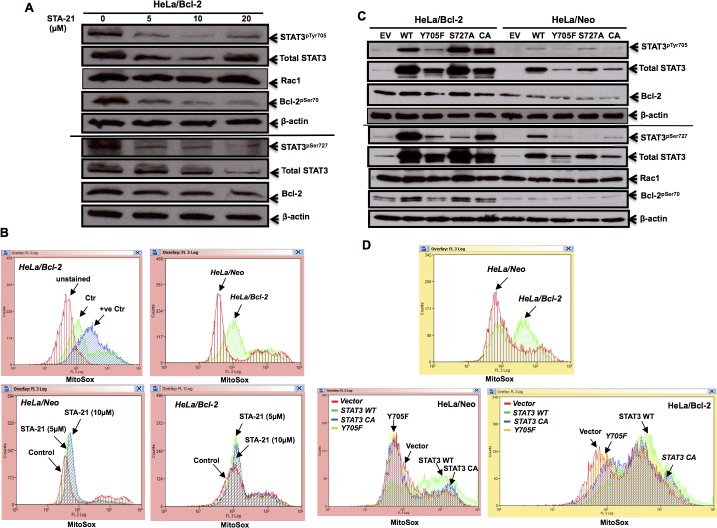
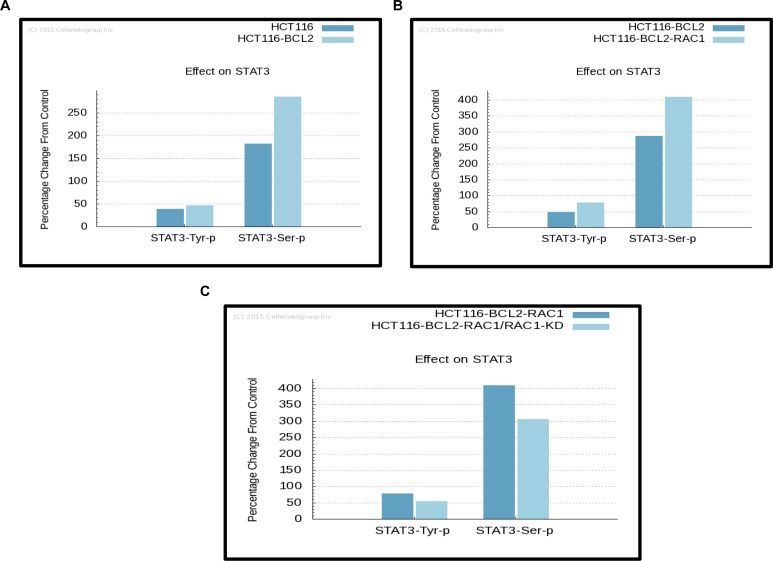
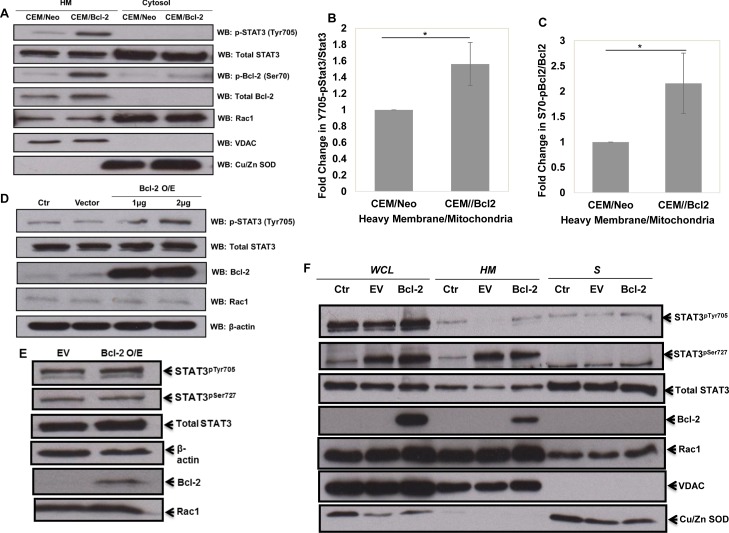
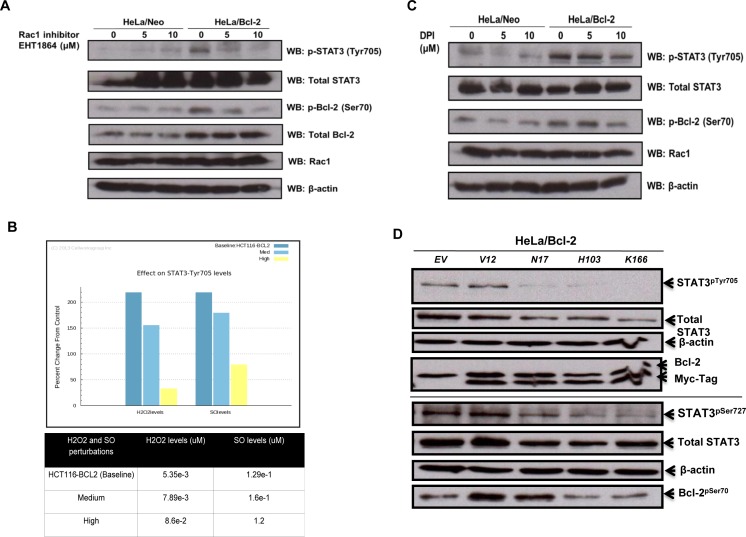
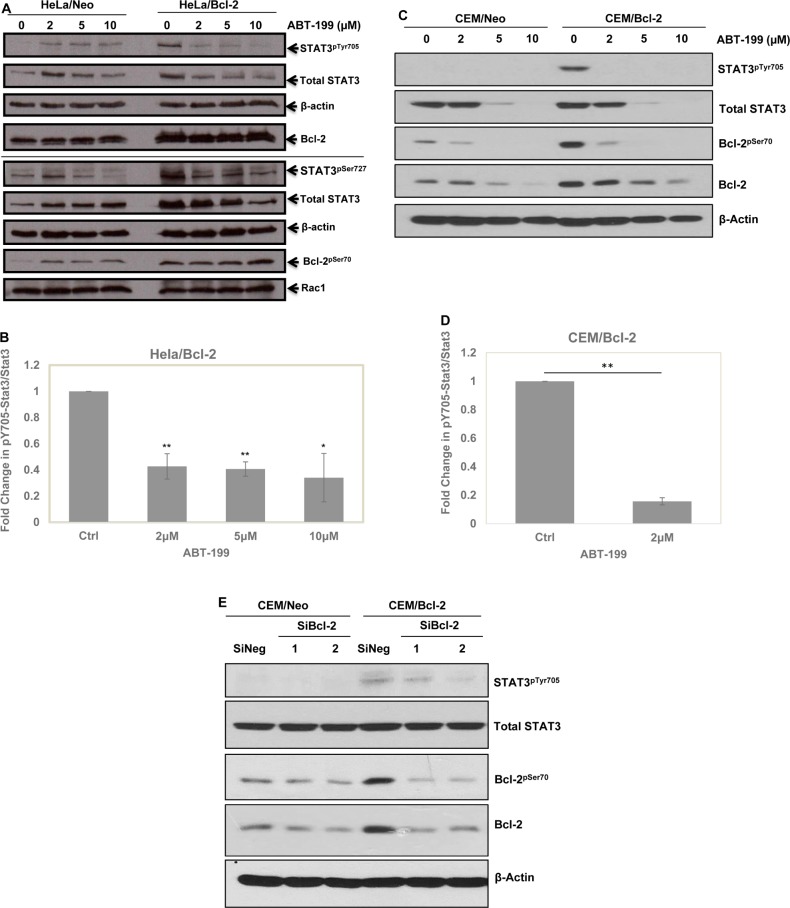
We recently reported a novel interaction between Bcl-2 and Rac1 and linked that to the ability of Bcl-2 to induce a pro-oxidant state in cancer cells. To gain further insight into the functional relevance of this interaction, we utilized computer simulation based on the protein pathway dynamic network created by Cellworks Group Inc. STAT3 was identified among targets that positively correlated with Rac1 and/or Bcl-2 expression levels. Validating this, the activation level of STAT3, as marked by p-Tyr705, particularly in the mitochondria, was significantly higher in Bcl-2-overexpressing cancer cells. Bcl-2-induced STAT3 activation was a function of GTP-loaded Rac1 and NADPH oxidase (Nox)-dependent increase in intracellular superoxide (O2•-). Furthermore, ABT199, a BH-3 specific inhibitor of Bcl-2, as well as silencing of Bcl-2 blocked STAT3 phosphorylation. Interestingly, while inhibiting intracellular O2•- blocked STAT3 phosphorylation, transient overexpression of wild type STAT3 resulted in a significant increase in mitochondrial O2•- production, which was rescued by the functional mutants of STAT3 (Y705F). Notably, a strong correlation between the expression and/or phosphorylation of STAT3 and Bcl-2 was observed in primary tissues derived from patients with different sub-sets of B cell lymphoma. These data demonstrate the presence of a functional crosstalk between Bcl-2, Rac1 and activated STAT3 in promoting a permissive redox milieu for cell survival. Results also highlight the potential utility of a signature involving Bcl-2 overexpression, Rac1 activation and STAT3 phosphorylation for stratifying clinical lymphomas based on disease severity and chemoresistance.
我们最近报道了Bcl-2与Rac1之间一种新的相互作用,并将其与Bcl-2在癌细胞中诱导促氧化状态的能力联系起来。为了进一步深入了解这种相互作用的功能相关性,我们利用了基于Cellworks Group Inc.创建的蛋白质途径动态网络的计算机模拟。在与Rac1和/或Bcl-2表达水平呈正相关的靶点中鉴定出了STAT3。经证实,以p-Tyr705为标志的STAT3激活水平,特别是在线粒体中,在过表达Bcl-2的癌细胞中显著更高。Bcl-2诱导的STAT3激活是GTP负载的Rac1和NADPH氧化酶(Nox)依赖性细胞内超氧化物(O2•-)增加的结果。此外,Bcl-2的BH-3特异性抑制剂ABT199以及Bcl-2的沉默均阻断了STAT3的磷酸化。有趣的是,虽然抑制细胞内O2•-可阻断STAT3磷酸化,但野生型STAT3的瞬时过表达导致线粒体O2•-产生显著增加,而STAT3的功能突变体(Y705F)可挽救这一现象。值得注意的是,在来自不同亚型B细胞淋巴瘤患者原发性组织中观察到STAT3与Bcl-2的表达和/或磷酸化之间存在强烈相关性。这些数据表明,Bcl-2、Rac1和活化的STAT3之间存在功能性串扰,以促进有利于细胞存活的氧化还原环境。结果还突出了涉及Bcl-2过表达、Rac1激活和STAT3磷酸化的特征在根据疾病严重程度和化疗耐药性对临床淋巴瘤进行分层方面的潜在用途。