Peters V N, Tumkur T U, Zhu G, Noginov M A
Center for Materials Research, Norfolk State University, Norfolk, VA 23504.
Sci Rep. 2015 Oct 5;5:14620. doi: 10.1038/srep14620.
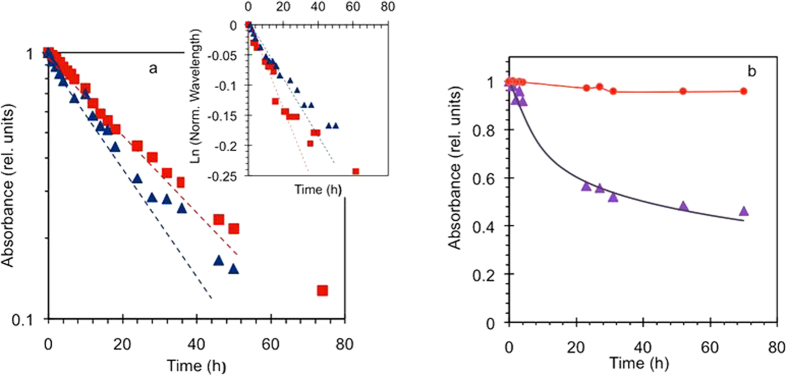
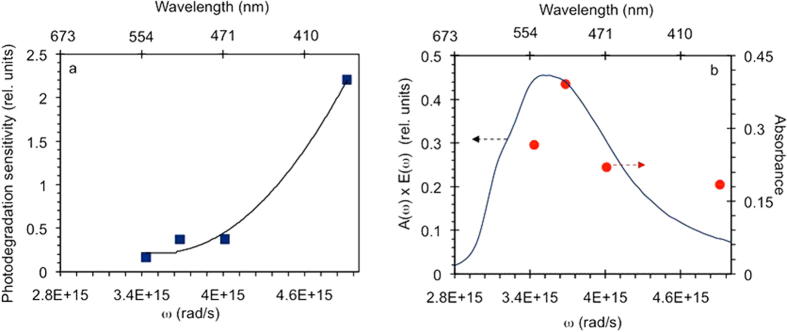
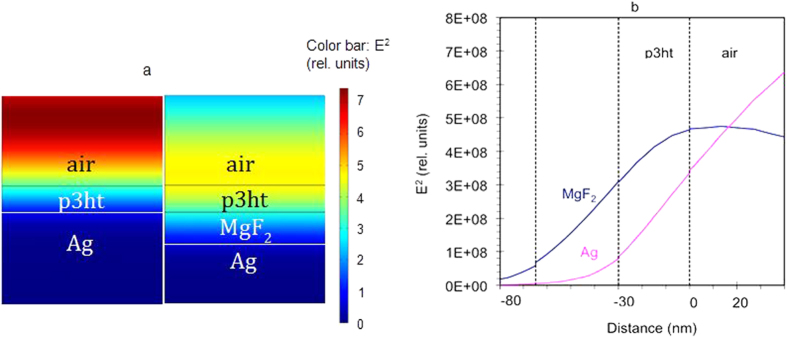
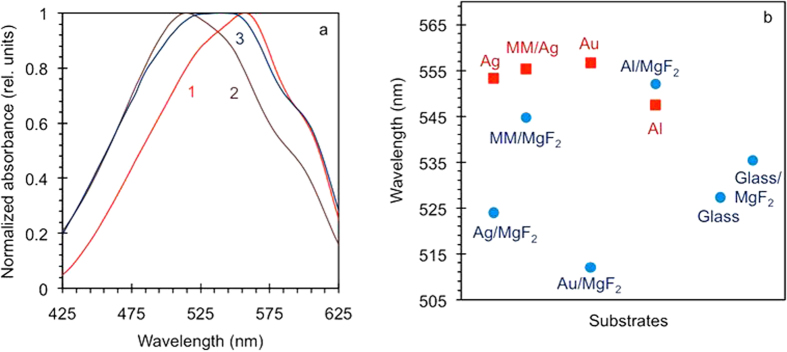
Proximity to metallic surfaces, plasmonic structures, cavities and other inhomogeneous dielectric environments is known to control spontaneous emission, energy transfer, scattering, and many other phenomena of practical importance. The aim of the present study was to demonstrate that, in spirit of the Marcus theory, the rates of chemical reactions can, too, be influenced by nonlocal dielectric environments, such as metallic films and metal/dielectric bilayer or multilayer structures. We have experimentally shown that metallic, composite metal/dielectric substrates can, indeed, control ordering as well as photodegradation of thin poly-3-hexylthiophene (p3ht) films. In many particular experiments, p3ht films were separated from metal by a dielectric spacer, excluding conventional catalysis facilitated by metals and making modification of the nonlocal dielectric environment a plausible explanation for the observed phenomena. This first step toward understanding of a complex relationship between chemical reactions and nonlocal dielectric environments is to be followed by the theory development and a broader scope of thorough experimental studies.
众所周知,靠近金属表面、等离子体结构、腔体及其他非均匀介电环境能够控制自发辐射、能量转移、散射以及许多其他具有实际重要性的现象。本研究的目的在于证明,根据马库斯理论的精神,化学反应速率同样会受到非局部介电环境的影响,比如金属薄膜以及金属/介电双层或多层结构。我们通过实验表明,金属、复合金属/介电基底确实能够控制聚3-己基噻吩(p3ht)薄膜的有序性以及光降解。在许多具体实验中,p3ht薄膜通过介电间隔层与金属隔开,排除了金属促进的传统催化作用,使得非局部介电环境的改变成为对所观察到的现象的一种合理的解释。在理解化学反应与非局部介电环境之间复杂关系的这第一步之后,将进行理论发展以及更广泛深入的实验研究。