Payne S N, Maher M E, Tran N H, Van De Hey D R, Foley T M, Yueh A E, Leystra A A, Pasch C A, Jeffrey J J, Clipson L, Matkowskyj K A, Deming D A
University of Wisconsin Carbone Cancer Center, Madison, WI, USA.
Division of Hematology and Oncology, Department of Medicine, University of Wisconsin, Madison, WI, USA.
Oncogenesis. 2015 Oct 5;4(10):e169. doi: 10.1038/oncsis.2015.28.
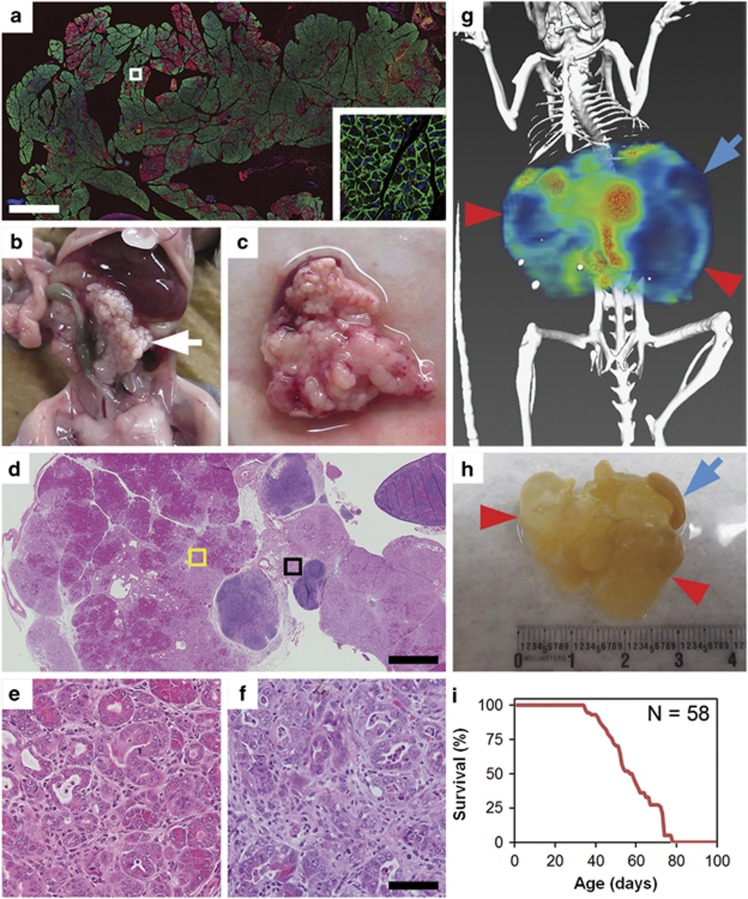
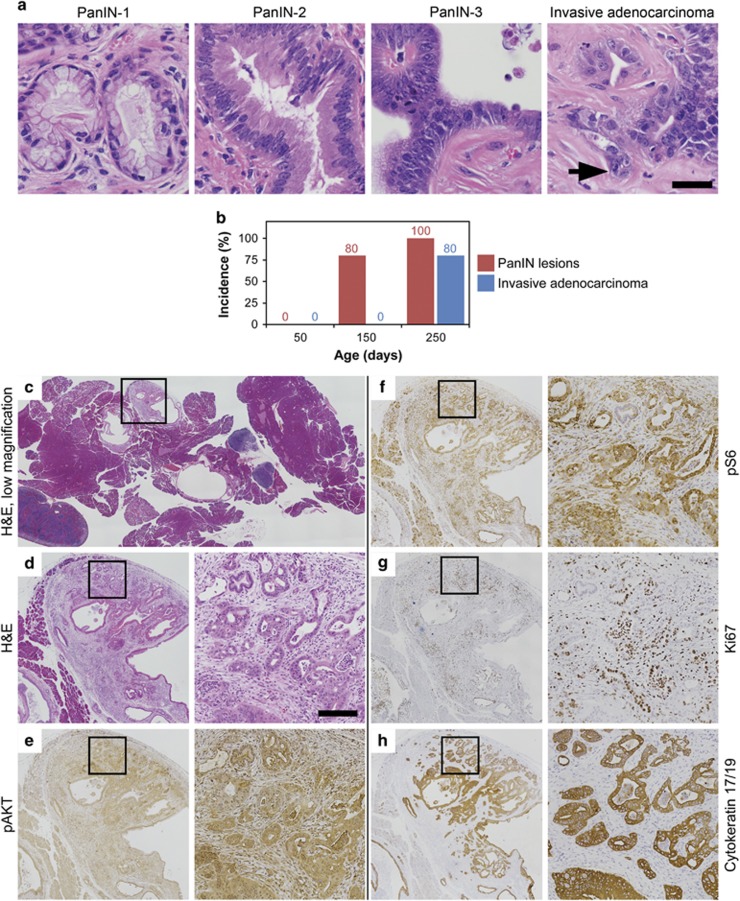
Aberrations in the phosphoinositide 3-kinase (PI3K) signaling pathway have a key role in the pathogenesis of numerous cancers by altering cell growth, metabolism, proliferation and apoptosis. Interest in targeting the PI3K signaling cascade continues, as new agents are being clinically evaluated. PIK3CA mutations result in a constitutively active PI3K and are present in a subset of pancreatic cancers. Here we examine mutant PIK3CA-mediated pancreatic tumorigenesis and the response of PIK3CA mutant pancreatic cancers to dual PI3K/mammalian target of rapamycin (mTOR) inhibition. Two murine models were generated expressing a constitutively active PI3K within the pancreas. An increase in acinar-to-ductal metaplasia and pancreatic intraepithelial neoplasms (PanINs) was identified. In one model these lesions were detected as early as 10 days of age. Invasive pancreatic ductal adenocarcinoma developed in these mice as early as 20 days of age. These cancers were highly sensitive to treatment with dual PI3K/mTOR inhibition. In the second model, PanINs and invasive cancer develop with a greater latency owing to a lesser degree of PI3K pathway activation in this murine model. In addition to PI3K pathway activation, increased ERK1/2 signaling is common in human pancreatic cancers. Phosphorylation of ERK1/2 was also investigated in these models. Phosphorylation of ERK1/2 is demonstrated in the pre-neoplastic lesions and invasive cancers. This activation of ERK1/2 is diminished with dual PI3K/mTOR inhibition. In summary, PIK3CA mutations can initiate pancreatic tumorigenesis and these cancers are particularly sensitive to dual PI3K/mTOR inhibition. Future studies of PI3K pathway inhibitors for patients with PIK3CA mutant pancreatic cancers are warranted.
磷酸肌醇3激酶(PI3K)信号通路的异常通过改变细胞生长、代谢、增殖和凋亡,在多种癌症的发病机制中起关键作用。随着新药物正在进行临床评估,针对PI3K信号级联的研究仍在继续。PIK3CA突变导致PI3K持续激活,并存在于一部分胰腺癌中。在此,我们研究了突变型PIK3CA介导的胰腺肿瘤发生以及PIK3CA突变型胰腺癌对PI3K/哺乳动物雷帕霉素靶蛋白(mTOR)双重抑制的反应。构建了两种在胰腺中表达持续激活的PI3K的小鼠模型。发现腺泡-导管化生和胰腺上皮内瘤变(PanINs)有所增加。在一种模型中,这些病变早在10日龄时就被检测到。这些小鼠早在20日龄时就发生了侵袭性胰腺导管腺癌。这些癌症对PI3K/mTOR双重抑制治疗高度敏感。在第二种模型中,由于该小鼠模型中PI3K信号通路激活程度较低,PanINs和侵袭性癌症的发生潜伏期更长。除了PI3K信号通路激活外,ERK1/2信号增加在人类胰腺癌中也很常见。在这些模型中也研究了ERK1/2的磷酸化。在肿瘤前病变和侵袭性癌症中证实了ERK1/2的磷酸化。PI3K/mTOR双重抑制可减弱ERK1/2的这种激活。总之,PIK3CA突变可引发胰腺肿瘤发生,并且这些癌症对PI3K/mTOR双重抑制特别敏感。有必要对PIK3CA突变型胰腺癌患者进行PI3K信号通路抑制剂的进一步研究。