Fink Stephen P, Myeroff Lois L, Kariv Revital, Platzer Petra, Xin Baozhong, Mikkola Debra, Lawrence Earl, Morris Nathan, Nosrati Arman, Willson James K V, Willis Joseph, Veigl Martina, Barnholtz-Sloan Jill S, Wang Zhenghe, Markowitz Sanford D
Department of Medicine, Case Western Reserve University and Case Medical Center, Cleveland, OH, USA.
Case Comprehensive Cancer Center, Case Western Reserve University and Case Medical Center, Cleveland, OH, USA.
Oncotarget. 2015 Oct 13;6(31):30500-15. doi: 10.18632/oncotarget.5921.
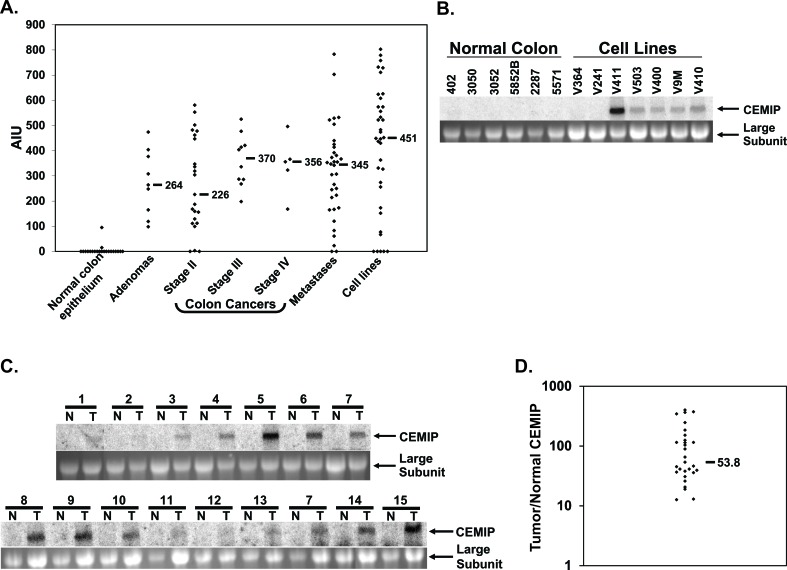
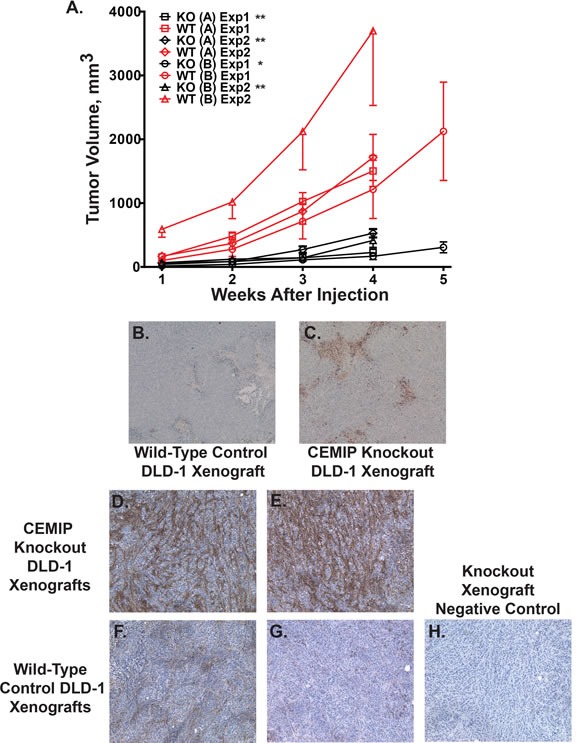
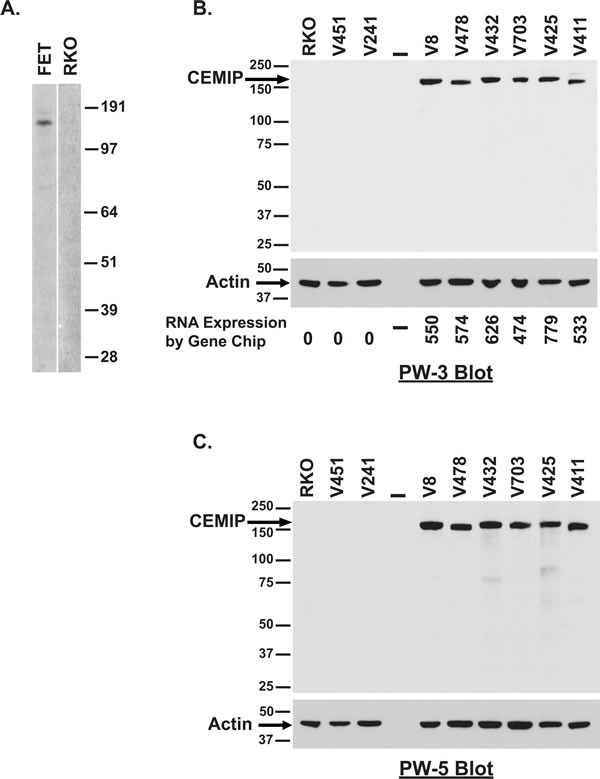
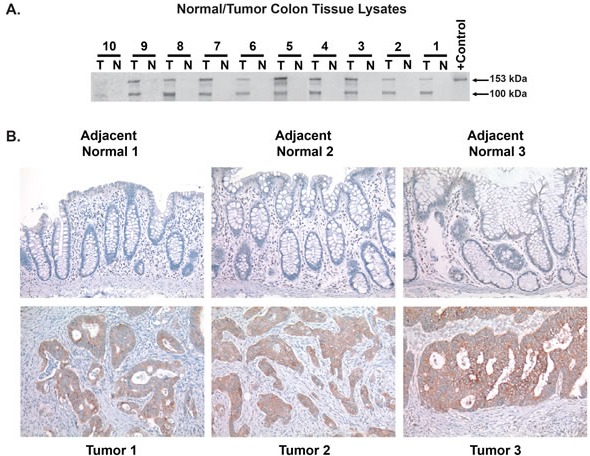
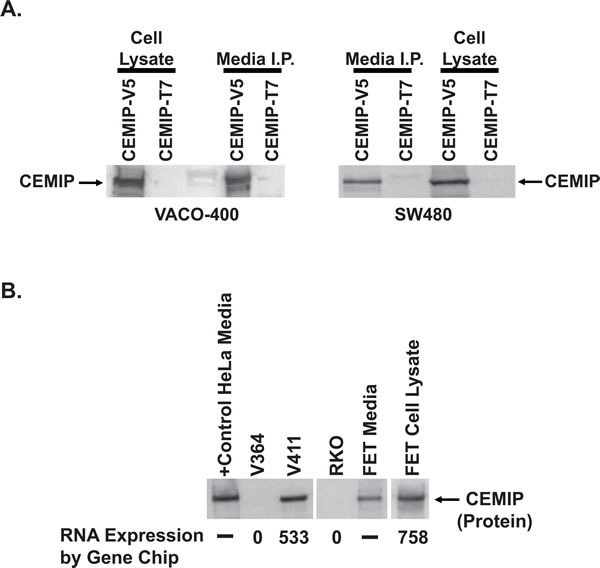
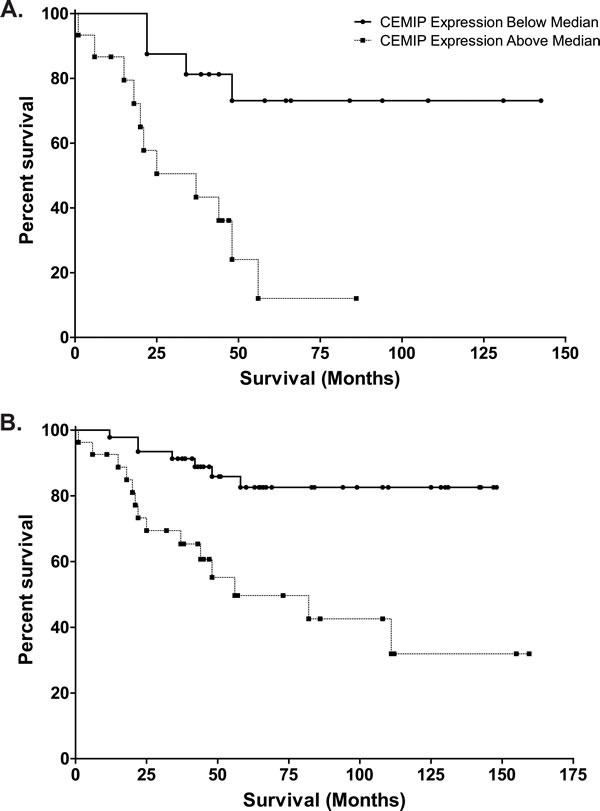
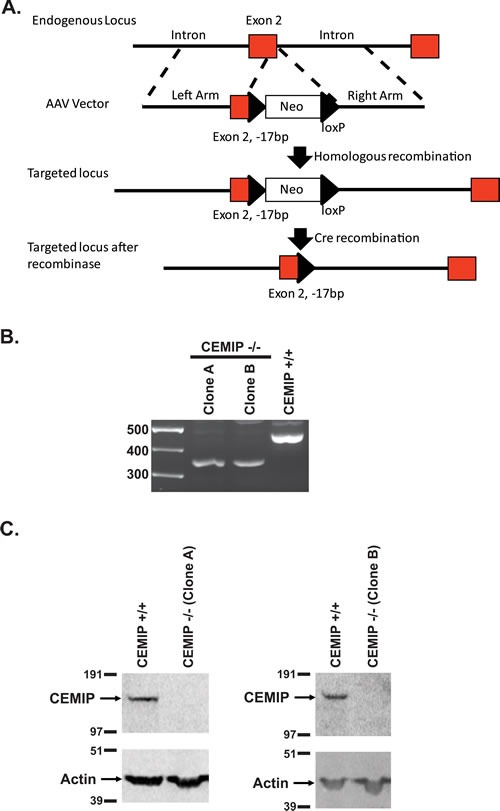
Genes induced in colon cancer provide novel candidate biomarkers of tumor phenotype and aggressiveness. We originally identified KIAA1199 (now officially called CEMIP) as a transcript highly induced in colon cancer: initially designating the transcript as Colon Cancer Secreted Protein 1. We molecularly characterized CEMIP expression both at the mRNA and protein level and found it is a secreted protein induced an average of 54-fold in colon cancer. Knockout of CEMIPreduced the ability of human colon cancer cells to form xenograft tumors in athymic mice. Tumors that did grow had increased deposition of hyaluronan, linking CEMIP participation in hyaluronan degradation to the modulation of tumor phenotype. We find CEMIP mRNA overexpression correlates with poorer patient survival. In stage III only (n = 31) or in combined stage II plus stage III colon cancer cases (n = 73), 5-year overall survival was significantly better (p = 0.004 and p = 0.0003, respectively) among patients with low CEMIP expressing tumors than those with high CEMIP expressing tumors. These results demonstrate that CEMIP directly facilitates colon tumor growth, and high CEMIP expression correlates with poor outcome in stage III and in stages II+III combined cohorts. We present CEMIP as a candidate prognostic marker for colon cancer and a potential therapeutic target.
在结肠癌中诱导表达的基因可提供肿瘤表型和侵袭性的新型候选生物标志物。我们最初将KIAA1199(现正式命名为CEMIP)鉴定为在结肠癌中高度诱导表达的转录本:最初将该转录本命名为结肠癌分泌蛋白1。我们在mRNA和蛋白质水平对CEMIP的表达进行了分子特征分析,发现它是一种分泌蛋白,在结肠癌中平均诱导表达54倍。敲除CEMIP可降低人结肠癌细胞在无胸腺小鼠中形成异种移植肿瘤的能力。生长出的肿瘤中透明质酸沉积增加,这表明CEMIP参与透明质酸降解与肿瘤表型的调节有关。我们发现CEMIP mRNA的过表达与患者较差的生存率相关。仅在III期(n = 31)或II期加III期结肠癌联合病例(n = 73)中,CEMIP低表达肿瘤患者的5年总生存率显著高于CEMIP高表达肿瘤患者(分别为p = 0.004和p = 0.0003)。这些结果表明,CEMIP直接促进结肠肿瘤生长,且CEMIP高表达与III期以及II + III期联合队列中的不良预后相关。我们提出CEMIP作为结肠癌的候选预后标志物和潜在治疗靶点。