Zhong Nan, Loppnau Peter, Seitova Alma, Ravichandran Mani, Fenner Maria, Jain Harshika, Bhattacharya Anandi, Hutchinson Ashley, Paduch Marcin, Lu Vincent, Olszewski Michal, Kossiakoff Anthony A, Dowdell Evan, Koide Akiko, Koide Shohei, Huang Haiming, Nadeem Vincent, Sidhu Sachdev S, Greenblatt Jack F, Marcon Edyta, Arrowsmith Cheryl H, Edwards Aled M, Gräslund Susanne
Structural Genomics Consortium, University of Toronto, MaRS South tower, 101 College street, Toronto, ON M5G 1L7, Canada.
Department of Biochemistry and Molecular Biology, Knapp Center for Biomedical Discovery, University of Chicago, 900 East 57th St., Chicago, IL 60637, United States of America.
PLoS One. 2015 Oct 5;10(10):e0139695. doi: 10.1371/journal.pone.0139695. eCollection 2015.
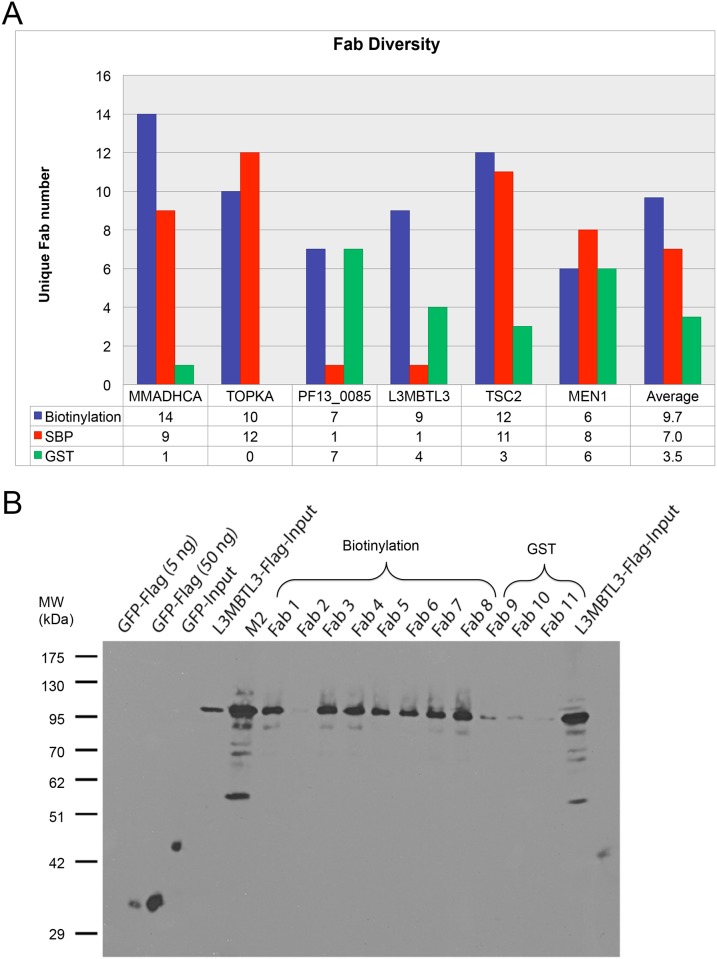
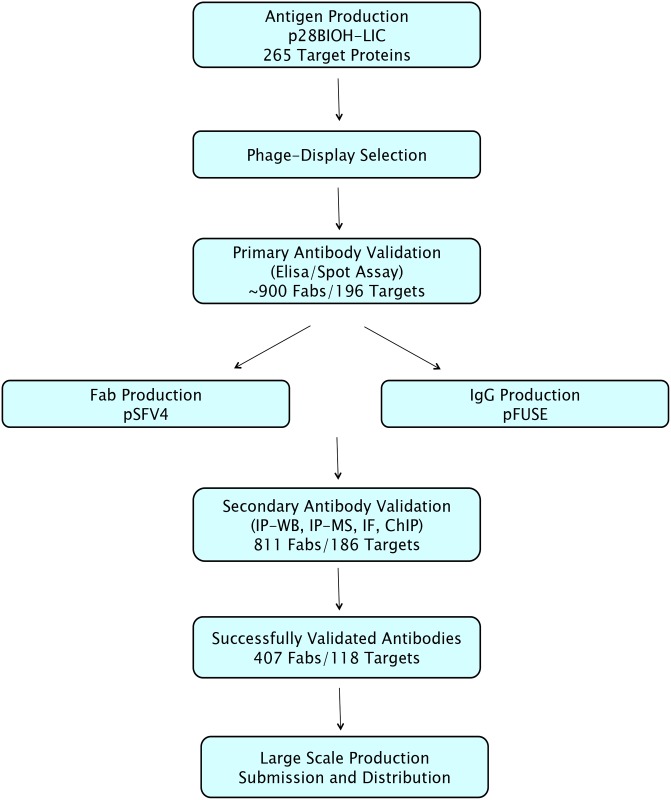
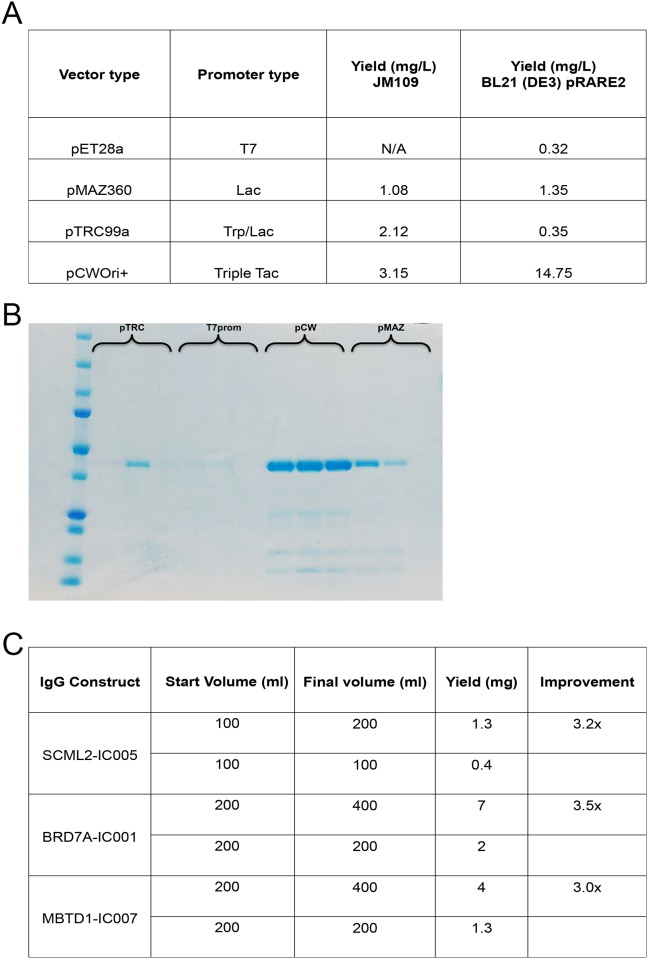
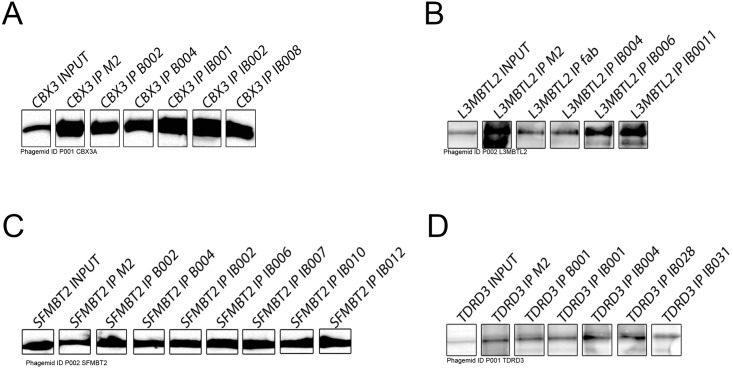
We developed and optimized a high-throughput project workflow to generate renewable recombinant antibodies to human proteins involved in epigenetic signalling. Three different strategies to produce phage display compatible protein antigens in bacterial systems were compared, and we found that in vivo biotinylation through the use of an Avi tag was the most productive method. Phage display selections were performed on 265 in vivo biotinylated antigen domains. High-affinity Fabs (<20nM) were obtained for 196. We constructed and optimized a new expression vector to produce in vivo biotinylated Fabs in E. coli. This increased average yields up to 10-fold, with an average yield of 4 mg/L. For 118 antigens, we identified Fabs that could immunoprecipitate their full-length endogenous targets from mammalian cell lysates. One Fab for each antigen was converted to a recombinant IgG and produced in mammalian cells, with an average yield of 15 mg/L. In summary, we have optimized each step of the pipeline to produce recombinant antibodies, significantly increasing both efficiency and yield, and also showed that these Fabs and IgGs can be generally useful for chromatin immunoprecipitation (ChIP) protocols.
我们开发并优化了一种高通量项目工作流程,以生成针对参与表观遗传信号传导的人类蛋白质的可再生重组抗体。比较了在细菌系统中产生噬菌体展示兼容蛋白抗原的三种不同策略,我们发现通过使用Avi标签进行体内生物素化是最有效的方法。对265个体内生物素化抗原结构域进行了噬菌体展示筛选。获得了196个高亲和力的Fab(<20nM)。我们构建并优化了一种新的表达载体,以在大肠杆菌中产生体内生物素化的Fab。这使平均产量提高了10倍,平均产量为4mg/L。对于118种抗原,我们鉴定出了能够从哺乳动物细胞裂解物中免疫沉淀其全长内源性靶标的Fab。每种抗原的一个Fab被转化为重组IgG并在哺乳动物细胞中产生,平均产量为15mg/L。总之,我们优化了生产重组抗体流程的每一步,显著提高了效率和产量,并且还表明这些Fab和IgG通常可用于染色质免疫沉淀(ChIP)实验方案。