Pospíšilová Marie, Kuncová Gabriela, Trögl Josef
Czech Technical University, Faculty of Biomedical Engeneering, Nám. Sítná 3105, 27201 Kladno, Czech Republic.
Institute of Chemical Process Fundamentals, ASCR, Rozvojová 135, 16500 Prague, Czech Republic.
Sensors (Basel). 2015 Sep 30;15(10):25208-59. doi: 10.3390/s151025208.
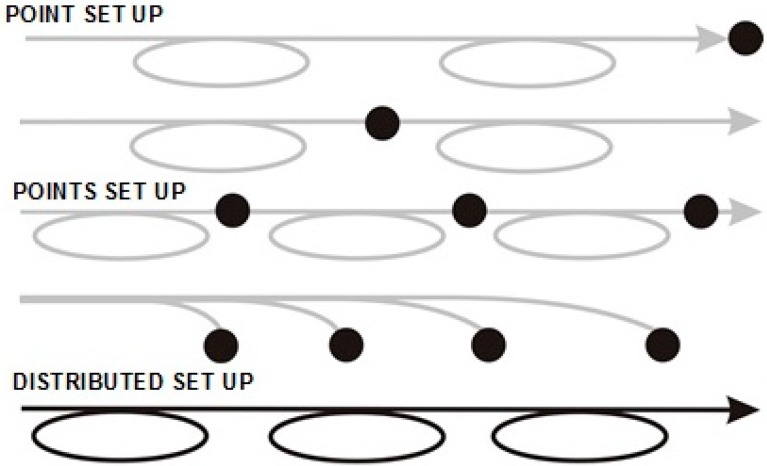
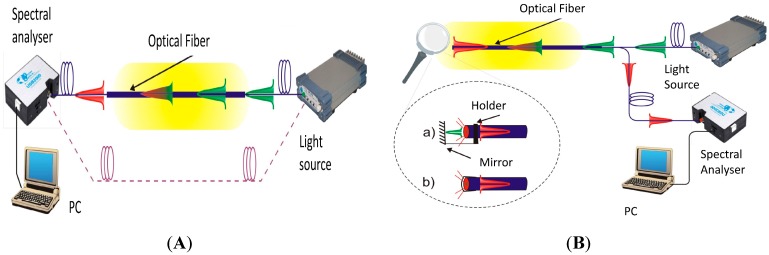
This review summarizes principles and current stage of development of fiber-optic chemical sensors (FOCS) and biosensors (FOBS). Fiber optic sensor (FOS) systems use the ability of optical fibers (OF) to guide the light in the spectral range from ultraviolet (UV) (180 nm) up to middle infrared (IR) (10 μm) and modulation of guided light by the parameters of the surrounding environment of the OF core. The introduction of OF in the sensor systems has brought advantages such as measurement in flammable and explosive environments, immunity to electrical noises, miniaturization, geometrical flexibility, measurement of small sample volumes, remote sensing in inaccessible sites or harsh environments and multi-sensing. The review comprises briefly the theory of OF elaborated for sensors, techniques of fabrications and analytical results reached with fiber-optic chemical and biological sensors.
本综述总结了光纤化学传感器(FOCS)和生物传感器(FOBS)的原理及当前发展阶段。光纤传感器(FOS)系统利用光纤(OF)在从紫外(UV)(180 nm)到中红外(IR)(10 μm)的光谱范围内引导光的能力,以及由OF纤芯周围环境参数对引导光进行调制。将OF引入传感器系统带来了诸多优势,如可在易燃易爆环境中进行测量、抗电噪声干扰、小型化、几何形状灵活性高、可测量小体积样品、能在难以到达的场所或恶劣环境中进行遥感以及具备多传感功能。本综述简要介绍了为传感器所阐述的OF理论、制造技术以及光纤化学和生物传感器所取得的分析结果。