Chung Dudley, Dellaire Graham
Department of Pathology, Dalhousie University, Halifax, NS B3H 4R2, Canada.
Department of Biochemistry and Molecular Biology, Dalhousie University, Halifax, NS B3H 4R2, Canada.
Biomolecules. 2015 Sep 30;5(4):2388-416. doi: 10.3390/biom5042388.
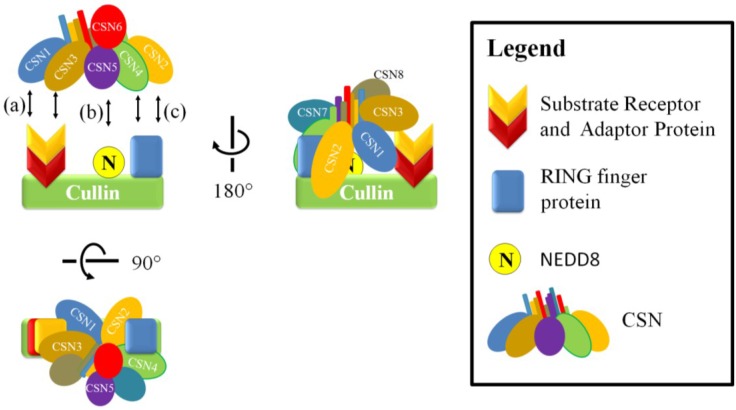
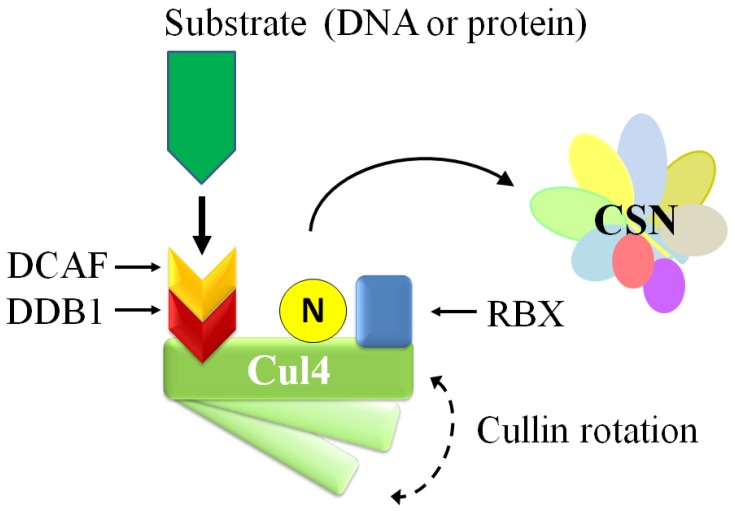
The maintenance of genomic integrity is an important process in organisms as failure to sense and repair damaged DNA can result in a variety of diseases. Eukaryotic cells have developed complex DNA repair response (DDR) mechanisms to accurately sense and repair damaged DNA. Post-translational modifications by ubiquitin and ubiquitin-like proteins, such as SUMO and NEDD8, have roles in coordinating the progression of DDR. Proteins in the neddylation pathway have also been linked to regulating DDR. Of interest is the COP9 signalosome (CSN), a multi-subunit metalloprotease present in eukaryotes that removes NEDD8 from cullins and regulates the activity of cullin-RING ubiquitin ligases (CRLs). This in turn regulates the stability and turnover of a host of CRL-targeted proteins, some of which have established roles in DDR. This review will summarize the current knowledge on the role of the CSN and neddylation in DNA repair.
基因组完整性的维持是生物体中的一个重要过程,因为无法感知和修复受损DNA会导致多种疾病。真核细胞已经发展出复杂的DNA修复反应(DDR)机制来准确感知和修复受损DNA。泛素和类泛素蛋白(如SUMO和NEDD8)的翻译后修饰在协调DDR的进程中发挥作用。NEDD化途径中的蛋白质也与调节DDR有关。有趣的是COP9信号体(CSN),一种存在于真核生物中的多亚基金属蛋白酶,它从cullin中去除NEDD8并调节cullin-RING泛素连接酶(CRL)的活性。这反过来又调节了许多CRL靶向蛋白的稳定性和周转,其中一些蛋白在DDR中已确立了作用。本综述将总结目前关于CSN和NEDD化在DNA修复中作用的知识。