Cole Brian S, Tapescu Iulia, Allon Samuel J, Mallory Michael J, Qiu Jinsong, Lake Robert J, Fan Hua-Ying, Fu Xiang-Dong, Lynch Kristen W
Department of Biochemistry and Biophysics Department of Genetics, Perelman School of Medicine, University of Pennsylvania, Philadelphia, Pennsylvania 19104, USA.
Department of Cell and Molecular Medicine, University of California San Diego, San Diego, California 92093, USA.
RNA. 2015 Dec;21(12):2053-66. doi: 10.1261/rna.052969.115. Epub 2015 Oct 5.
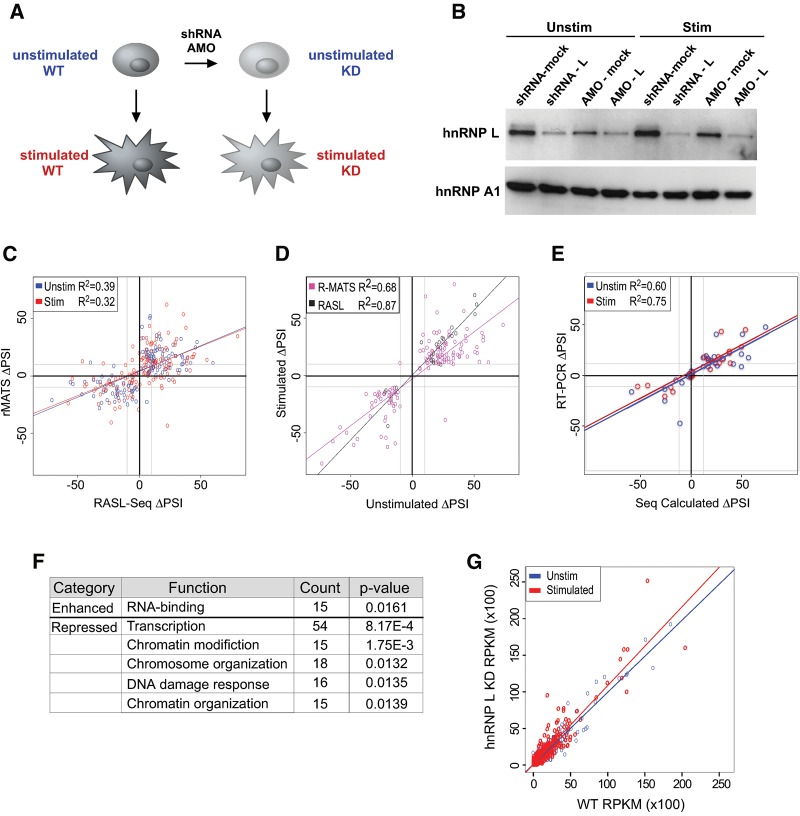
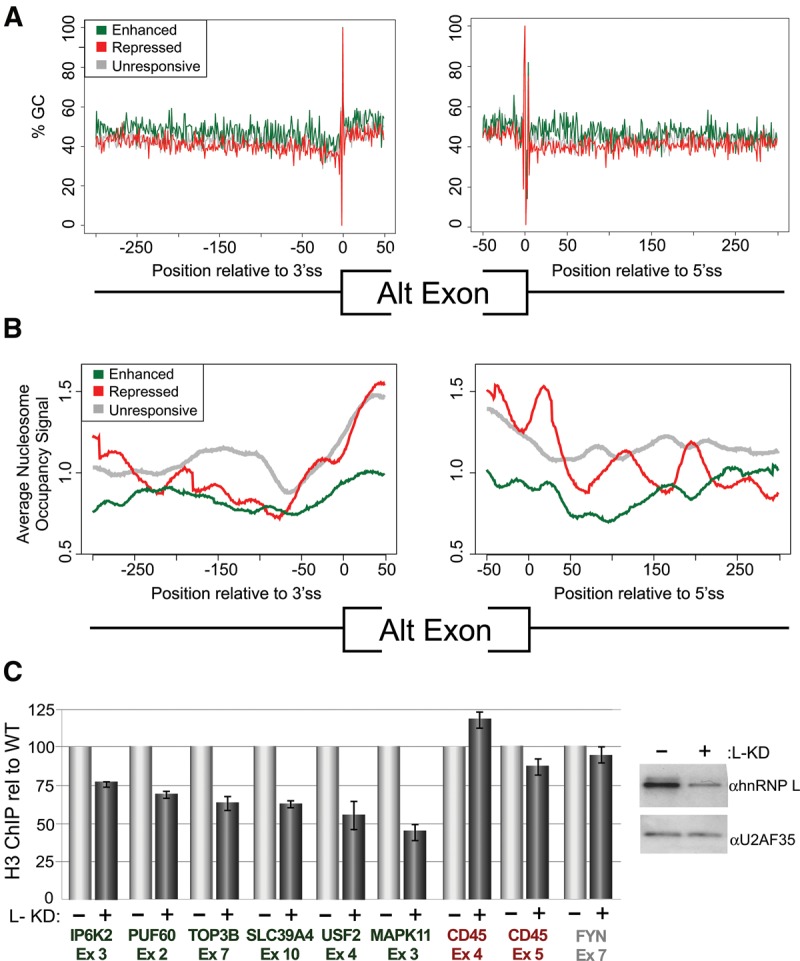
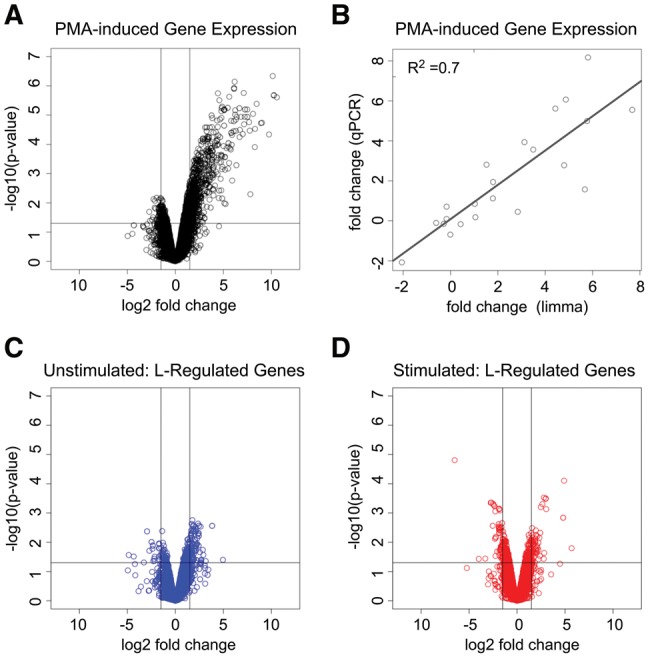
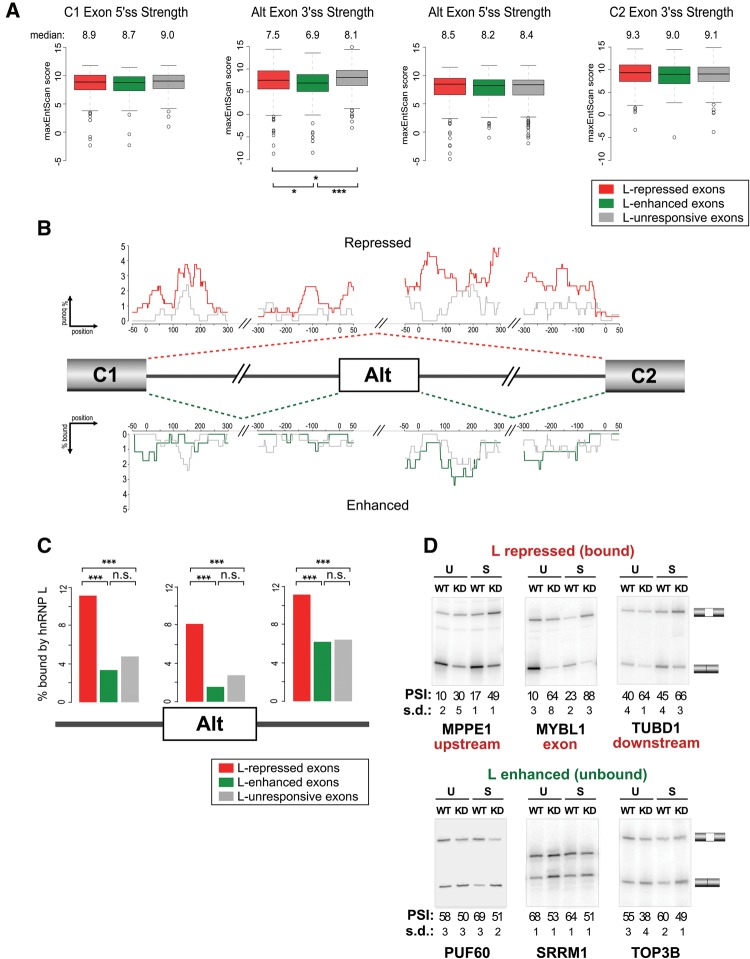
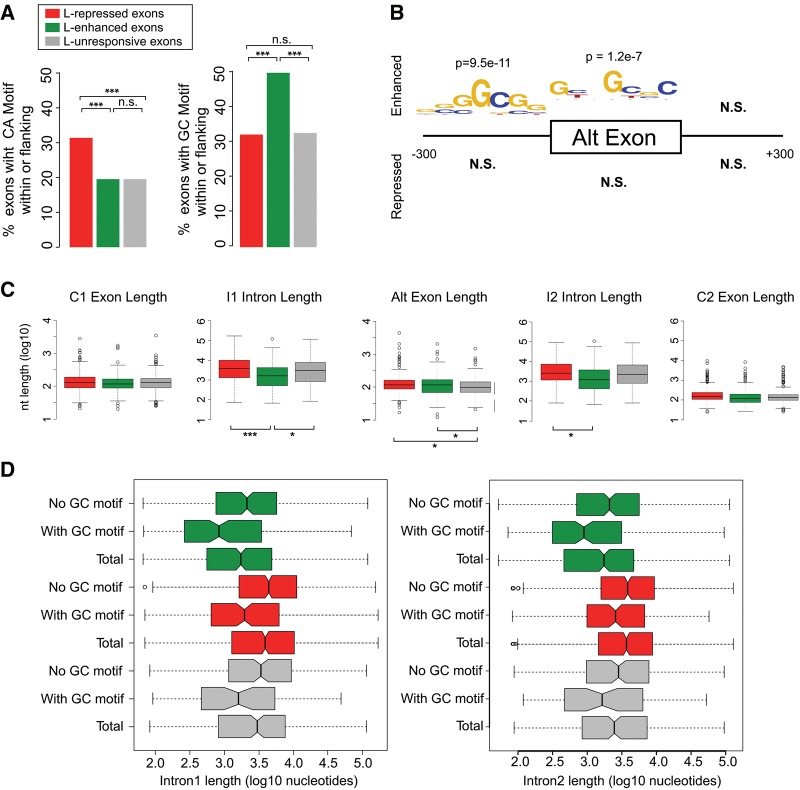
HnRNP L is a ubiquitous splicing-regulatory protein that is critical for the development and function of mammalian T cells. Previous work has identified a few targets of hnRNP L-dependent alternative splicing in T cells and has described transcriptome-wide association of hnRNP L with RNA. However, a comprehensive analysis of the impact of hnRNP L on mRNA expression remains lacking. Here we use next-generation sequencing to identify transcriptome changes upon depletion of hnRNP L in a model T-cell line. We demonstrate that hnRNP L primarily regulates cassette-type alternative splicing, with minimal impact of hnRNP L depletion on transcript abundance, intron retention, or other modes of alternative splicing. Strikingly, we find that binding of hnRNP L within or flanking an exon largely correlates with exon repression by hnRNP L. In contrast, exons that are enhanced by hnRNP L generally lack proximal hnRNP L binding. Notably, these hnRNP L-enhanced exons share sequence and context features that correlate with poor nucleosome positioning, suggesting that hnRNP may enhance inclusion of a subset of exons via a cotranscriptional or epigenetic mechanism. Our data demonstrate that hnRNP L controls inclusion of a broad spectrum of alternative cassette exons in T cells and suggest both direct RNA regulation as well as indirect mechanisms sensitive to the epigenetic landscape.
HnRNP L是一种普遍存在的剪接调节蛋白,对哺乳动物T细胞的发育和功能至关重要。先前的研究已经确定了T细胞中hnRNP L依赖性可变剪接的一些靶点,并描述了hnRNP L与RNA在全转录组范围内的关联。然而,目前仍缺乏对hnRNP L对mRNA表达影响的全面分析。在这里,我们使用下一代测序技术来鉴定模型T细胞系中hnRNP L缺失后的转录组变化。我们证明hnRNP L主要调节盒式可变剪接,hnRNP L缺失对转录本丰度、内含子保留或其他可变剪接模式的影响最小。令人惊讶的是,我们发现hnRNP L在外显子内部或侧翼的结合与hnRNP L介导的外显子抑制在很大程度上相关。相反,被hnRNP L增强的外显子通常缺乏近端hnRNP L结合。值得注意的是,这些被hnRNP L增强的外显子具有与不良核小体定位相关的序列和上下文特征,这表明hnRNP可能通过共转录或表观遗传机制增强一部分外显子的包含。我们的数据表明,hnRNP L控制T细胞中广泛的可变盒式外显子的包含,并提示了直接的RNA调节以及对表观遗传景观敏感的间接机制。