Ma Nan, Chen Wen, Fan Tiangang, Tian Yaran, Zhang Shuai, Zeng Daxing, Li Yonghong
Department of Ornamental Horticulture, China Agricultural University, Beijing, 100193, China.
The Key Laboratory for Quality Improvement of Agricultural Products of Zhejiang Province, School of Agriculture and Food Science, Zhejiang Agriculture & Forestry University, Lin'an, 311300, China.
BMC Plant Biol. 2015 Oct 5;15:237. doi: 10.1186/s12870-015-0623-1.
Flower development is central to angiosperm reproduction and is regulated by a broad range of endogenous and exogenous stimuli. It has been well documented that ambient temperature plays a key role in controlling flowering time; however, the mechanisms by which temperature regulates floral organ differentiation remain largely unknown.
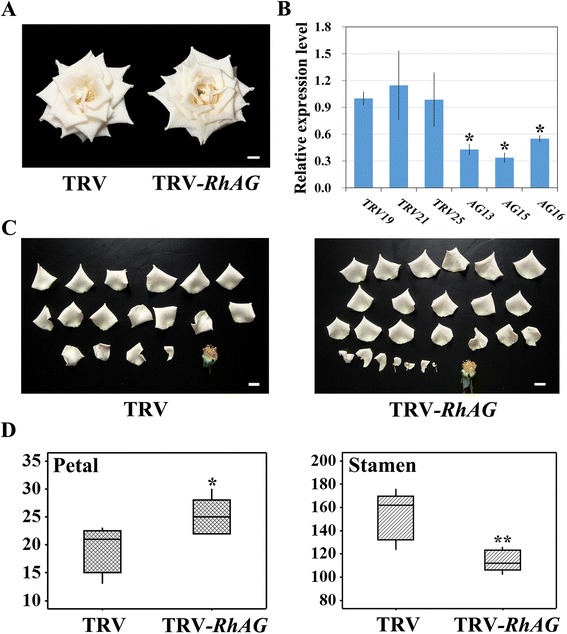
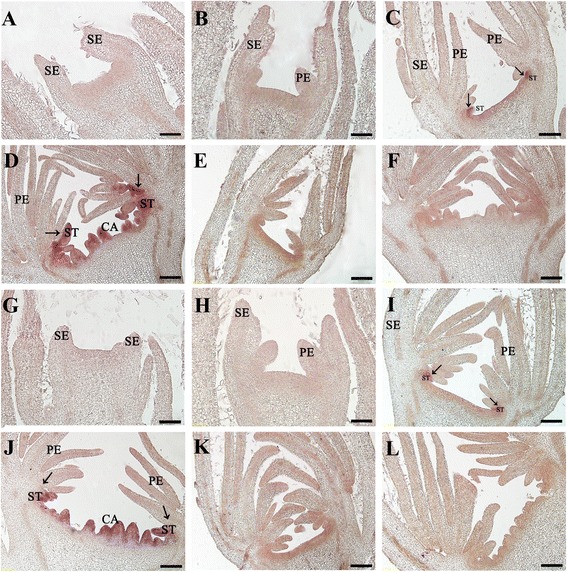
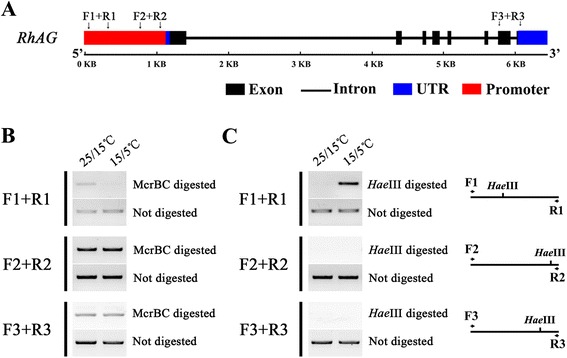
In this study, we show that low temperature treatment significantly increases petal number in rose (Rosa hybrida) through the promotion of stamen petaloidy. Quantitative RT-PCR analysis revealed that the expression pattern of RhAG, a rose homolog of the Arabidopsis thaliana AGAMOUS C-function gene, is associated with low temperature regulated flower development. Silencing of RhAG mimicked the impact of low temperature treatments on petal development by significantly increasing petal number through an increased production of petaloid stamens. In situ hybridization studies further revealed that low temperature restricts its spatial expression area. Analysis of DNA methylation level showed that low temperature treatment enhances the methylation level of the RhAG promoter, and a specific promoter region that was hypermethylated at CHH loci under low temperature conditions, was identified by bisulfite sequencing. This suggests that epigenetic DNA methylation contributes to the ambient temperature modulation of RhAG expression.
Our results provide highlights in the role of RhAG gene in petal number determination and add a new layer of complexity in the regulation of floral organ development.
We propose that RhAG plays an essential role in rose flower patterning by regulating petal development, and that low temperatures increase petal number, at least in part, by suppressing RhAG expression via enhancing DNA CHH hypermethylation of the RhAG promoter.
花的发育是被子植物繁殖的核心,受多种内源性和外源性刺激的调控。已有充分的文献记载,环境温度在控制开花时间方面起着关键作用;然而,温度调节花器官分化的机制仍 largely 未知。
在本研究中,我们表明低温处理通过促进雄蕊瓣化显著增加了玫瑰(Rosa hybrida)的花瓣数量。定量 RT-PCR 分析表明,拟南芥 AGAMOUS C 功能基因的玫瑰同源基因 RhAG 的表达模式与低温调控的花发育相关。RhAG 的沉默模拟了低温处理对花瓣发育的影响,通过增加瓣化雄蕊的产生显著增加了花瓣数量。原位杂交研究进一步表明低温限制了其空间表达区域。DNA 甲基化水平分析表明,低温处理提高了 RhAG 启动子的甲基化水平,并且通过亚硫酸氢盐测序鉴定了在低温条件下 CHH 位点发生超甲基化的特定启动子区域。这表明表观遗传 DNA 甲基化有助于环境温度对 RhAG 表达的调节。
我们的结果突出了 RhAG 基因在花瓣数量决定中的作用,并在花器官发育调控中增加了新的复杂性层次。
我们提出 RhAG 通过调节花瓣发育在玫瑰花朵形态形成中起重要作用,并且低温至少部分地通过增强 RhAG 启动子的 DNA CHH 超甲基化来抑制 RhAG 表达从而增加花瓣数量。