Bollampalli Vishnu Priya, Harumi Yamashiro Lívia, Feng Xiaogang, Bierschenk Damiën, Gao Yu, Blom Hans, Henriques-Normark Birgitta, Nylén Susanne, Rothfuchs Antonio Gigliotti
Department of Microbiology, Tumor and Cell Biology, Karolinska Institutet, Stockholm, Sweden.
Department of Microbiology, Tumor and Cell Biology, Karolinska Institutet, Stockholm, Sweden; Department of Pharmacology, Federal University of Santa Catarina, Florianópolis, Brazil.
PLoS Pathog. 2015 Oct 6;11(10):e1005206. doi: 10.1371/journal.ppat.1005206. eCollection 2015 Oct.
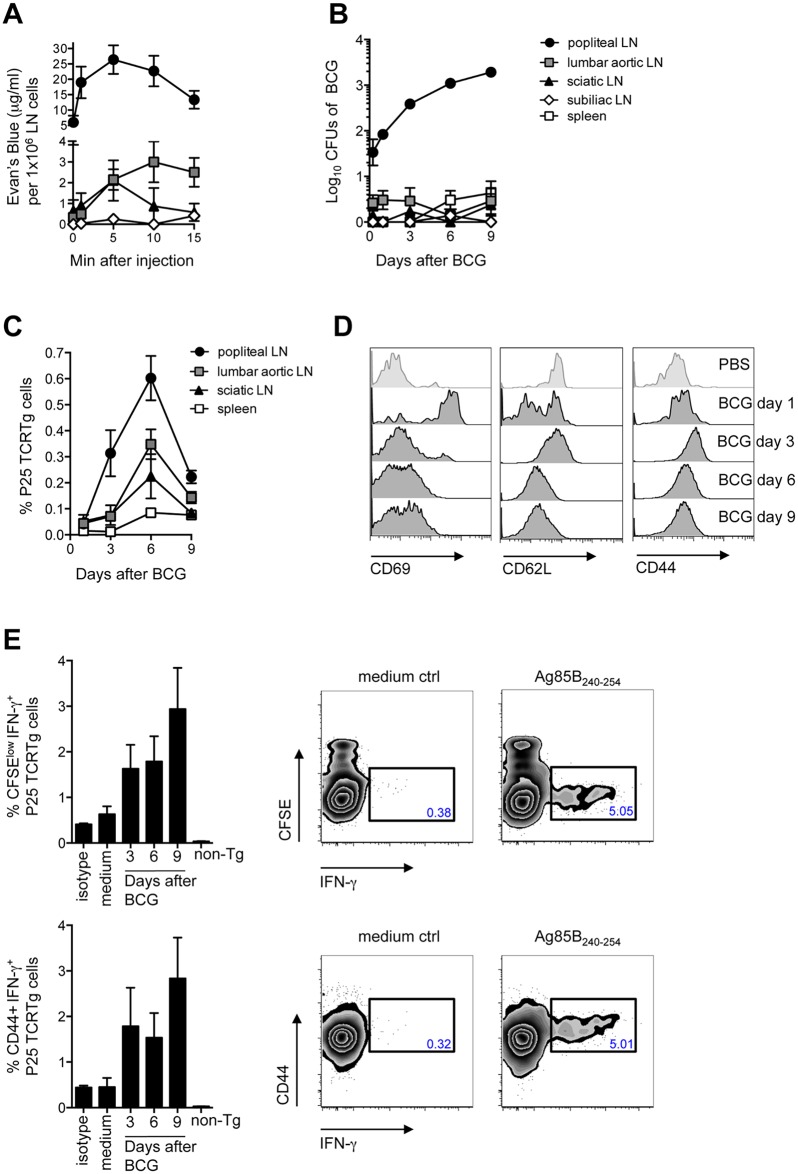
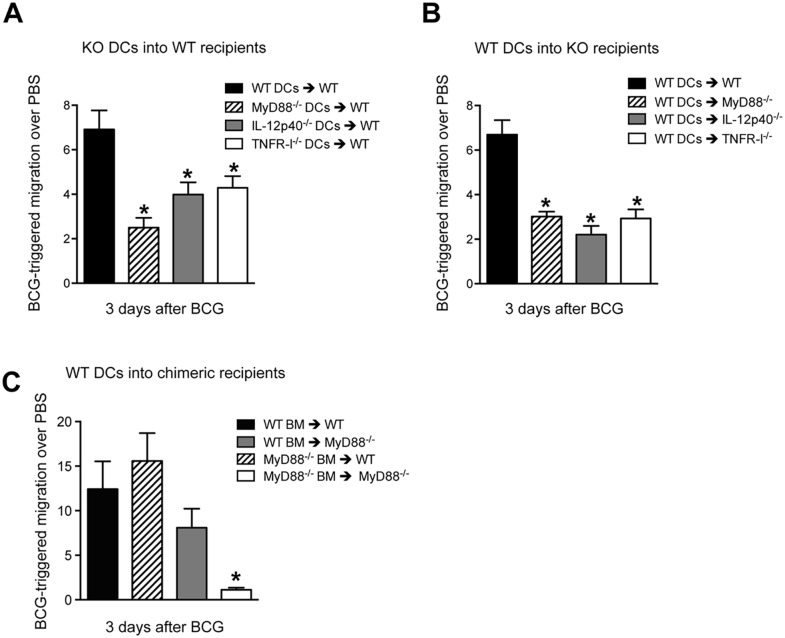
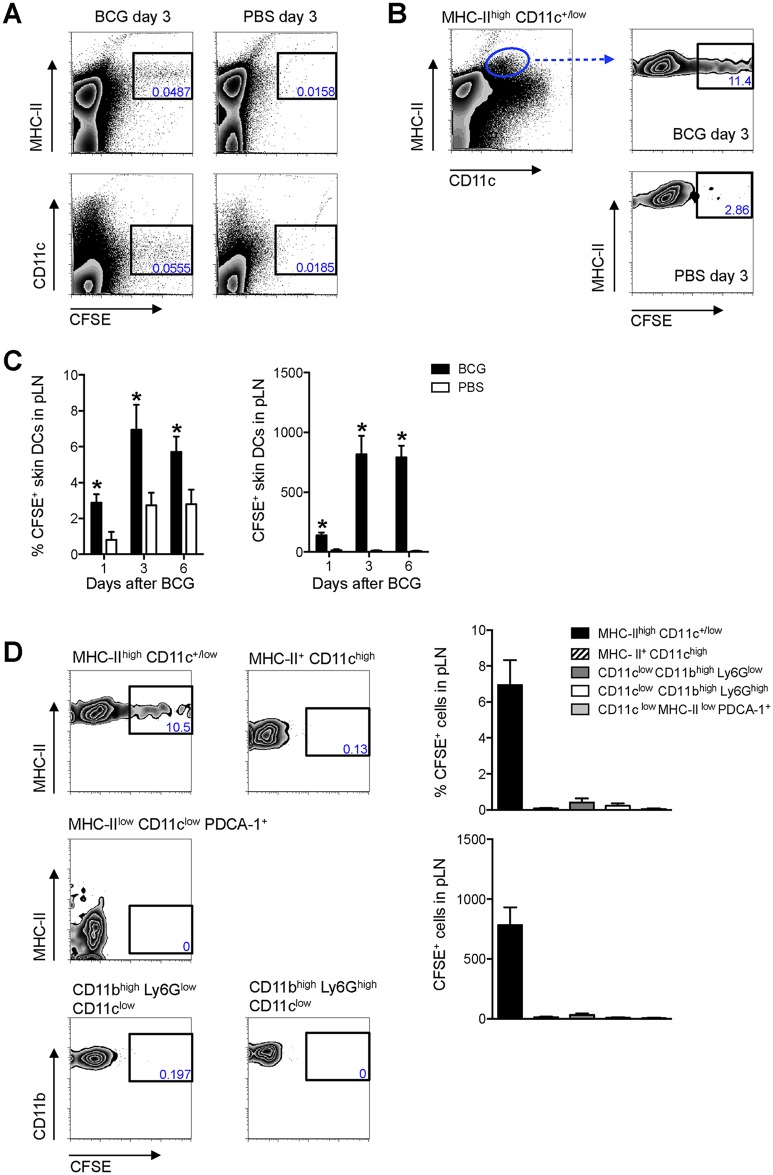
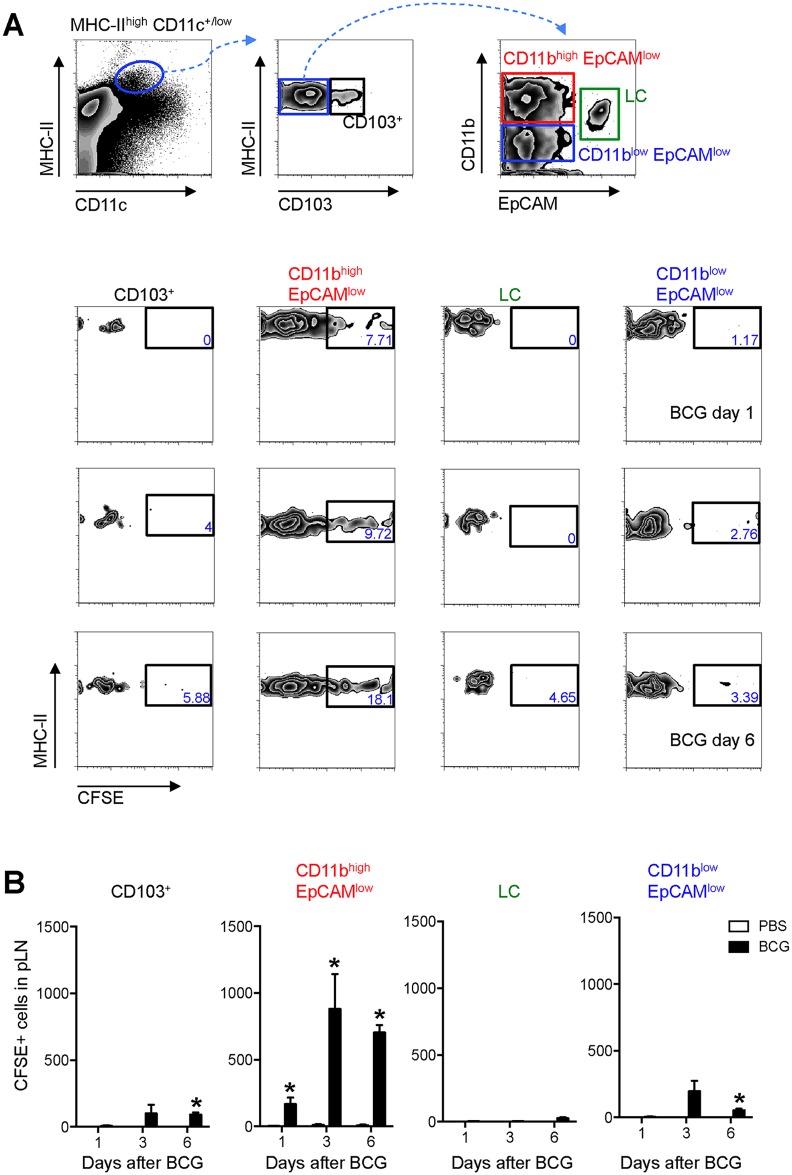
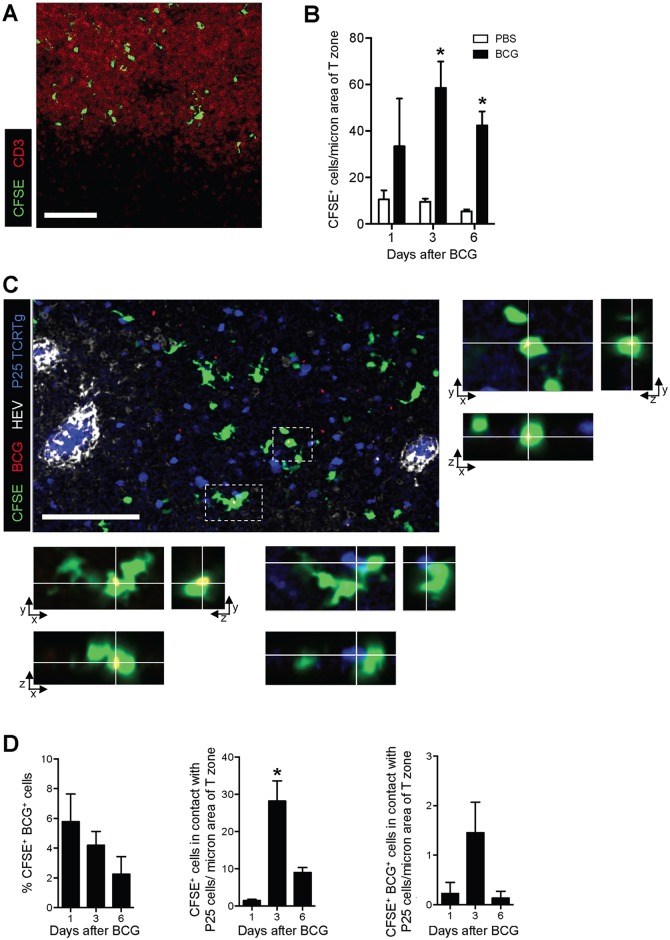
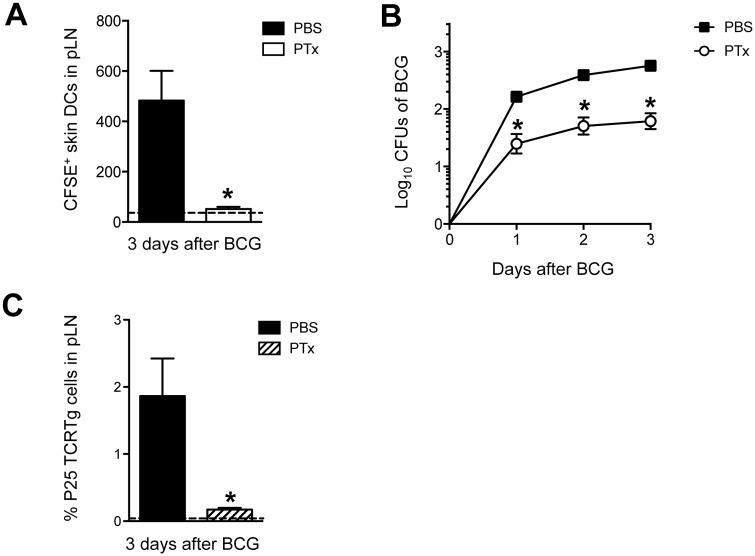
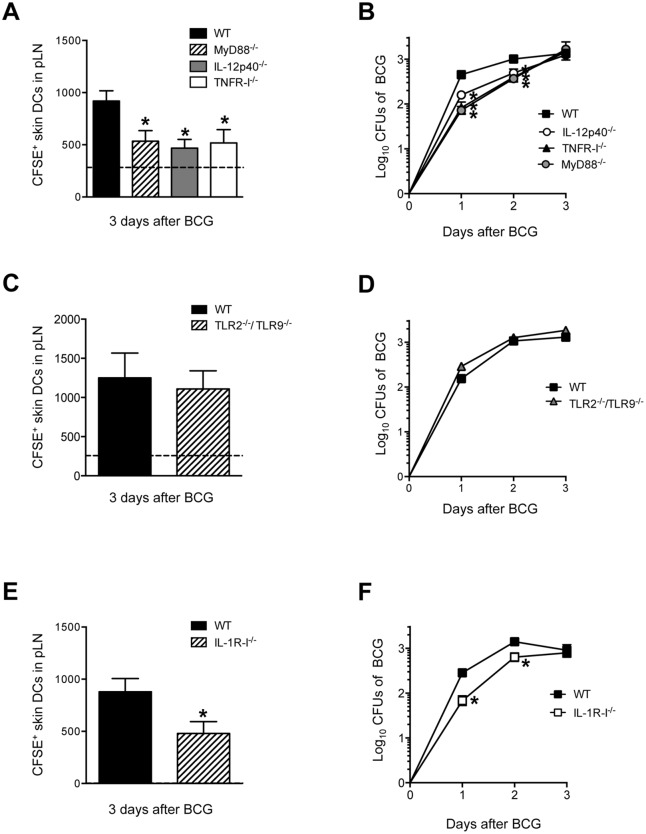
The transport of antigen from the periphery to the draining lymph node (DLN) is critical for T-cell priming but remains poorly studied during infection with Mycobacterium bovis Bacille Calmette-Guérin (BCG). To address this we employed a mouse model to track the traffic of Dendritic cells (DCs) and mycobacteria from the BCG inoculation site in the skin to the DLN. Detection of BCG in the DLN was concomitant with the priming of antigen-specific CD4+ T cells at that site. We found EpCAMlow CD11bhigh migratory skin DCs to be mobilized during the transport of BCG to the DLN. Migratory skin DCs distributed to the T-cell area of the LN, co-localized with BCG and were found in close apposition to antigen-specific CD4+ T cells. Consequently, blockade of skin DC traffic into DLN dramatically reduced mycobacterial entry into DLN and muted T-cell priming. Interestingly, DC and mycobacterial entry into the DLN was dependent on IL-1R-I, MyD88, TNFR-I and IL-12p40. In addition, we found using DC adoptive transfers that the requirement for MyD88 in BCG-triggered migration was not restricted to the migrating DC itself and that hematopoietic expression of MyD88 was needed in part for full-fledged migration. Our observations thus identify a population of DCs that contribute towards the priming of CD4+ T cells to BCG infection by transporting bacilli into the DLN in an IL-1R-MyD88-dependent manner and reveal both DC-intrinsic and -extrinsic requirements for MyD88 in DC migration.
抗原从外周运输至引流淋巴结(DLN)对于T细胞启动至关重要,但在牛分枝杆菌卡介苗(BCG)感染期间,这方面的研究仍很匮乏。为解决这一问题,我们采用小鼠模型来追踪树突状细胞(DCs)和分枝杆菌从皮肤BCG接种部位至DLN的运输过程。在DLN中检测到BCG与该部位抗原特异性CD4+ T细胞的启动同时发生。我们发现,在BCG运输至DLN的过程中,EpCAMlow CD11bhigh迁移性皮肤DCs被动员起来。迁移性皮肤DCs分布至淋巴结的T细胞区域,与BCG共定位,并发现与抗原特异性CD4+ T细胞紧密相邻。因此,阻断皮肤DC进入DLN可显著减少分枝杆菌进入DLN,并减弱T细胞启动。有趣的是,DC和分枝杆菌进入DLN依赖于IL-1R-I、MyD88、TNFR-I和IL-12p40。此外,我们通过DC过继转移发现,BCG触发迁移过程中对MyD88的需求并不局限于迁移的DC本身,MyD88的造血表达部分是充分迁移所必需的。因此我们观察到一群DCs,它们通过以IL-1R-MyD88依赖的方式将杆菌运输至DLN,从而促进CD4+ T细胞对BCG感染的启动,并揭示了DC迁移过程中MyD88在DC内在和外在方面的需求。