Bahr S M, Tyler B C, Wooldridge N, Butcher B D, Burns T L, Teesch L M, Oltman C L, Azcarate-Peril M A, Kirby J R, Calarge C A
Department of Microbiology, University of Iowa, Iowa City, IA, USA.
Department of Psychiatry, University of Iowa, Iowa City, IA, USA.
Transl Psychiatry. 2015 Oct 6;5(10):e652. doi: 10.1038/tp.2015.135.
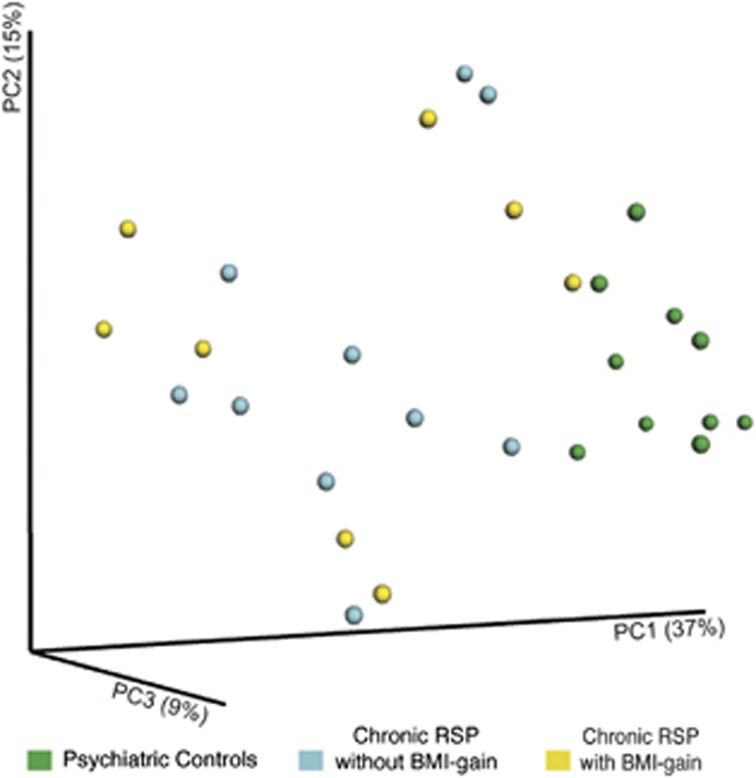
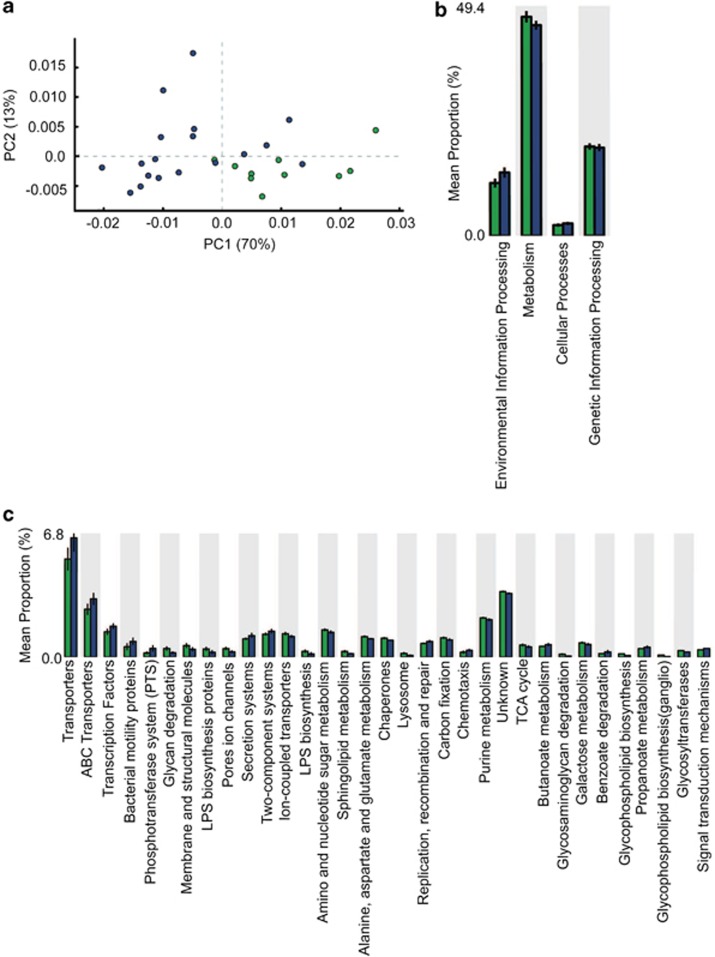
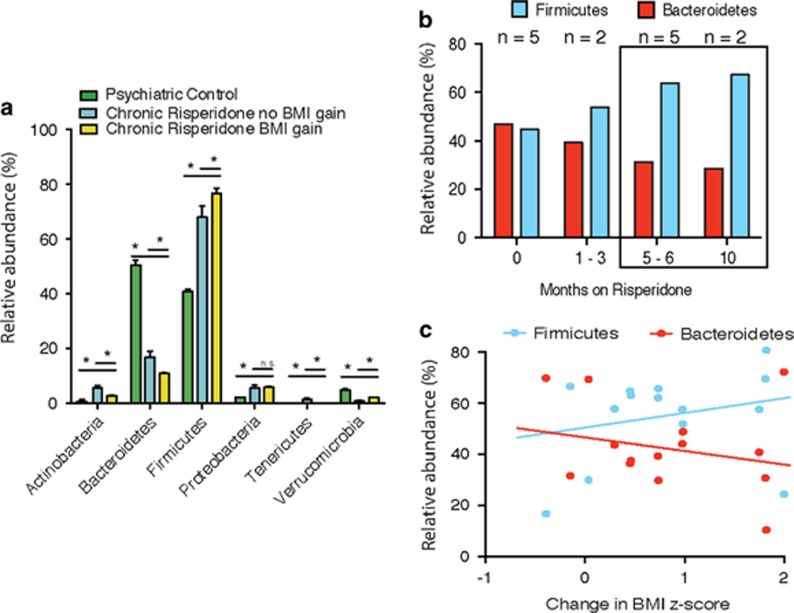
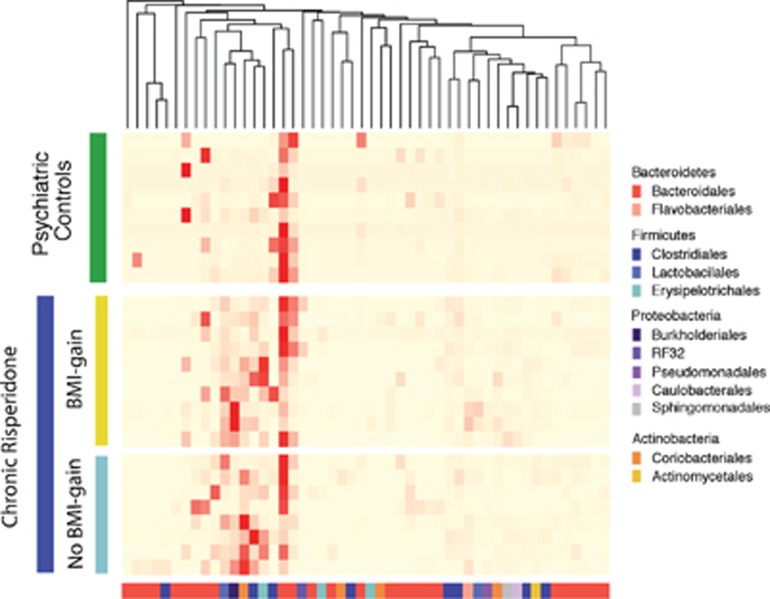
The atypical antipsychotic risperidone (RSP) is often associated with weight gain and cardiometabolic side effects. The mechanisms for these adverse events are poorly understood and, undoubtedly, multifactorial in etiology. In light of growing evidence implicating the gut microbiome in the host's energy regulation and in xenobiotic metabolism, we hypothesized that RSP treatment would be associated with changes in the gut microbiome in children and adolescents. Thus, the impact of chronic (>12 months) and short-term use of RSP on the gut microbiome of pediatric psychiatrically ill male participants was examined in a cross-sectional and prospective (up to 10 months) design, respectively. Chronic treatment with RSP was associated with an increase in body mass index (BMI) and a significantly lower ratio of Bacteroidetes:Firmicutes as compared with antipsychotic-naïve psychiatric controls (ratio=0.15 vs 1.24, respectively; P<0.05). Furthermore, a longitudinal observation, beginning shortly after onset of RSP treatment, revealed a gradual decrease in the Bacteroidetes:Firmicutes ratio over the ensuing months of treatment, in association with BMI gain. Lastly, metagenomic analyses were performed based on extrapolation from 16S ribosomal RNA data using the software package, Phylogenetic Investigation of Communities by Reconstruction of Unobserved States (PICRUSt). Those data indicate that gut microbiota dominating the RSP-treated participants are enriched for pathways that have been implicated in weight gain, such as short-chain fatty acid production.
非典型抗精神病药物利培酮(RSP)常与体重增加和心脏代谢副作用相关。这些不良事件的机制尚不清楚,病因无疑是多因素的。鉴于越来越多的证据表明肠道微生物群与宿主的能量调节和外源性物质代谢有关,我们推测RSP治疗可能与儿童和青少年的肠道微生物群变化有关。因此,我们分别采用横断面和前瞻性(长达10个月)设计,研究了长期(>12个月)和短期使用RSP对患有精神疾病的男性儿童肠道微生物群的影响。与未使用过抗精神病药物的精神科对照相比,RSP的长期治疗与体重指数(BMI)增加以及拟杆菌门与厚壁菌门的比例显著降低有关(比例分别为0.15和1.24;P<0.05)。此外,一项从RSP治疗开始后不久就开始的纵向观察显示,在随后的治疗月份中,拟杆菌门与厚壁菌门的比例逐渐下降,且与BMI增加相关。最后,使用软件包“通过重建未观察状态进行群落系统发育研究”(PICRUSt),基于16S核糖体RNA数据的推断进行宏基因组分析。这些数据表明,在接受RSP治疗的参与者中占主导地位的肠道微生物群富含与体重增加相关的途径,如短链脂肪酸的产生。