Hoeffel Guillaume, Ginhoux Florent
Singapore Immunology Network (SIgN), Agency for Science, Technology and Research (ASTAR) , Singapore , Singapore.
Front Immunol. 2015 Sep 22;6:486. doi: 10.3389/fimmu.2015.00486. eCollection 2015.
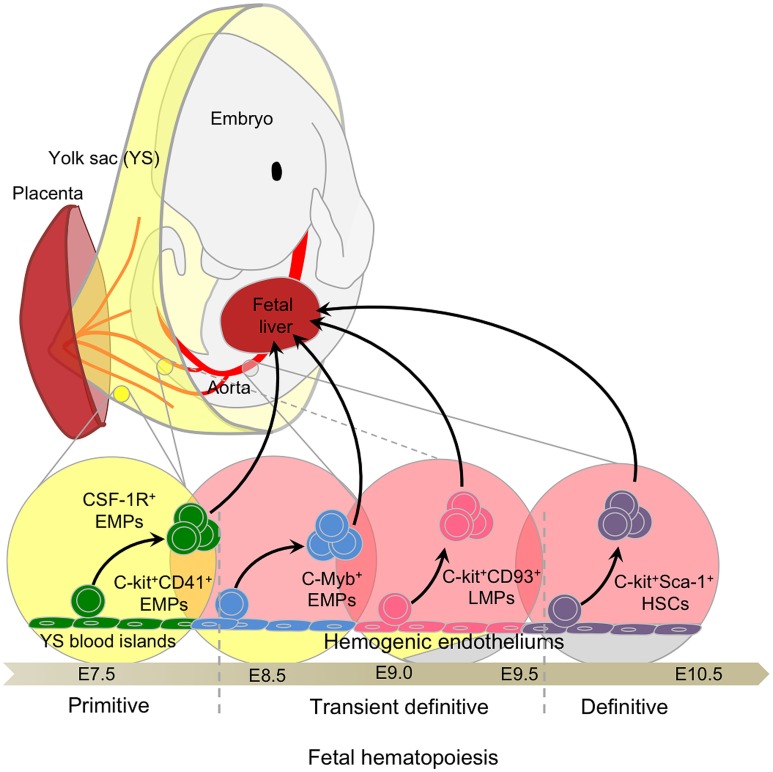
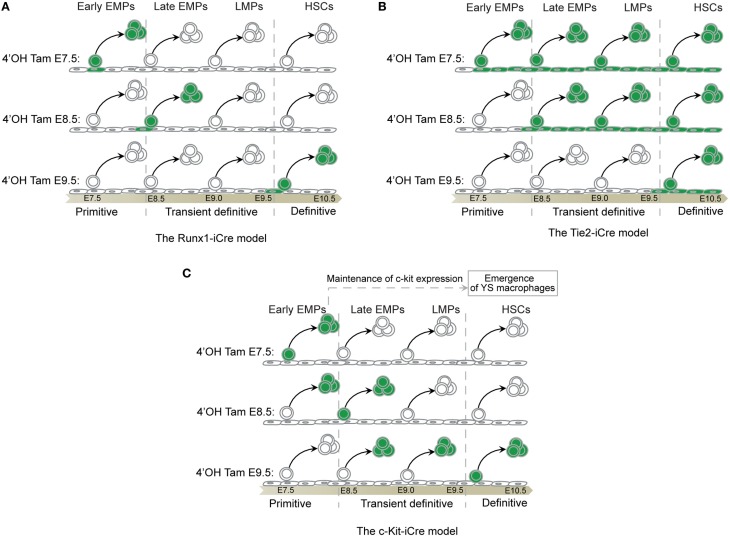
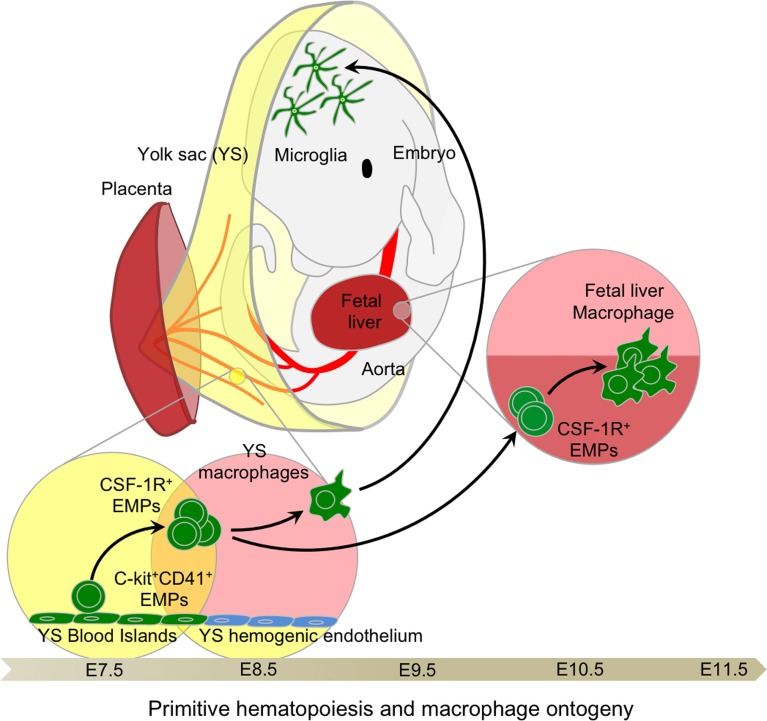
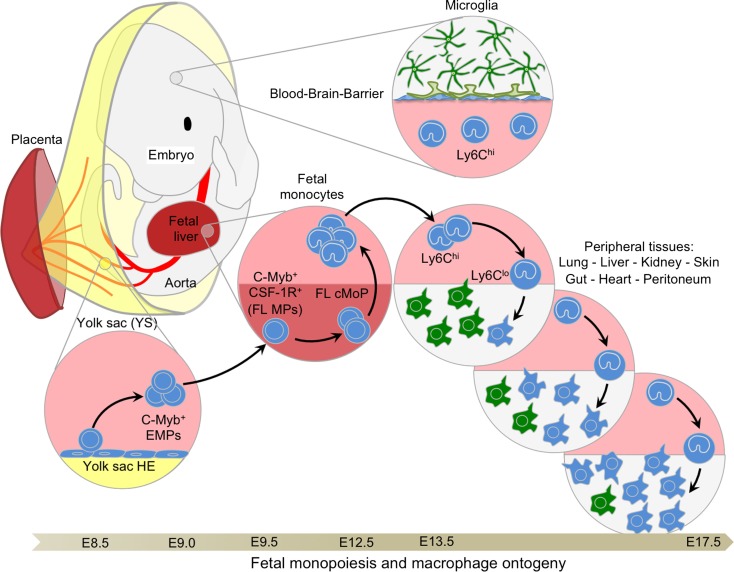
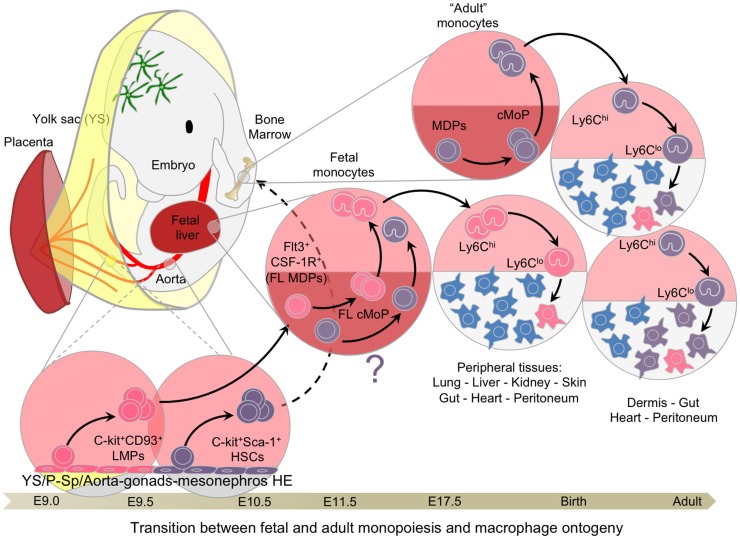
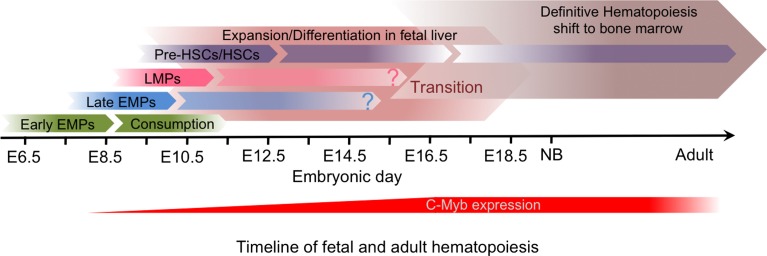
The origin of tissue-resident macrophages, crucial for homeostasis and immunity, has remained controversial until recently. Originally described as part of the mononuclear phagocyte system, macrophages were long thought to derive solely from adult blood circulating monocytes. However, accumulating evidence now shows that certain macrophage populations are in fact independent from monocyte and even from adult bone marrow hematopoiesis. These tissue-resident macrophages derive from sequential seeding of tissues by two precursors during embryonic development. Primitive macrophages generated in the yolk sac (YS) from early erythro-myeloid progenitors (EMPs), independently of the transcription factor c-Myb and bypassing monocytic intermediates, first give rise to microglia. Later, fetal monocytes, generated from c-Myb(+) EMPs that initially seed the fetal liver (FL), then give rise to the majority of other adult macrophages. Thus, hematopoietic stem cell-independent embryonic precursors transiently present in the YS and the FL give rise to long-lasting self-renewing macrophage populations.
组织驻留巨噬细胞对体内平衡和免疫至关重要,其起源一直存在争议,直到最近才有所定论。巨噬细胞最初被描述为单核吞噬细胞系统的一部分,长期以来人们一直认为它们仅来源于成年血液循环中的单核细胞。然而,越来越多的证据表明,某些巨噬细胞群体实际上独立于单核细胞,甚至独立于成年骨髓造血。这些组织驻留巨噬细胞在胚胎发育过程中由两种前体细胞依次播种到组织中产生。卵黄囊(YS)中由早期红系髓系祖细胞(EMP)产生的原始巨噬细胞,独立于转录因子c-Myb并绕过单核细胞中间体,首先产生小胶质细胞。后来,由最初定植于胎儿肝脏(FL)的c-Myb(+) EMP产生的胎儿单核细胞,进而产生了大多数其他成年巨噬细胞。因此,短暂存在于YS和FL中的独立于造血干细胞的胚胎前体细胞产生了持久的自我更新巨噬细胞群体。