Lavin Yonit, Winter Deborah, Blecher-Gonen Ronnie, David Eyal, Keren-Shaul Hadas, Merad Miriam, Jung Steffen, Amit Ido
Department of Oncological Sciences, Immunology Institute and the Tisch Cancer Institute, Icahn School of Medicine at Mount Sinai, New York, NY 10029, USA.
Department of Immunology, Weizmann Institute of Science, Rehovot 76100, Israel.
Cell. 2014 Dec 4;159(6):1312-26. doi: 10.1016/j.cell.2014.11.018.
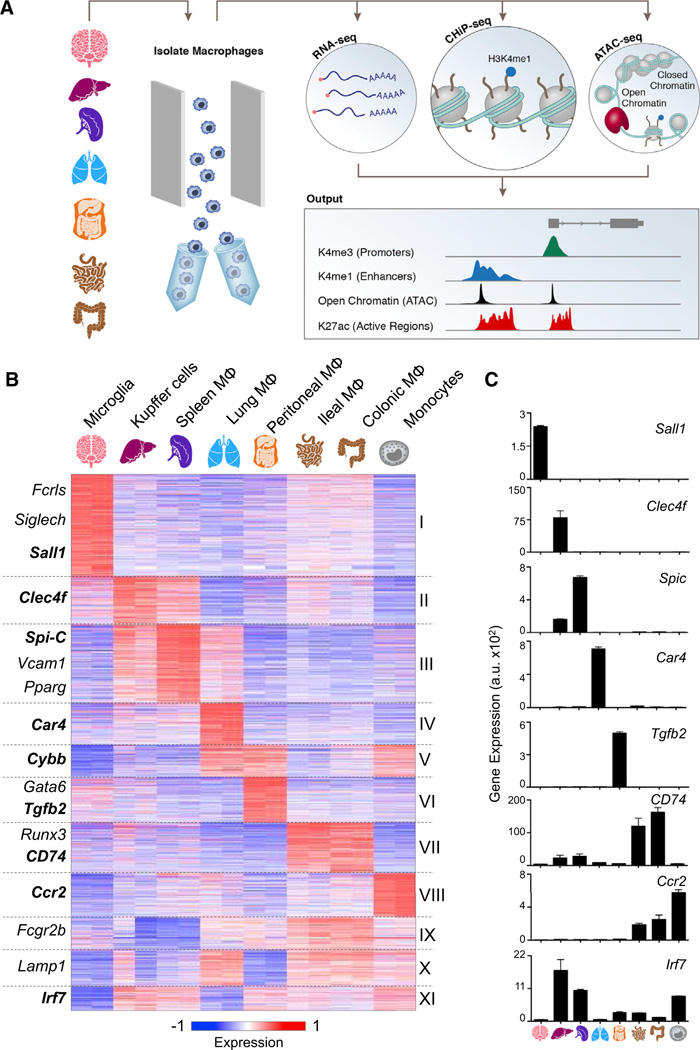
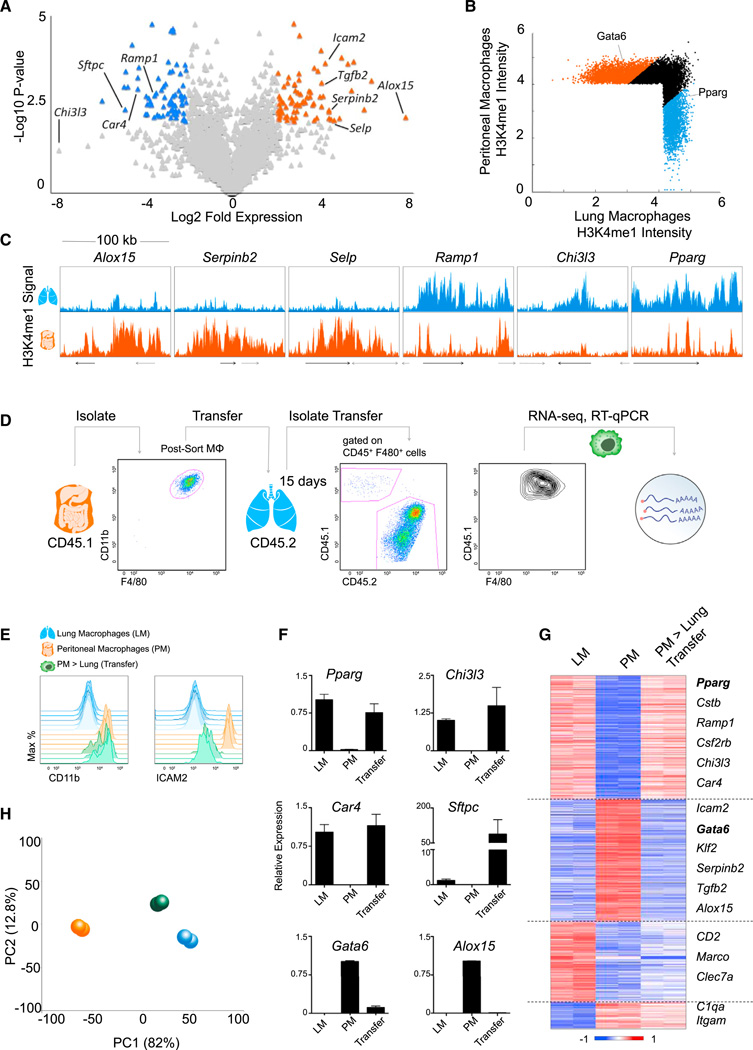
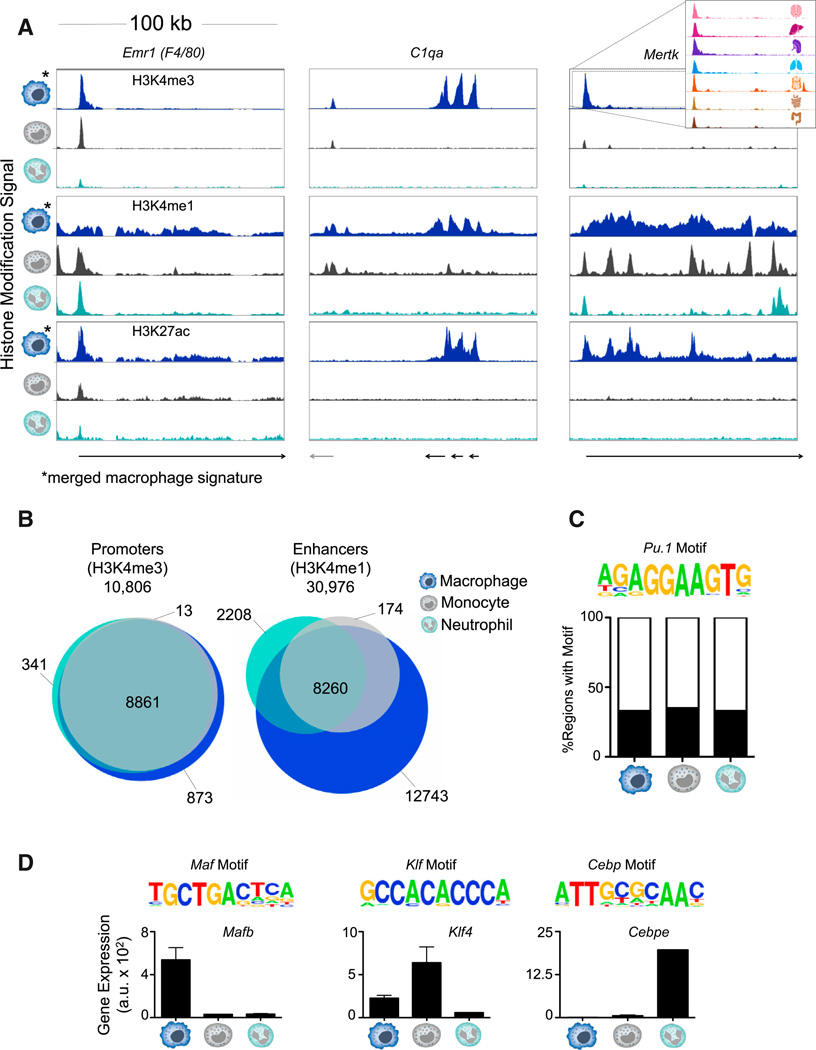
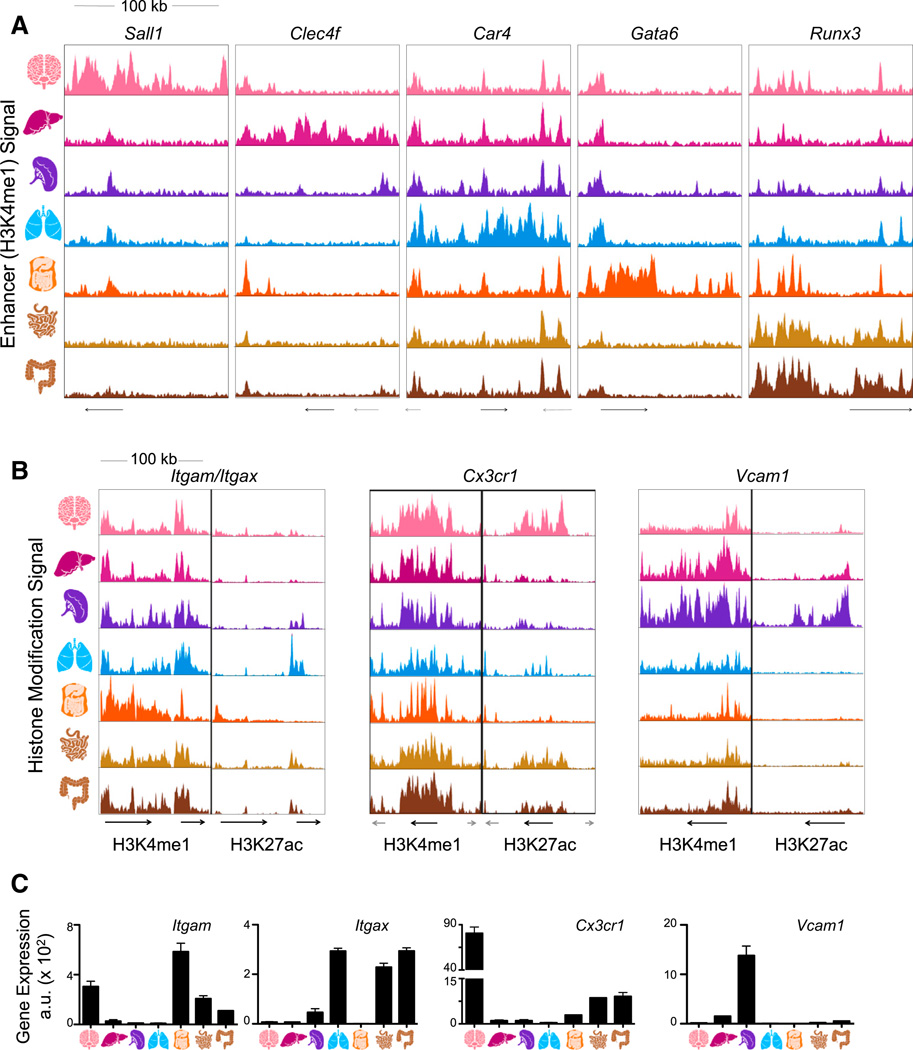
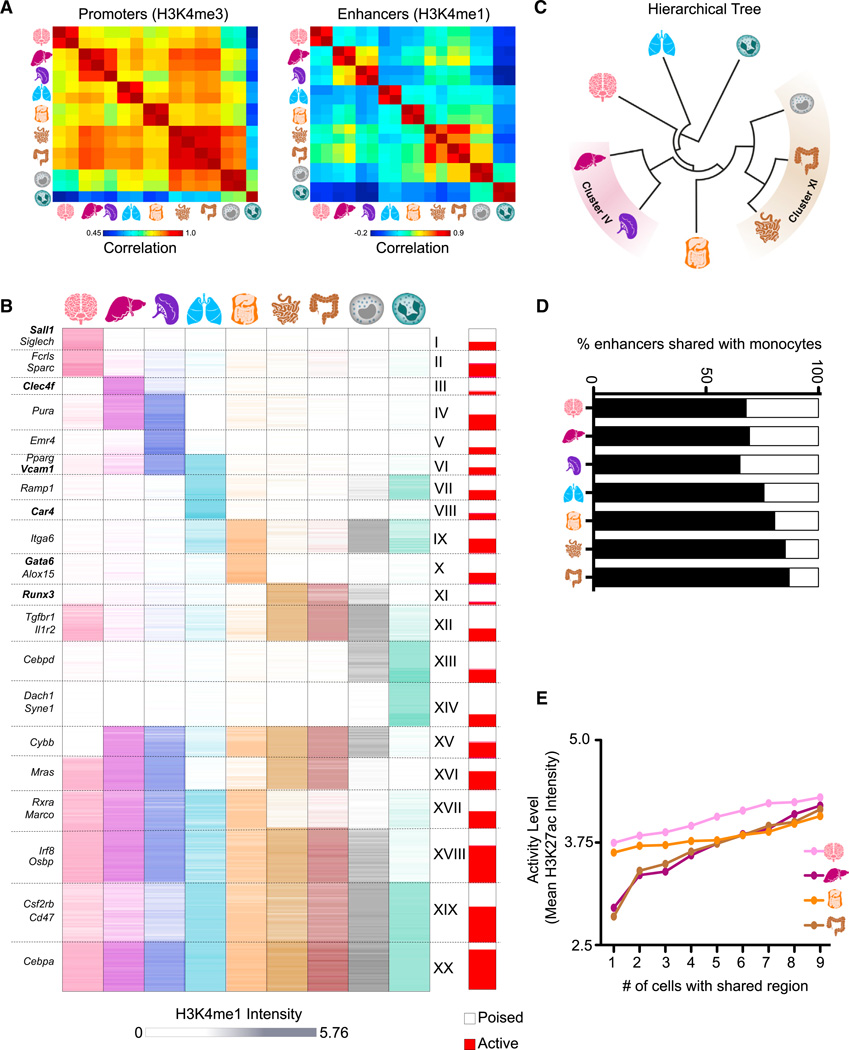
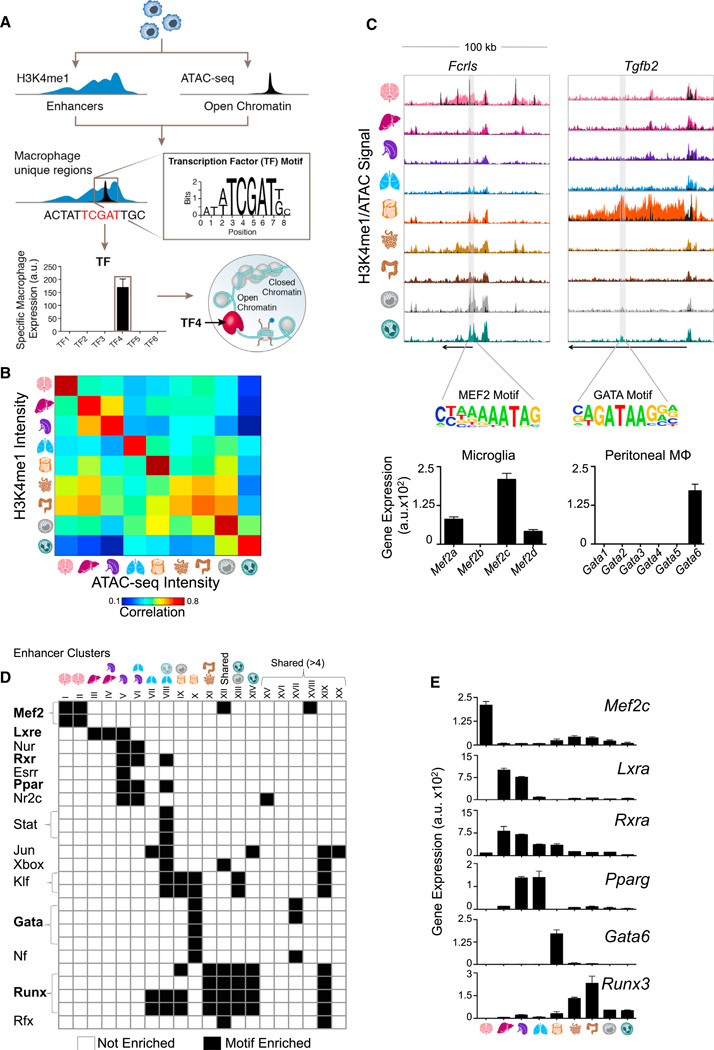
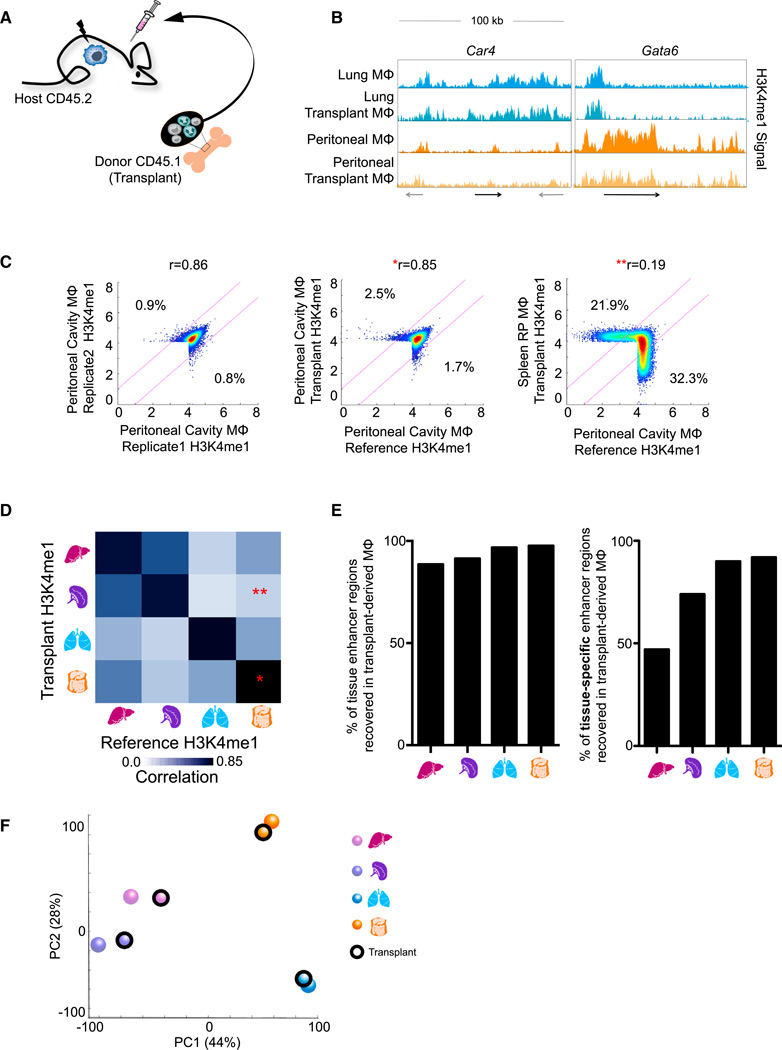
Macrophages are critical for innate immune defense and also control organ homeostasis in a tissue-specific manner. They provide a fitting model to study the impact of ontogeny and microenvironment on chromatin state and whether chromatin modifications contribute to macrophage identity. Here, we profile the dynamics of four histone modifications across seven tissue-resident macrophage populations. We identify 12,743 macrophage-specific enhancers and establish that tissue-resident macrophages have distinct enhancer landscapes beyond what can be explained by developmental origin. Combining our enhancer catalog with gene expression profiles and open chromatin regions, we show that a combination of tissue- and lineage-specific transcription factors form the regulatory networks controlling chromatin specification in tissue-resident macrophages. The environment is capable of shaping the chromatin landscape of transplanted bone marrow precursors, and even differentiated macrophages can be reprogrammed when transferred into a new microenvironment. These results provide a comprehensive view of macrophage regulatory landscape and highlight the importance of the microenvironment, along with pioneer factors in orchestrating identity and plasticity.
巨噬细胞对于先天性免疫防御至关重要,并且还以组织特异性方式控制器官内稳态。它们为研究个体发生和微环境对染色质状态的影响以及染色质修饰是否有助于巨噬细胞特性提供了一个合适的模型。在此,我们描绘了七个组织驻留巨噬细胞群体中四种组蛋白修饰的动态变化。我们鉴定出12743个巨噬细胞特异性增强子,并确定组织驻留巨噬细胞具有独特的增强子景观,其差异超出了发育起源所能解释的范围。将我们的增强子目录与基因表达谱和开放染色质区域相结合,我们表明组织特异性和谱系特异性转录因子的组合形成了控制组织驻留巨噬细胞染色质特异性的调控网络。环境能够塑造移植骨髓前体的染色质景观,甚至分化的巨噬细胞在转移到新的微环境中时也可以被重新编程。这些结果提供了巨噬细胞调控景观的全面视图,并突出了微环境以及先驱因子在协调细胞特性和可塑性方面的重要性。