Frizzi Filippo, Ciofi Claudio, Dapporto Leonardo, Natali Chiara, Chelazzi Guido, Turillazzi Stefano, Santini Giacomo
Department of Biology, University of Florence, Via Madonna del Piano 6, 50019, Sesto Fiorentino (FI), Italy.
PLoS One. 2015 Oct 7;10(10):e0137919. doi: 10.1371/journal.pone.0137919. eCollection 2015.
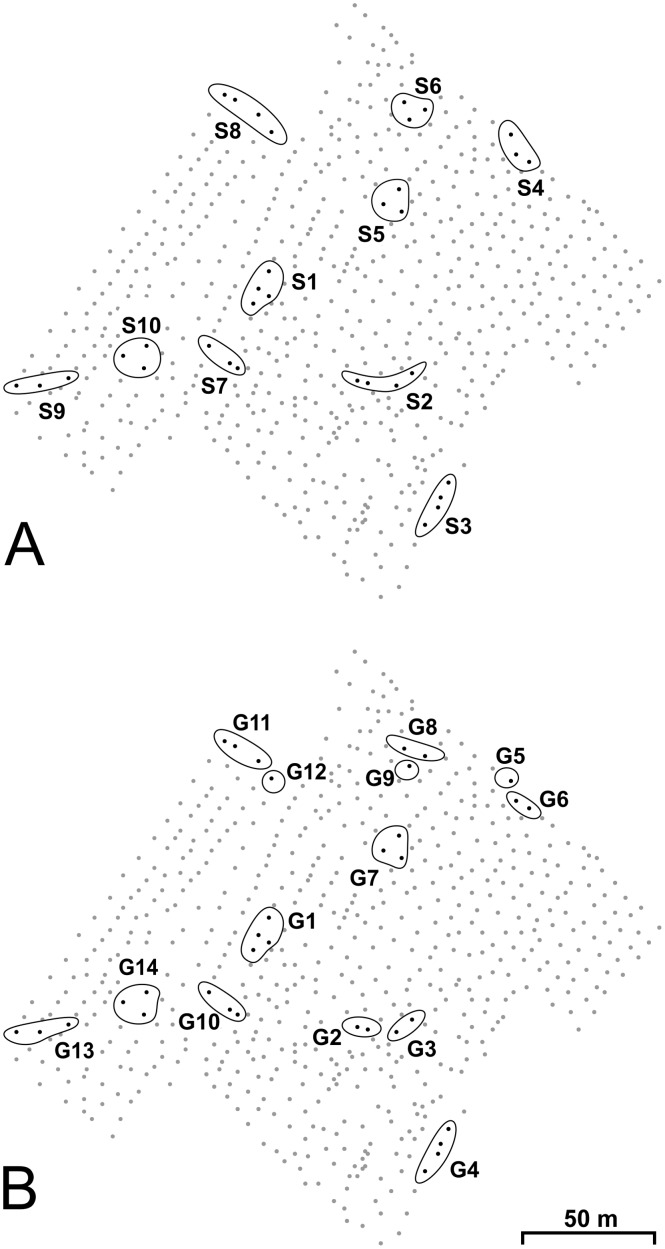
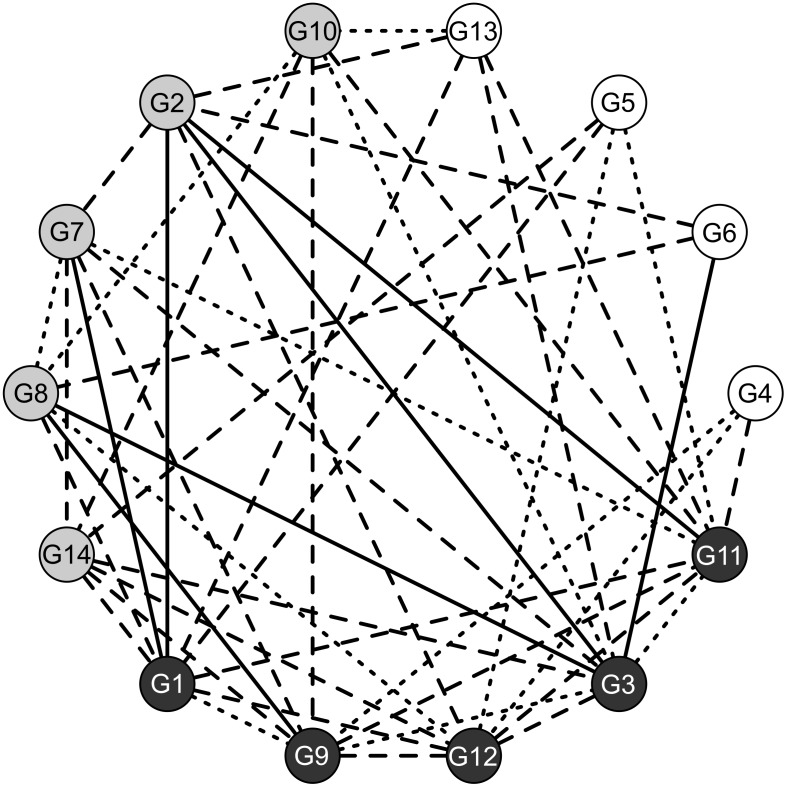
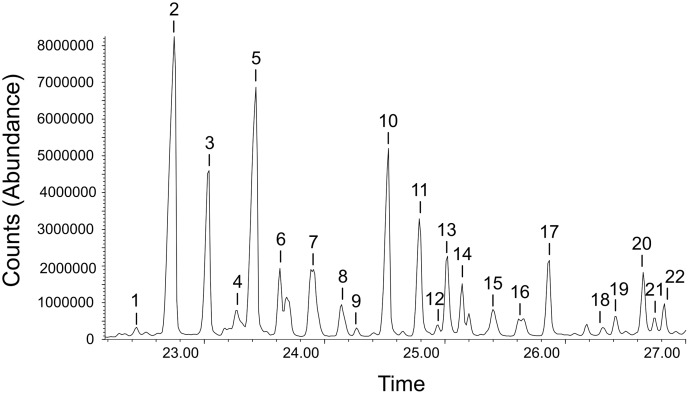
Nest-mate recognition plays a key role in the biology of ants. Although individuals coming from a foreign nest are, in most cases, promptly rejected, the degree of aggressiveness towards non nest-mates may be highly variable among species and relies on genetic, chemical and environmental factors. We analyzed intraspecific relationships among neighboring colonies of the dominant Mediterranean acrobat ant Crematogaster scutellaris integrating genetic, chemical and behavioral analyses. Colony structure, parental relationships between nests, cuticular hydrocarbons profiles (CHCs) and aggressive behavior against non nest-mates were studied in 34 nests located in olive tree trunks. Bayesian clustering analysis of allelic variation at nine species-specific microsatellite DNA markers pooled nests into 14 distinct clusters, each representing a single colony, confirming a polydomous arrangement of nests in this species. A marked genetic separation among colonies was also detected, probably due to long distance dispersion of queens and males during nuptial flights. CHCs profiles varied significantly among colonies and between nests of the same colony. No relationship between CHCs profiles and genetic distances was detected. The level of aggressiveness between colonies was inversely related to chemical and spatial distance, suggesting a 'nasty neighbor' effect. Our findings also suggest that CHCs profiles in C. scutellaris may be linked to external environmental factors rather than genetic relationships.
巢伴识别在蚂蚁生物学中起着关键作用。尽管大多数情况下,来自其他巢穴的个体都会被迅速排斥,但不同物种对非巢伴的攻击程度可能差异很大,并且取决于遗传、化学和环境因素。我们综合运用遗传、化学和行为分析方法,研究了地中海优势杂技蚁(Crematogaster scutellaris)相邻蚁群之间的种内关系。我们对位于橄榄树干中的34个蚁巢的蚁群结构、巢间的亲本关系、表皮碳氢化合物图谱(CHCs)以及对非巢伴的攻击行为进行了研究。利用9个物种特异性微卫星DNA标记对等位基因变异进行贝叶斯聚类分析,将蚁巢归为14个不同的聚类,每个聚类代表一个单一蚁群,证实了该物种蚁巢的多蚁巢分布模式。我们还检测到不同蚁群之间存在明显的遗传分化,这可能是由于婚飞期间蚁后和雄蚁远距离扩散所致。不同蚁群以及同一蚁群内不同蚁巢之间的CHCs图谱存在显著差异。未检测到CHCs图谱与遗传距离之间的关系。蚁群之间的攻击水平与化学距离和空间距离呈负相关,表明存在“恶劣邻居”效应。我们的研究结果还表明,C. scutellaris的CHCs图谱可能与外部环境因素有关,而非遗传关系。