Molecular Ecology Group, Department of Ecology, University of Innsbruck, Technikerstr. 25, Innsbruck, 6020, Austria.
Sci Rep. 2019 May 2;9(1):6856. doi: 10.1038/s41598-019-43313-4.
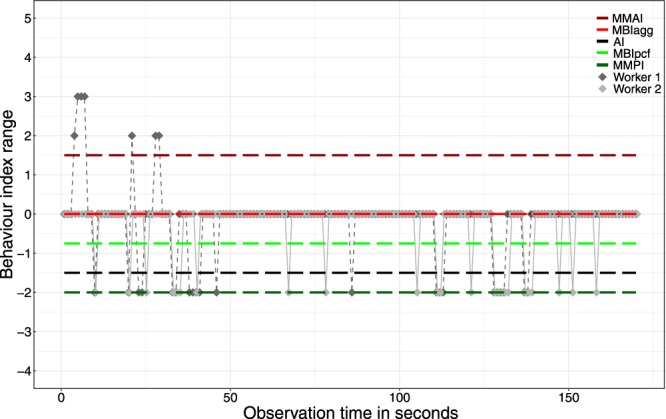
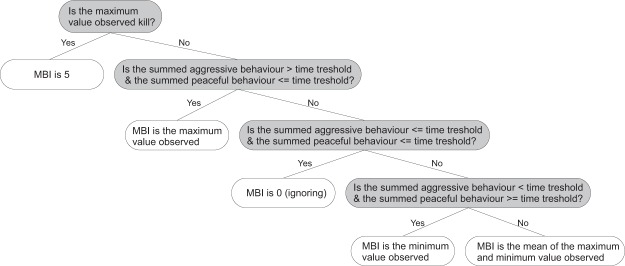
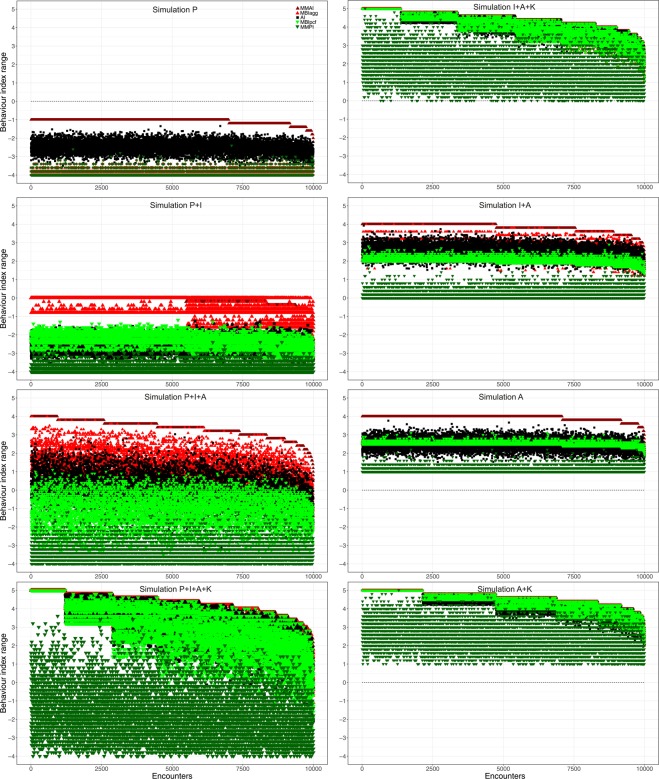
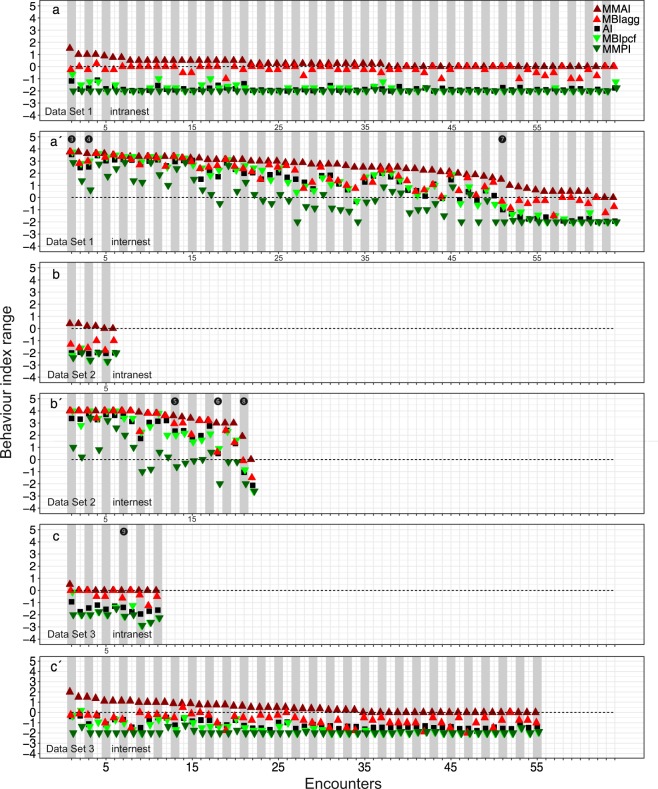
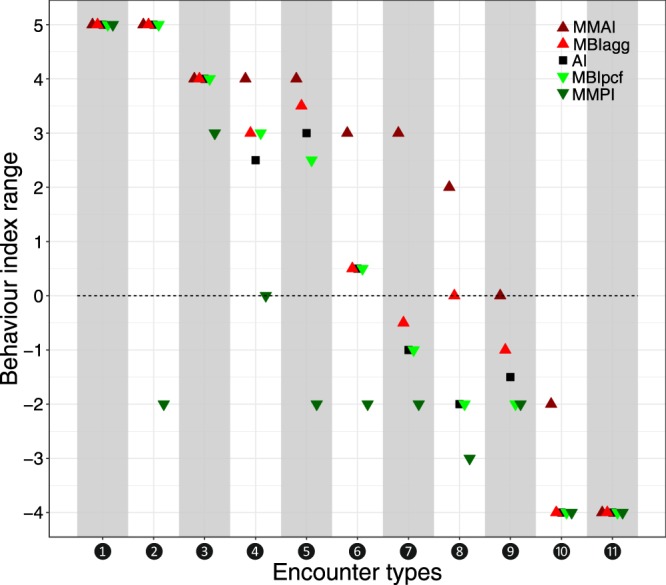
Animal behaviour often is characterised by standardised assays. In social insects such as ants, behaviour assays are for example used to characterise aggressive and peaceful behaviour. Such assays differ in the number of individuals, the duration and place of assays, and the scoring scales. Also the behaviour indices used to summarise the results differ. Here, we compared five behaviour indices (Aggression Index, Mean Maximum Aggression Index; and the newly introduced Mean Maximum Peace Index, Mean Behaviour Index aggressive, and Mean Behaviour Index peaceful) using a scoring scale that comprises peaceful and aggressive behaviour. The indices were applied on eight simulations and three observed data sets. The five indices were correlated but frequently differed in their means. Multiple indices were needed to capture the complete behaviour range. Furthermore, subtle differences in workers' behaviour, that is, differences that go beyond the presence/absence of aggression, were only identified when considering multiple indices. We infer that the indices applied are differently suited for different analyses. Fine-scale analyses of behavioural variation profit from using more than one index. The particular choice of index or indices likely influences the interpretation of behaviour and should be carefully done in the light of study species and research question.
动物行为通常具有标准化的特征。例如,在蚂蚁等社会性昆虫中,行为测试用于描述攻击性行为和温和性行为。这些测试在个体数量、持续时间和地点以及评分标准上存在差异。此外,用于总结结果的行为指数也不同。在这里,我们使用包含温和和攻击行为的评分标准比较了五个行为指数(攻击指数、平均最大攻击指数,以及新引入的平均最大温和指数、攻击行为平均行为指数和温和行为平均行为指数)。这五个指数应用于八个模拟和三个观测数据集。这些指数相关但平均值经常不同。需要多个指数来捕捉完整的行为范围。此外,当考虑多个指数时,只有在考虑到工人行为的细微差异时,即超越攻击存在/不存在的差异时,才能识别出这些差异。我们推断,应用的指数在不同的分析中具有不同的适用性。对行为变化的精细分析受益于使用多个指数。指数的特定选择或组合可能会影响对行为的解释,应根据研究物种和研究问题仔细选择。