Lai Tsung-Hsuan, Shieh Jiunn-Min, Tsou Chih-Jen, Wu Wen-Bin
School of Medicine, Fu-Jen Catholic University, New Taipei City, Taiwan ; Department of Obstetrics and Gynecology, Cathay General Hospital, Taipei, Taiwan ; Institute of Systems Biology and Bioinformatics, National Central University, Jhongli City, Taiwan.
Department of Internal Medicine, Chi-Mei Medical Center, Tainan, Taiwan ; Department of Recreation and Healthcare Management, Chia Nan University of Pharmacy and Science, Tainan, Taiwan.
Int J Nanomedicine. 2015 Sep 21;10:5925-39. doi: 10.2147/IJN.S88514. eCollection 2015.
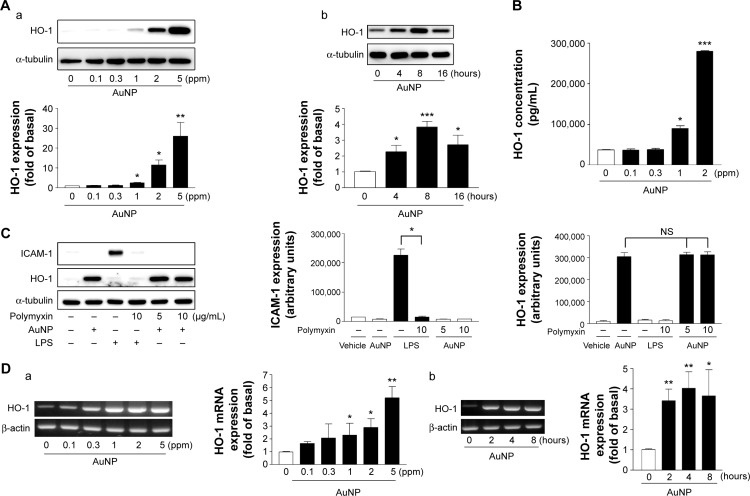
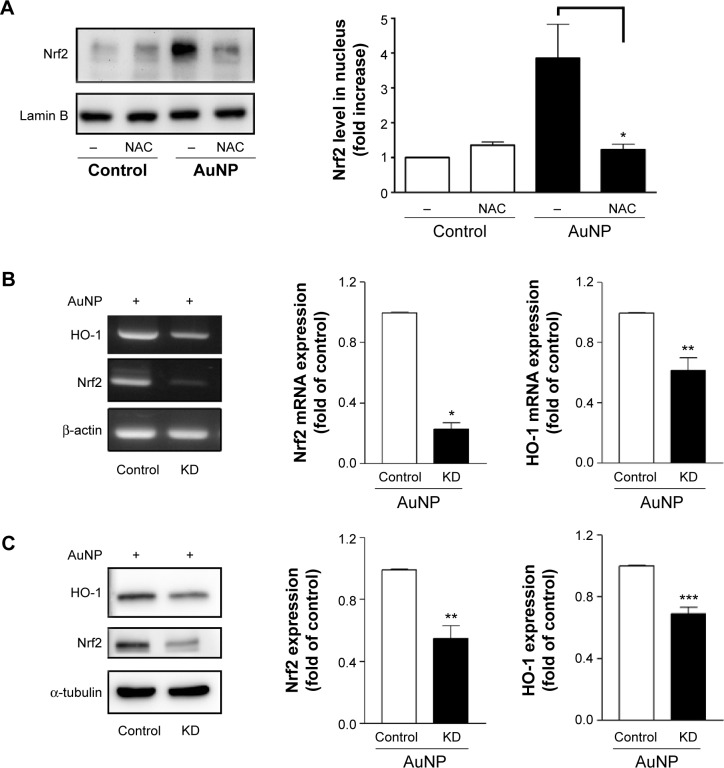
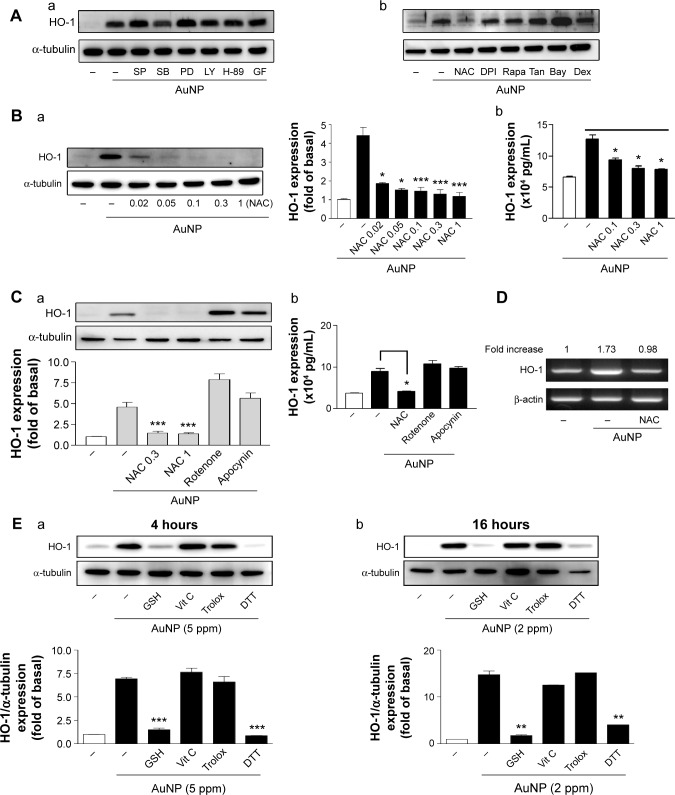
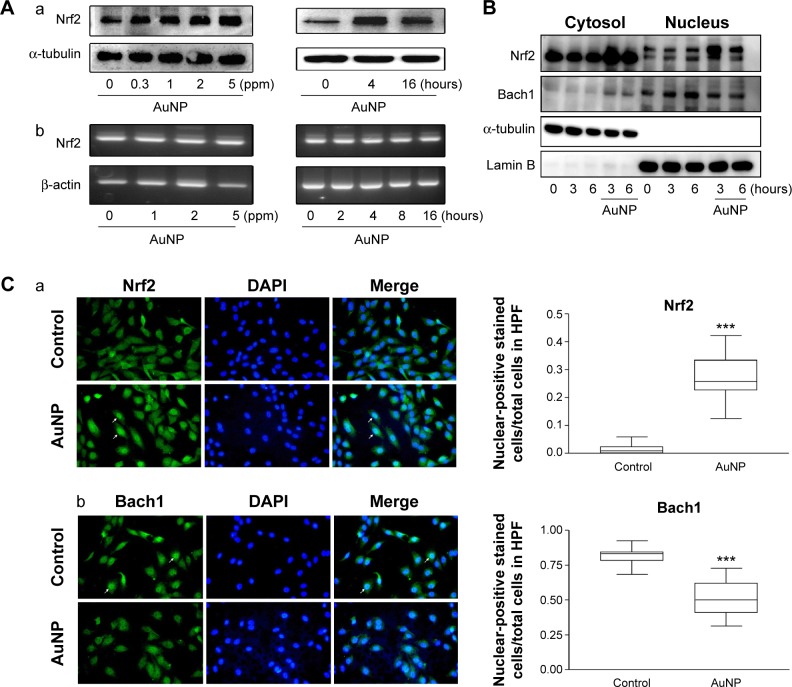
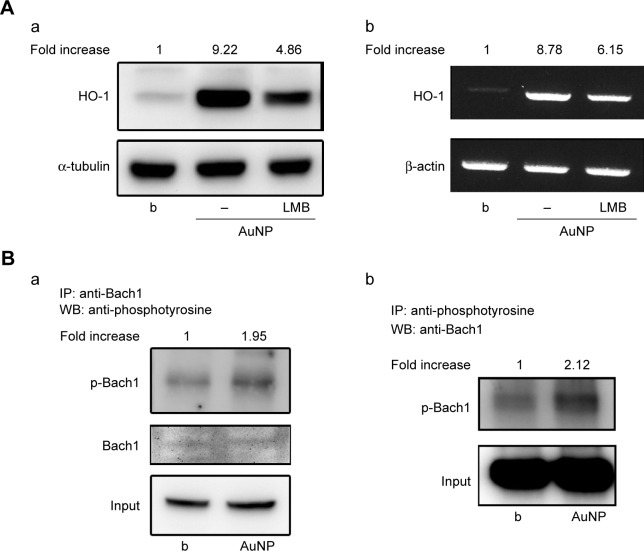
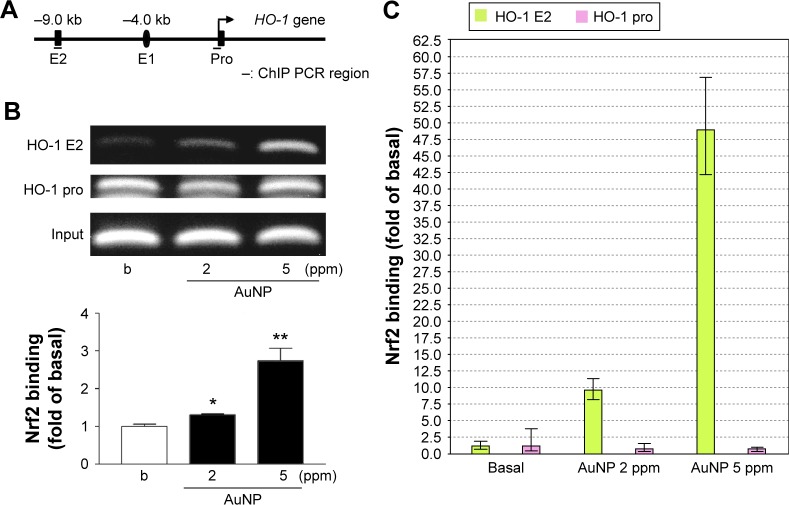
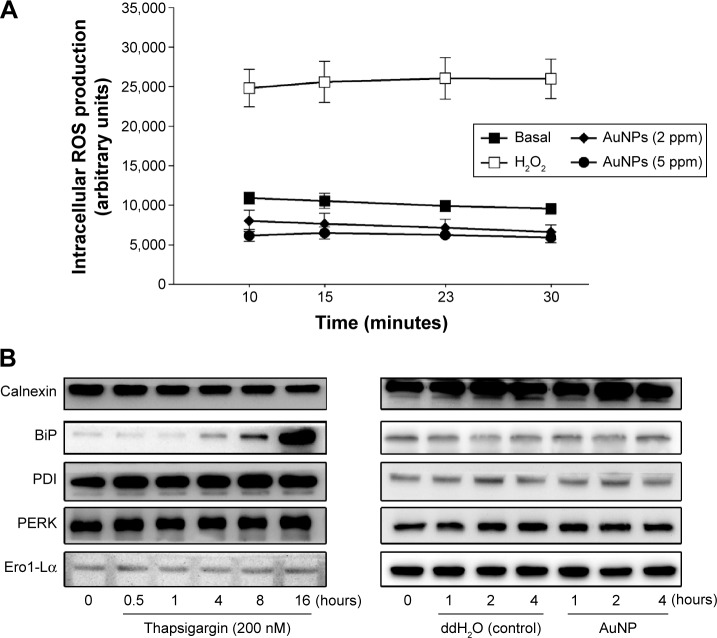
It has been reported that increased levels and activity of the heme oxygenase-1 (HO-1) protein ameliorate tissue injuries. In the present study, we investigated the effects and mechanisms of action of gold nanoparticles (AuNPs) on HO-1 protein expression in human vascular endothelial cells (ECs). The AuNPs induced HO-1 protein and mRNA expression in a concentration- and time-dependent manner. The induction was reduced by the thiol-containing antioxidants, including N-acetylcysteine and glutathione, but not by the non-thiol-containing antioxidants and inhibitors that block the enzymes for intracellular reactive oxygen species generation. The AuNPs enhanced Nrf2 protein levels but did not affect Nrf2 mRNA expression. In response to the AuNP treatment, the cytosolic Nrf2 translocated to the nucleus, and, concomitantly, Bach1 exited the nucleus and its tyrosine phosphorylation increased. The chromatin immunoprecipitation assay revealed that the translocated Nrf2 bound to the antioxidant-response element located in the E2 enhancer region of the HO-1 gene promoter and acted as a transcription factor. Although N-acetylcysteine inhibited the AuNP-induced Nrf2 nuclear translocation, the AuNPs did not promote intracellular reactive oxygen species production or endoplasmic reticulum stress in the ECs. Knockdown of Nrf2 expression by RNA interference significantly inhibited AuNP-induced HO-1 expression at the protein and mRNA levels. In summary, AuNPs enhance the levels and nuclear translocation of the Nrf2 protein and Bach1 export/tyrosine phosphorylation, leading to Nrf2 binding to the HO-1 E2 enhancer promoter region to drive HO-1 expression in ECs. This study, together with our parallel findings, demonstrates that AuNPs can act as an HO-1 inducer, which may partially contribute to their anti-inflammatory bioactivity in human vascular ECs.
据报道,血红素加氧酶-1(HO-1)蛋白水平和活性的增加可改善组织损伤。在本研究中,我们调查了金纳米颗粒(AuNPs)对人血管内皮细胞(ECs)中HO-1蛋白表达的影响及其作用机制。AuNPs以浓度和时间依赖性方式诱导HO-1蛋白和mRNA表达。含硫醇的抗氧化剂(包括N-乙酰半胱氨酸和谷胱甘肽)可降低这种诱导作用,但不含硫醇的抗氧化剂和阻断细胞内活性氧生成酶的抑制剂则不能。AuNPs提高了Nrf2蛋白水平,但不影响Nrf2 mRNA表达。响应AuNP处理,胞质Nrf2易位至细胞核,同时,Bach1离开细胞核,其酪氨酸磷酸化增加。染色质免疫沉淀分析表明,易位的Nrf2与位于HO-1基因启动子E2增强子区域的抗氧化反应元件结合,并作为转录因子发挥作用。尽管N-乙酰半胱氨酸抑制了AuNP诱导的Nrf2核易位,但AuNPs并未促进ECs中的细胞内活性氧生成或内质网应激。通过RNA干扰敲低Nrf2表达可显著抑制AuNP诱导的HO-1在蛋白和mRNA水平的表达。总之,AuNPs提高了Nrf2蛋白水平和核易位以及Bach1的输出/酪氨酸磷酸化,导致Nrf2与HO-1 E2增强子启动子区域结合,从而驱动ECs中HO-1的表达。这项研究与我们的平行发现一起表明,AuNPs可作为HO-1诱导剂,这可能部分解释了它们在人血管ECs中的抗炎生物活性。