Zemp Niklaus, Tavares Raquel, Widmer Alex
Institute of Integrative Biology (IBZ), ETH Zurich, Zürich, Switzerland.
Laboratoire de Biométrie et Biologie Evolutive (UMR 5558), CNRS / Université Lyon 1, Villeurbanne, France.
PLoS Genet. 2015 Oct 8;11(10):e1005536. doi: 10.1371/journal.pgen.1005536. eCollection 2015 Oct.
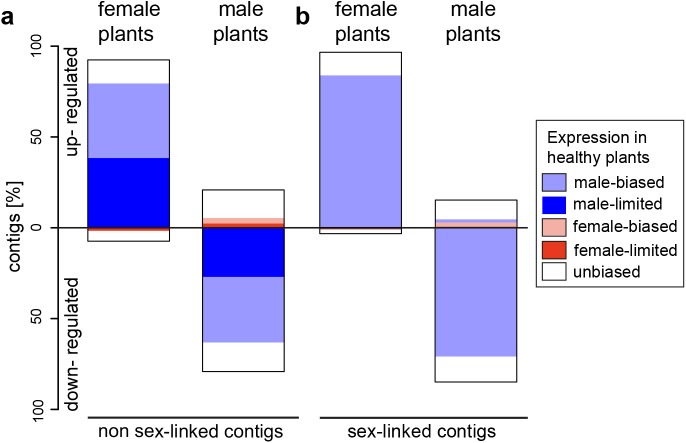
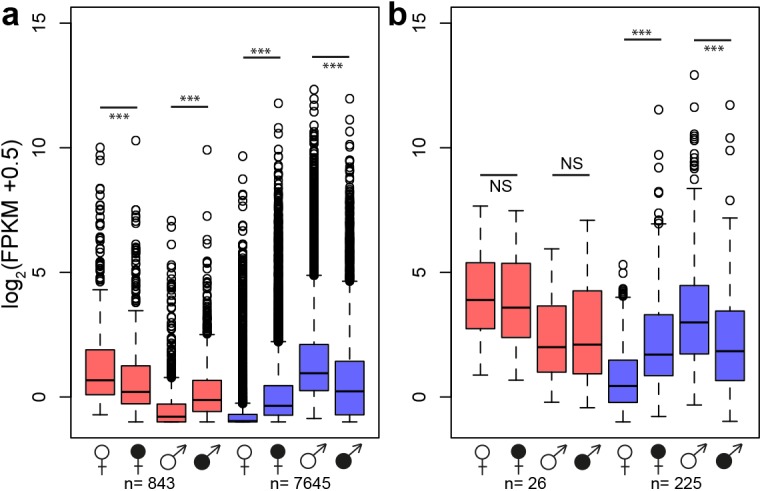
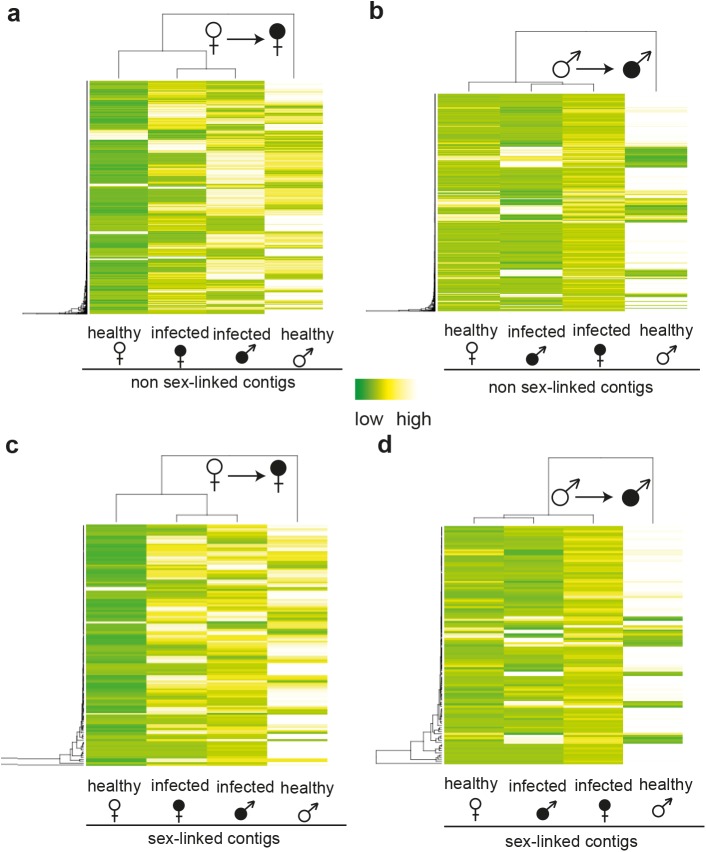
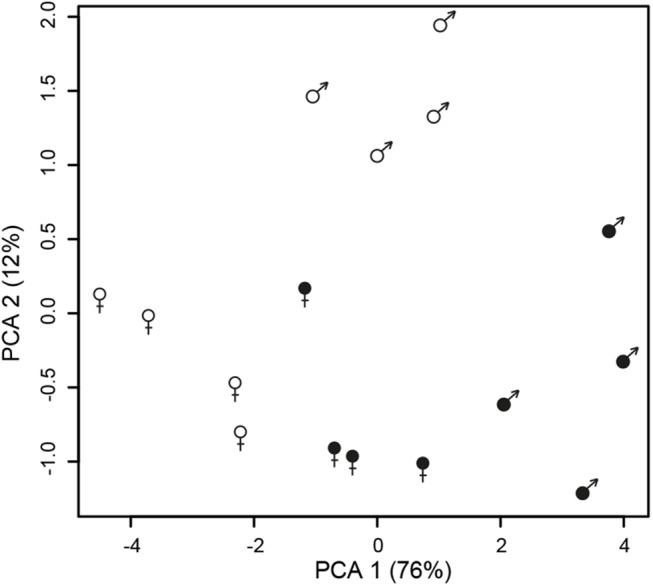
Sexual dimorphism, including differences in morphology, behavior and physiology between females and males, is widespread in animals and plants and is shaped by gene expression differences between the sexes. Such expression differences may also underlie sex-specific responses of hosts to pathogen infections, most notably when pathogens induce partial sex reversal in infected hosts. The genetic changes associated with sex-specific responses to pathogen infections on the one hand, and sexual dimorphism on the other hand, remain poorly understood. The dioecious White Campion (Silene latifolia) displays sexual dimorphism in floral traits and infection with the smut fungus Micobrotryum lychnidis-dioicae induces a partial sex reversal in females. We find strong sex-specific responses to pathogen infection and reduced sexual dimorphism in infected S. latifolia. This provides a direct link between pathogen-mediated changes in sex-biased gene expression and altered sexual dimorphism in the host. Expression changes following infection affected mainly genes with male-biased expression in healthy plants. In females, these genes were up-regulated, leading to a masculinization of the transcriptome. In contrast, infection in males was associated with down-regulation of these genes, leading to a demasculinization of the transcriptome. To a lesser extent, genes with female-biased expression in healthy plants were also affected in opposite directions in the two sexes. These genes were overall down-regulated in females and up-regulated in males, causing, respectively, a defeminization in infected females and a feminization of the transcriptome in infected males. Our results reveal strong sex-specific responses to pathogen infection in a dioecious plant and provide a link between pathogen-induced changes in sex-biased gene expression and sexual dimorphism.
两性异形,包括雌性和雄性在形态、行为和生理上的差异,在动植物中广泛存在,并且是由两性之间的基因表达差异所塑造的。这种表达差异也可能是宿主对病原体感染产生性别特异性反应的基础,尤其是当病原体在受感染宿主中诱导部分性逆转时。一方面,与对病原体感染的性别特异性反应相关的基因变化,另一方面,与两性异形相关的基因变化,仍然知之甚少。雌雄异株的白剪秋罗(Silene latifolia)在花部性状上表现出两性异形,并且感染黑粉菌Micobrotryum lychnidis-dioicae会在雌性中诱导部分性逆转。我们发现受感染的白剪秋罗对病原体感染有强烈的性别特异性反应,并且两性异形减少。这为病原体介导的性别偏向基因表达变化与宿主中改变的两性异形之间提供了直接联系。感染后的表达变化主要影响健康植物中具有雄性偏向表达的基因。在雌性中,这些基因被上调,导致转录组的雄性化。相反,雄性中的感染与这些基因的下调相关,导致转录组的去雄性化。在较小程度上,健康植物中具有雌性偏向表达的基因在两性中也受到相反方向的影响。这些基因在雌性中总体下调,在雄性中上调,分别导致受感染雌性的去雌性化和受感染雄性转录组的雌性化。我们的结果揭示了雌雄异株植物对病原体感染有强烈的性别特异性反应,并为病原体诱导的性别偏向基因表达变化与两性异形之间提供了联系。