University of Basel, Zoological Institute, Vesalgasse 1, 4051 Basel, Switzerland.
BMC Biol. 2012 Dec 18;10:104. doi: 10.1186/1741-7007-10-104.
Males and females differ in many ways and might present different opportunities and challenges to their parasites. In the same way that parasites adapt to the most common host type, they may adapt to the characteristics of the host sex they encounter most often. To explore this hypothesis, we characterized host sex-specific effects of the parasite Pasteuria ramosa, a bacterium evolving in naturally, strongly, female-biased populations of its host Daphnia magna.
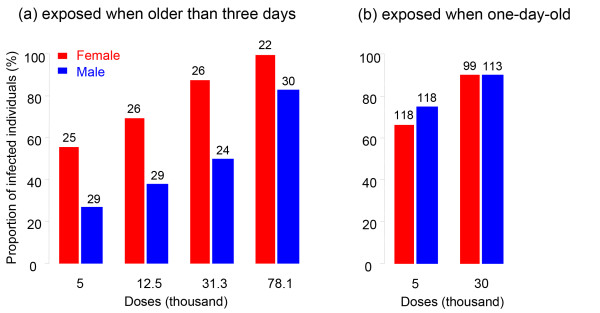
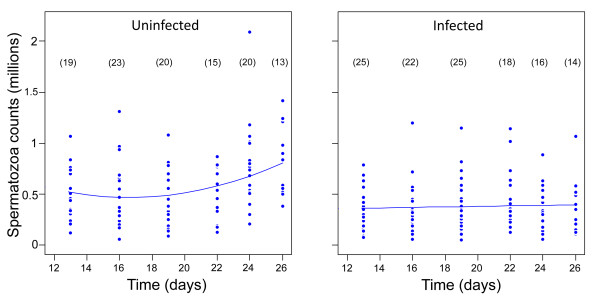
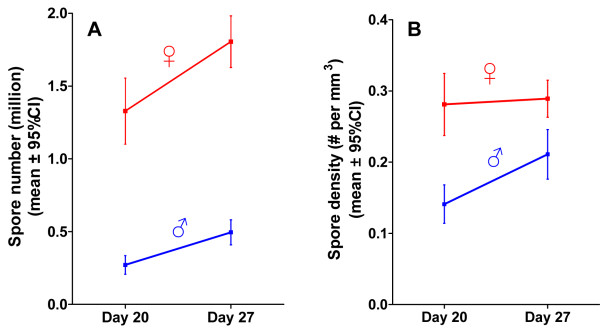
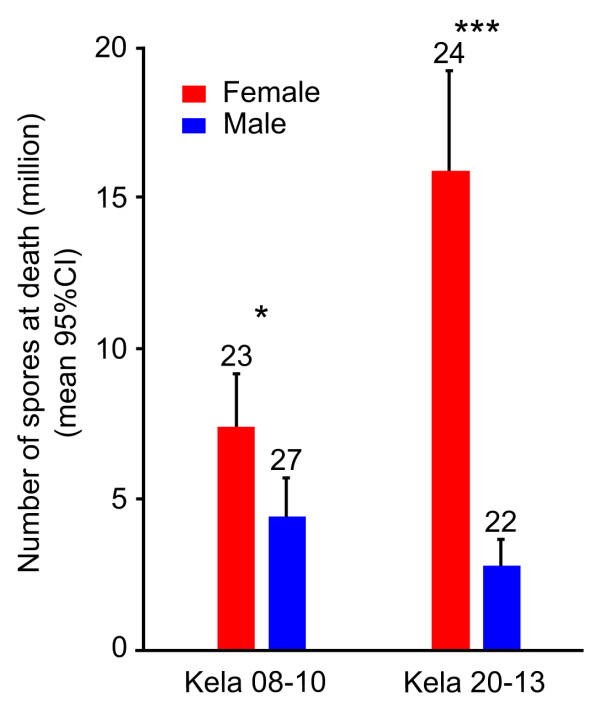
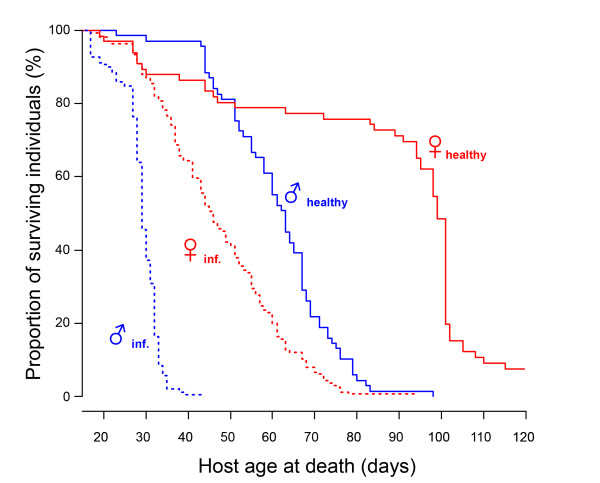
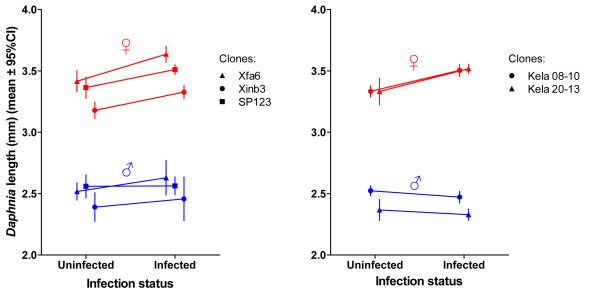
We show that the parasite proliferates more successfully in female hosts than in male hosts, even though males and females are genetically identical. In addition, when exposure occurred when hosts expressed a sexual dimorphism, females were more infected. In both host sexes, the parasite causes a similar reduction in longevity and leads to some level of castration. However, only in females does parasite-induced castration result in the gigantism that increases the carrying capacity for the proliferating parasite.
We show that mature male and female Daphnia represent different environments and reveal one parasite-induced symptom (host castration), which leads to increased carrying capacity for parasite proliferation in female but not male hosts. We propose that parasite induced host castration is a property of parasites that evolved as an adaptation to specifically exploit female hosts.
男性和女性在许多方面存在差异,这可能为寄生虫提供了不同的机会和挑战。同样,寄生虫会适应最常见的宿主类型,也可能会适应它们最常遇到的宿主性别的特征。为了探索这一假说,我们研究了寄生在其宿主大型溞中具有强烈雌性偏倚种群中的细菌巴氏真杆菌的宿主性别特异性效应。
我们发现,即使雄性和雌性在基因上完全相同,寄生虫在雌性宿主中比在雄性宿主中更能成功繁殖。此外,当宿主表现出性二态性时,雌性更容易受到感染。在两种宿主性别中,寄生虫都会导致类似的寿命缩短,并导致一定程度的去势。然而,只有在雌性中,寄生虫诱导的去势才会导致巨化,从而增加增殖寄生虫的承载能力。
我们表明成熟的雄性和雌性大型溞代表了不同的环境,并揭示了一种寄生虫诱导的症状(宿主去势),这导致了寄生虫增殖的承载能力在雌性宿主中增加,而在雄性宿主中则没有。我们提出,寄生虫诱导的宿主去势是寄生虫进化为专门利用雌性宿主的一种适应性特征。