Muñoz-Durango N, Vecchiola A, Gonzalez-Gomez L M, Simon F, Riedel C A, Fardella C E, Kalergis A M
Instituto Milenio en Inmunología e Inmunoterapia, Departamento de Genética Molecular y Microbiología, Pontificia Universidad Católica de Chile, Alameda 340, 8331150 Santiago de Chile, Chile.
Instituto Milenio en Inmunología e Inmunoterapia, Departamento de Endocrinología, Pontificia Universidad Católica de Chile, Lira 85, 8330074 Santiago de Chile, Chile.
Biomed Res Int. 2015;2015:652738. doi: 10.1155/2015/652738. Epub 2015 Sep 10.
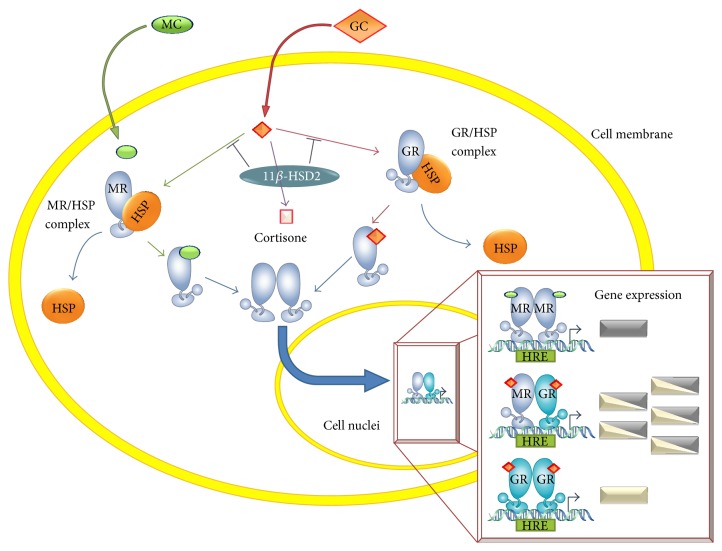
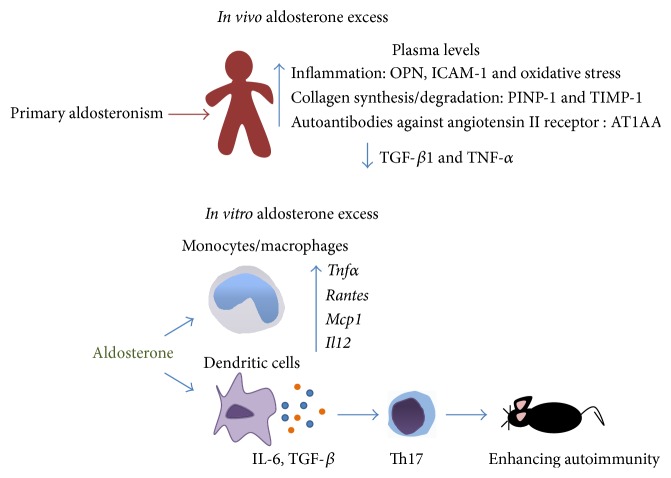
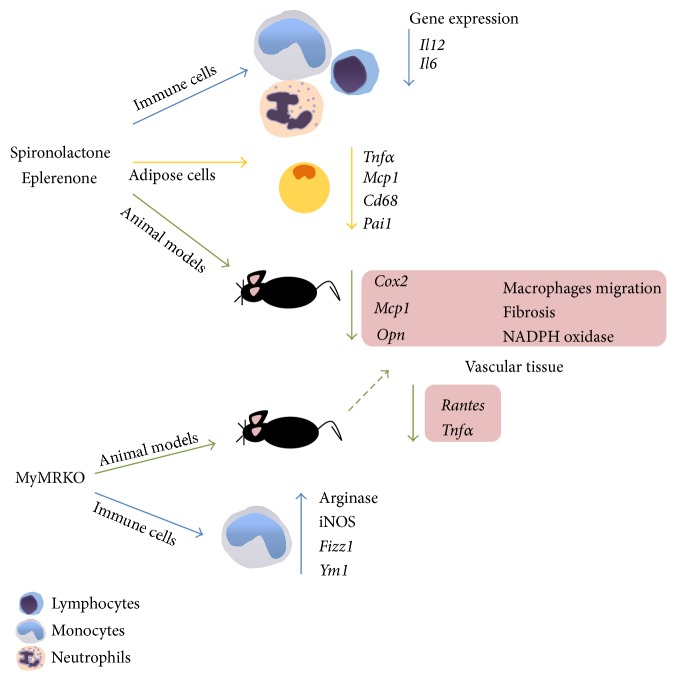
The mineralocorticoid receptor (MR) is a ligand dependent transcription factor. MR has been traditionally associated with the control of water and electrolyte homeostasis in order to keep blood pressure through aldosterone activation. However, there is growing evidence indicating that MR expression is not restricted to vascular and renal tissues, as it can be also expressed by cells of the immune system, where it responds to stimulation or antagonism, controlling immune cell function. On the other hand, aldosterone also has been associated with proinflammatory immune effects, such as the release of proinflammatory cytokines, generating oxidative stress and inducing fibrosis. The inflammatory participation of MR and aldosterone in the cardiovascular disease suggests an association with alterations in the immune system. Hypertensive patients show higher levels of proinflammatory mediators that can be modulated by MR antagonism. Although these proinflammatory properties have been observed in other autoimmune and chronic inflammatory diseases, the cellular and molecular mechanisms that mediate these effects remain unknown. Here we review and discuss the scientific work aimed at determining the immunological role of MR and aldosterone in humans, as well as animal models.
盐皮质激素受体(MR)是一种依赖配体的转录因子。传统上,MR与水和电解质平衡的控制相关,通过醛固酮激活来维持血压。然而,越来越多的证据表明,MR的表达并不局限于血管和肾脏组织,免疫系统的细胞也可表达MR,在其中它对刺激或拮抗作用产生反应,控制免疫细胞功能。另一方面,醛固酮也与促炎免疫效应相关,如促炎细胞因子的释放、产生氧化应激和诱导纤维化。MR和醛固酮在心血管疾病中的炎症参与表明其与免疫系统改变有关。高血压患者显示出较高水平的促炎介质,这些介质可通过MR拮抗作用进行调节。尽管在其他自身免疫性和慢性炎症性疾病中也观察到了这些促炎特性,但介导这些效应的细胞和分子机制仍不清楚。在此,我们回顾并讨论旨在确定MR和醛固酮在人类以及动物模型中的免疫作用的科学研究工作。