Liu Jinny L, Goldman Ellen R, Zabetakis Dan, Walper Scott A, Turner Kendrick B, Shriver-Lake Lisa C, Anderson George P
Naval Research Laboratory, Center for Bio/Molecular Science and Engineering, Washington, DC, 20375, USA.
Microb Cell Fact. 2015 Oct 9;14:158. doi: 10.1186/s12934-015-0340-3.
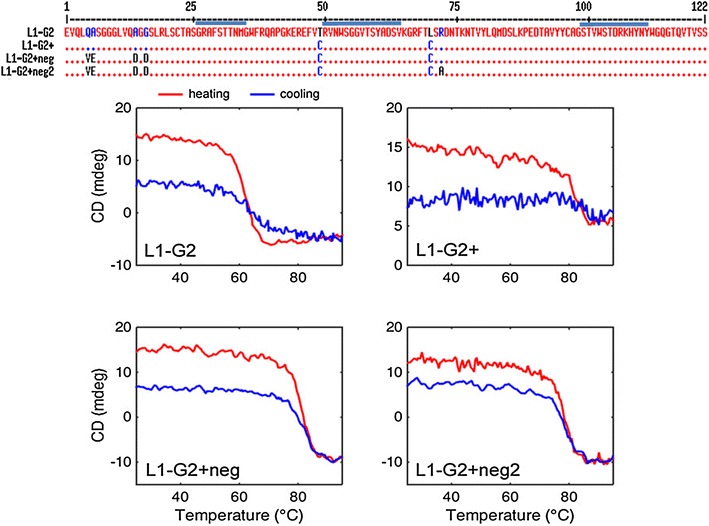
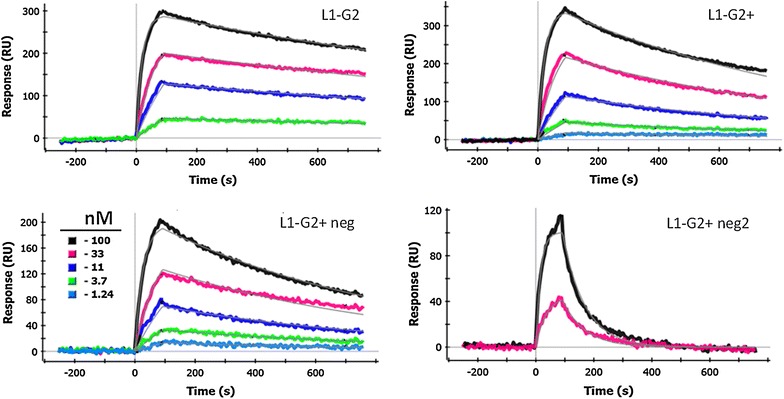
Single domain antibodies derived from the variable region of the unique heavy chain antibodies found in camelids yield high affinity and regenerable recognition elements. Adding an additional disulfide bond that bridges framework regions is a proven method to increase their melting temperature, however often at the expense of protein production. To fulfill their full potential it is essential to achieve robust protein production of these stable binding elements. In this work, we tested the hypothesis that decreasing the isoelectric point of single domain antibody extra disulfide bond mutants whose production fell due to the incorporation of the extra disulfide bond would lead to recovery of the protein yield, while maintaining the favorable melting temperature and affinity.
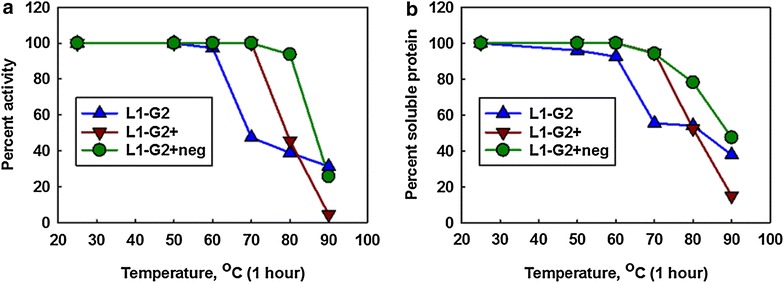
Introduction of negative charges into a disulfide bond mutant of a single domain antibody specific for the L1 antigen of the vaccinia virus led to approximately 3.5-fold increase of protein production to 14 mg/L, while affinity and melting temperature was maintained. In addition, refolding following heat denaturation improved from 15 to 70 %. It also maintained nearly 100 % of its binding function after heating to 85 °C for an hour at 1 mg/mL. Disappointingly, the replacement of neutral or positively charged amino acids with negatively charged ones to lower the isoelectric point of two anti-toxin single domain antibodies stabilized with a second disulfide bond yielded only slight increases in protein production. Nonetheless, for one of these binders the charge change itself stabilized the structure equivalent to disulfide bond addition, thus providing an alternative route to stabilization which is not accompanied by loss in production.
The ability to produce high affinity, stable single domain antibodies is critical for their utility. While the addition of a second disulfide bond is a proven method for enhancing stability of single domain antibodies, it frequently comes at the cost of reduced yields. While decreasing the isoelectric point of double disulfide mutants of single domain antibodies may improve protein production, charge addition appears to consistently improve refolding and some charge changes can also improve thermal stability, thus providing a number of benefits making the examination of such mutations worth consideration.
源自骆驼科动物独特重链抗体可变区的单域抗体可产生高亲和力和可再生的识别元件。添加一个连接框架区的额外二硫键是提高其解链温度的一种已证实的方法,然而这通常会以蛋白质产量为代价。为充分发挥其潜力,实现这些稳定结合元件的强大蛋白质生产至关重要。在这项工作中,我们测试了这样一个假设:降低因额外二硫键的引入而导致产量下降的单域抗体额外二硫键突变体的等电点,将导致蛋白质产量恢复,同时保持良好的解链温度和亲和力。
将负电荷引入针对痘苗病毒L1抗原的单域抗体的二硫键突变体中,导致蛋白质产量增加约3.5倍,达到14 mg/L,同时保持了亲和力和解链温度。此外,热变性后的重折叠率从15%提高到70%。在1 mg/mL的浓度下加热至85°C一小时后,它还保持了近100%的结合功能。令人失望的是,用带负电荷的氨基酸取代中性或带正电荷的氨基酸以降低用第二个二硫键稳定的两种抗毒素单域抗体的等电点,仅使蛋白质产量略有增加。尽管如此,对于其中一种结合物,电荷变化本身使结构稳定,相当于添加二硫键,从而提供了一种不伴随产量损失的稳定化替代途径。
生产高亲和力、稳定的单域抗体的能力对其效用至关重要。虽然添加第二个二硫键是增强单域抗体稳定性的一种已证实的方法,但它经常以产量降低为代价。虽然降低单域抗体双二硫键突变体的等电点可能会提高蛋白质产量,但添加电荷似乎始终能改善重折叠,并且一些电荷变化还可以提高热稳定性,从而带来许多益处,使得对这类突变的研究值得考虑。