Takemura Yoshihiro, Kuroki Katsuou, Shida Yoji, Araki Shungo, Takeuchi Yukari, Tanaka Keisuke, Ishige Taichiro, Yajima Shunsuke, Tamura Fumio
Faculty of Agriculture, Tottori University, Koyama, Tottori, 680-8553, Japan.
NODA Genome Research Center, Tokyo University of Agriculture, Setagaya-ku, Tokyo, 156-8502, Japan.
PLoS One. 2015 Oct 9;10(10):e0139595. doi: 10.1371/journal.pone.0139595. eCollection 2015.
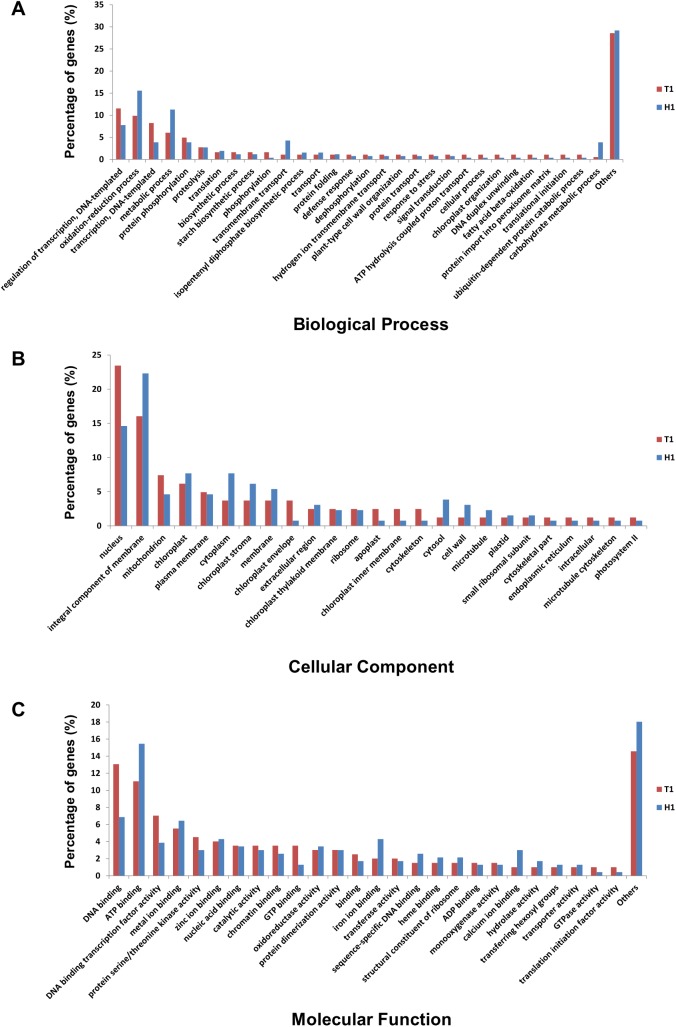
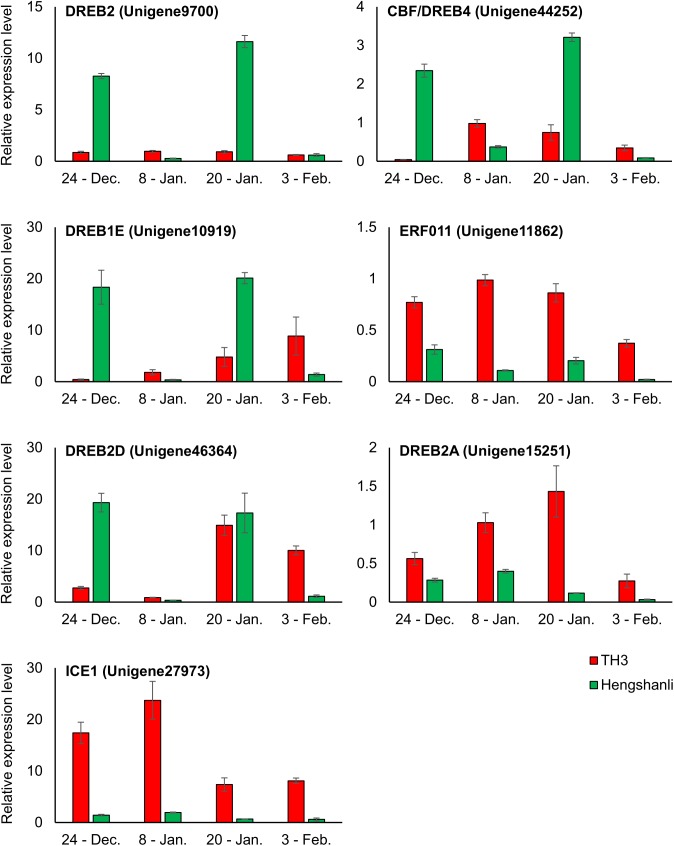
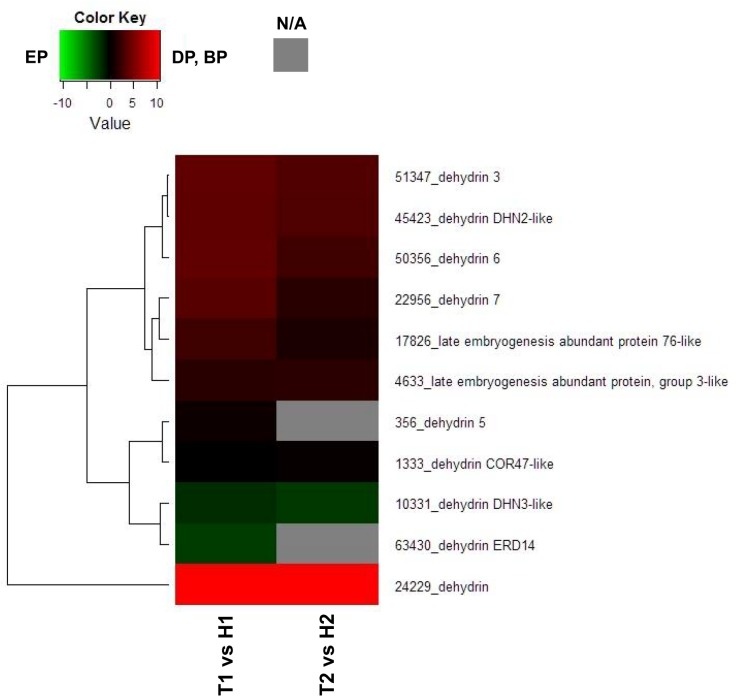
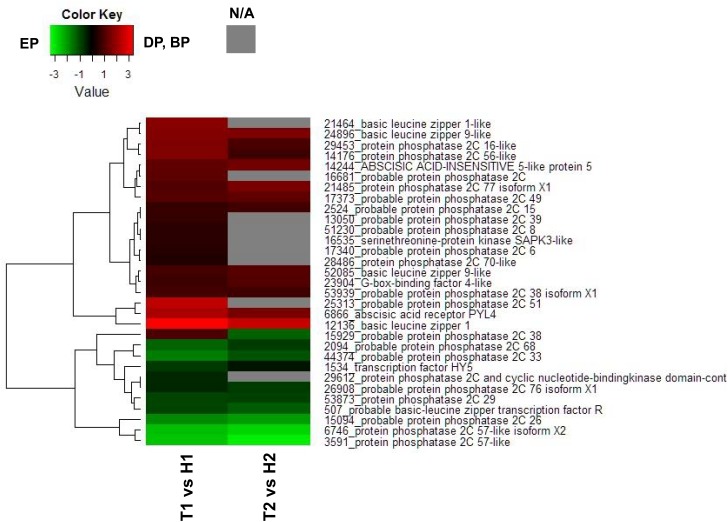
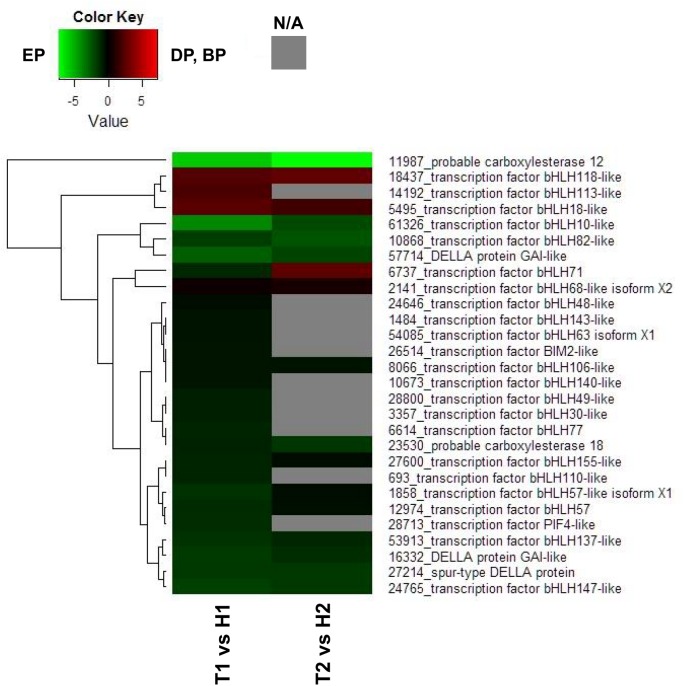
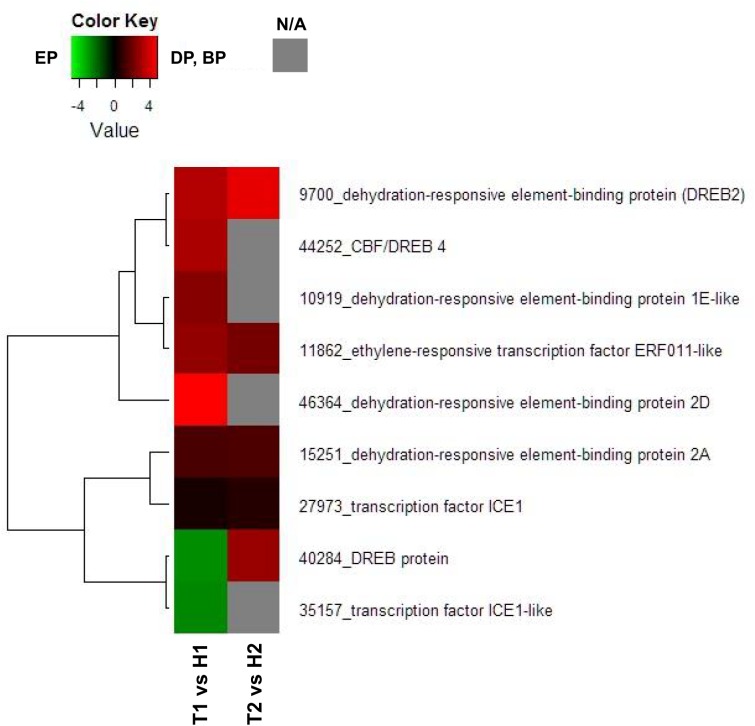
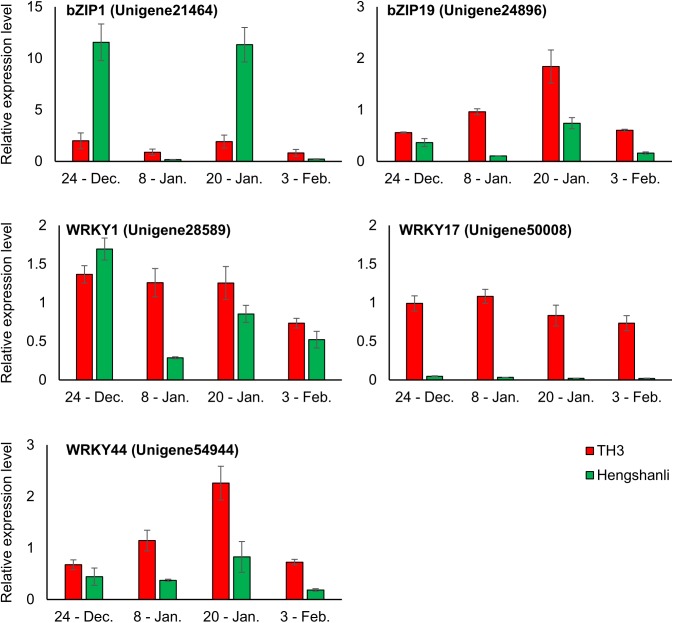
The flower bud transcriptome in the less dormant Taiwanese pear 'Hengshanli' and high-chilling requiring Japanese pear strain TH3 subjected to the same chilling exposure time were analyzed during winter using next-generation sequencing. In buds sampled on January 10th and on February 7th in 2014, 6,978 and 7,096 genes, respectively, were significantly differentially expressed in the TH3 and 'Hengshanli' libraries. A comparative GO analysis revealed that oxidation-reduction process (biological process) and ATP binding (molecular function), were overrepresented during the ecodormancy period (EP) when compared to the endodormancy deepest period (DP), indicating that ATP synthesis was activated during the transition between these dormancy stages. Among the 11 differently expressed genes (DEGs) annotated as probable dehydrins or LEA protein-related genes, 9 DEGs showed higher transcript levels in the DP than in the EP. In order to focus on transcription factors induced by low temperature or drought, 7 differently expressed genes (DEGs) annotated as probable ICE1 or DREB proteins were analyzed by real-time PCR. Expression levels of 3 genes were higher in TH3 than in 'Hengshanli' on all sampling days. Their expression increased during the endodormancy deepest period (DP) and then decreased before endodormancy breaking in TH3 buds. Taken together, these results suggest that these genes annotated as ICE1, DREB and ERF are involved in endodormancy maintenance and in the transition from endodormancy to ecodormancy.
在冬季,利用新一代测序技术对休眠程度较低的台湾梨‘横山梨’和需冷量高的日本梨品种TH3在相同低温处理时间下的花芽转录组进行了分析。在2014年1月10日和2月7日采集的芽中,TH3和‘横山梨’文库中分别有6978个和7096个基因显著差异表达。比较基因本体(GO)分析显示,与内休眠最深期(DP)相比,在生态休眠期(EP)氧化还原过程(生物过程)和ATP结合(分子功能)的代表性过高,表明在这些休眠阶段的转换过程中ATP合成被激活。在注释为可能的脱水素或胚胎发育晚期丰富蛋白(LEA)相关基因的11个差异表达基因(DEG)中,9个DEG在DP期的转录水平高于EP期。为了聚焦于低温或干旱诱导的转录因子,通过实时PCR分析了7个注释为可能的ICE1或DREB蛋白的差异表达基因(DEG)。在所有采样日,TH3中3个基因的表达水平高于‘横山梨’。它们的表达在TH3芽内休眠最深期(DP)增加,然后在内休眠打破前下降。综上所述,这些结果表明,这些注释为ICE1、DREB和ERF的基因参与了内休眠的维持以及从内休眠到生态休眠的转变。