
荧光假单胞菌PCL1751的基因组分析:一种可控制植物宿主根系病害并缓解盐胁迫的根际细菌。
Genome Analysis of Pseudomonas fluorescens PCL1751: A Rhizobacterium that Controls Root Diseases and Alleviates Salt Stress for Its Plant Host.
作者信息
Cho Shu-Ting, Chang Hsing-Hua, Egamberdieva Dilfuza, Kamilova Faina, Lugtenberg Ben, Kuo Chih-Horng
机构信息
Institute of Plant and Microbial Biology, Academia Sinica, Taipei, Taiwan.
Institute for Landscape Biogeochemistry, Leibniz Centre for Agricultural Landscape Research (ZALF), Eberswalder str. 84, Müncheberg, Germany.
出版信息
PLoS One. 2015 Oct 9;10(10):e0140231. doi: 10.1371/journal.pone.0140231. eCollection 2015.
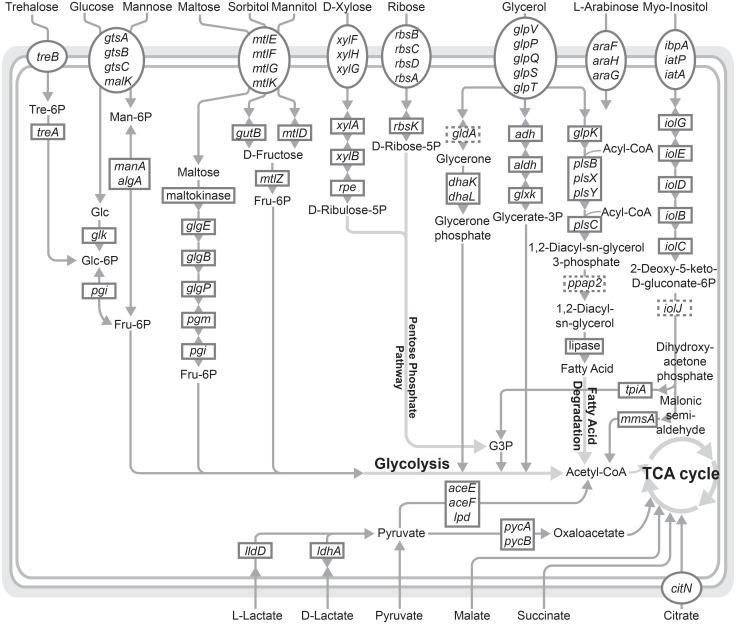
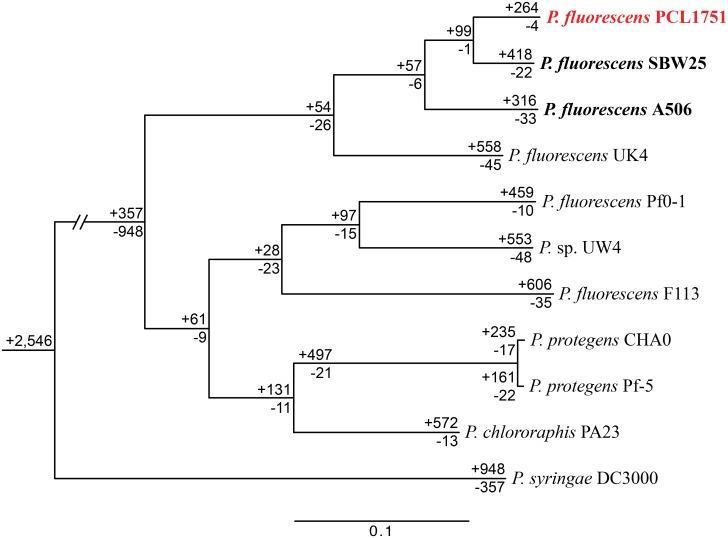
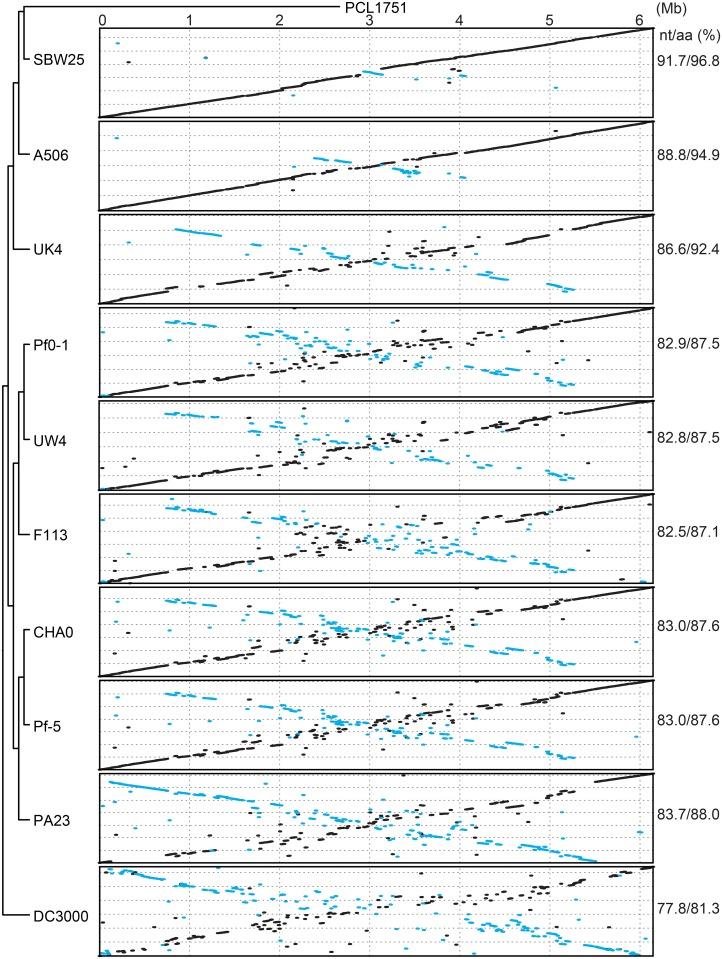
Pseudomonas fluorescens PCL1751 is a rod-shaped Gram-negative bacterium isolated from the rhizosphere of a greenhouse-grown tomato plant in Uzbekistan. It controls several plant root diseases caused by Fusarium fungi through the mechanism of competition for nutrients and niches (CNN). This mechanism does not rely on the production of antibiotics, so it avoids the concerns of resistance development and is environmentally safe. Additionally, this bacterium promotes plant growth by alleviating salt stress for its plant host. To investigate the genetic mechanisms that may explain these observations, we determined the complete genome sequence of this bacterium, examined its gene content, and performed comparative genomics analysis with other Pseudomonas strains. The genome of P. fluorescens PCL1751 consisted of one circular chromosome that is 6,143,950 base-pairs (bp) in size; no plasmid was found. The annotation included 19 rRNA, 70 tRNA, and 5,534 protein-coding genes. The gene content analysis identified a large number of genes involved in chemotaxis and motility, colonization of the rhizosphere, siderophore biosynthesis, and osmoprotectant production. In contrast, the pathways involved in the biosynthesis of phytohormones or antibiotics were not found. Comparison with other Pseudomonas genomes revealed extensive variations in their genome size and gene content. The presence and absence of secretion system genes were highly variable. As expected, the synteny conservation among strains decreased as a function of phylogenetic divergence. The integration of prophages appeared to be an important driver for genome rearrangements. The whole-genome gene content analysis of this plant growth-promoting rhizobacterium (PGPR) provided some genetic explanations to its phenotypic characteristics. The extensive and versatile substrate utilization pathways, together with the presence of many genes involved in competitive root colonization, provided further support for the finding that this strain achieves biological control of pathogens through effective competition for nutrients and niches.
荧光假单胞菌PCL1751是一种杆状革兰氏阴性菌,从乌兹别克斯坦温室种植的番茄植株根际分离得到。它通过营养和生态位竞争机制(CNN)控制由镰刀菌引起的几种植物根部病害。该机制不依赖于抗生素的产生,因此避免了耐药性发展的问题,且对环境安全。此外,这种细菌通过减轻其植物宿主的盐胁迫来促进植物生长。为了研究可能解释这些现象的遗传机制,我们测定了该细菌的完整基因组序列,检查了其基因组成,并与其他假单胞菌菌株进行了比较基因组学分析。荧光假单胞菌PCL1751的基因组由一个大小为6,143,950碱基对(bp)的环状染色体组成;未发现质粒。注释包括19个rRNA、70个tRNA和5,534个蛋白质编码基因。基因组成分析确定了大量参与趋化性和运动性、根际定殖、铁载体生物合成和渗透保护剂产生的基因。相比之下,未发现参与植物激素或抗生素生物合成的途径。与其他假单胞菌基因组的比较揭示了它们在基因组大小和基因组成上的广泛差异。分泌系统基因的存在与否变化很大。正如预期的那样,菌株间的共线性保守性随着系统发育差异而降低。前噬菌体的整合似乎是基因组重排的一个重要驱动因素。对这种植物促生根际细菌(PGPR)的全基因组基因组成分析为其表型特征提供了一些遗传学解释。广泛且多样的底物利用途径,以及许多参与竞争性根际定殖的基因的存在,进一步支持了该菌株通过对营养和生态位的有效竞争实现对病原体的生物控制这一发现。



 Zotero 插件