Kurth Ina, Hein Linda, Mäbert Katrin, Peitzsch Claudia, Koi Lydia, Cojoc Monica, Kunz-Schughart Leoni, Baumann Michael, Dubrovska Anna
OncoRay-National Center for Radiation Research in Oncology, Faculty of Medicine and University Hospital Carl Gustav Carus, Technische Universität Dresden and Helmholtz-Zentrum Dresden-Rossendorf, Dresden, Germany.
Department of Radiation Oncology, Faculty of Medicine and University Hospital Carl Gustav Carus, Technische Universität Dresden, Dresden, Germany.
Oncotarget. 2015 Oct 27;6(33):34494-509. doi: 10.18632/oncotarget.5417.
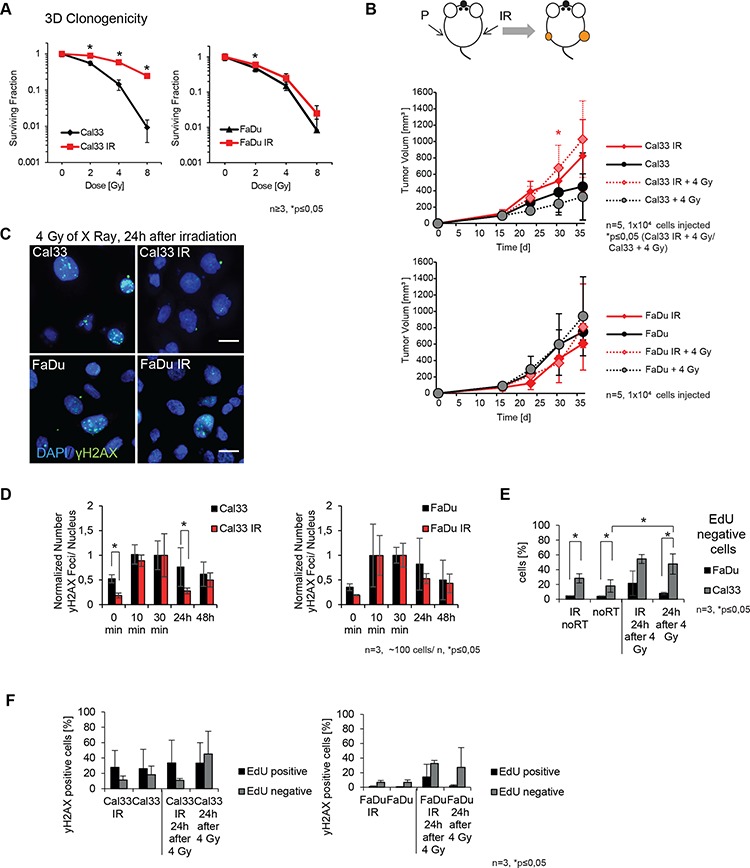
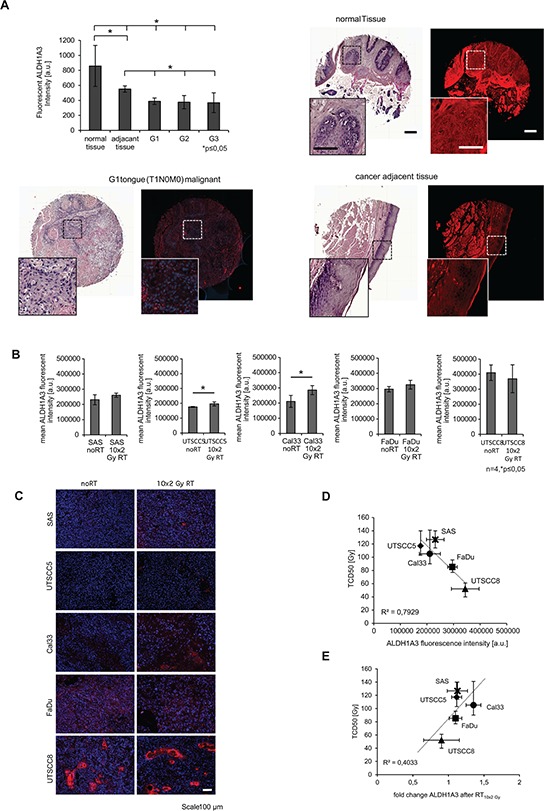
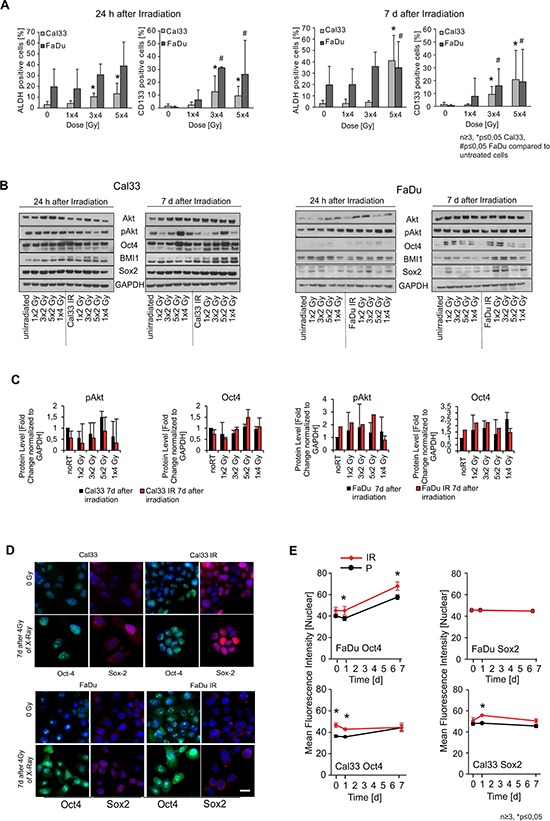
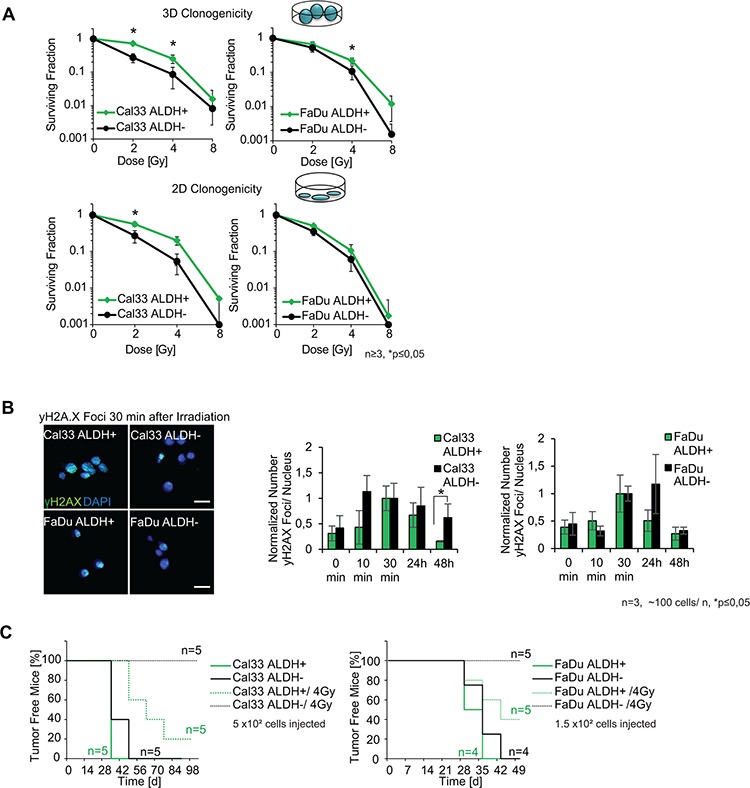
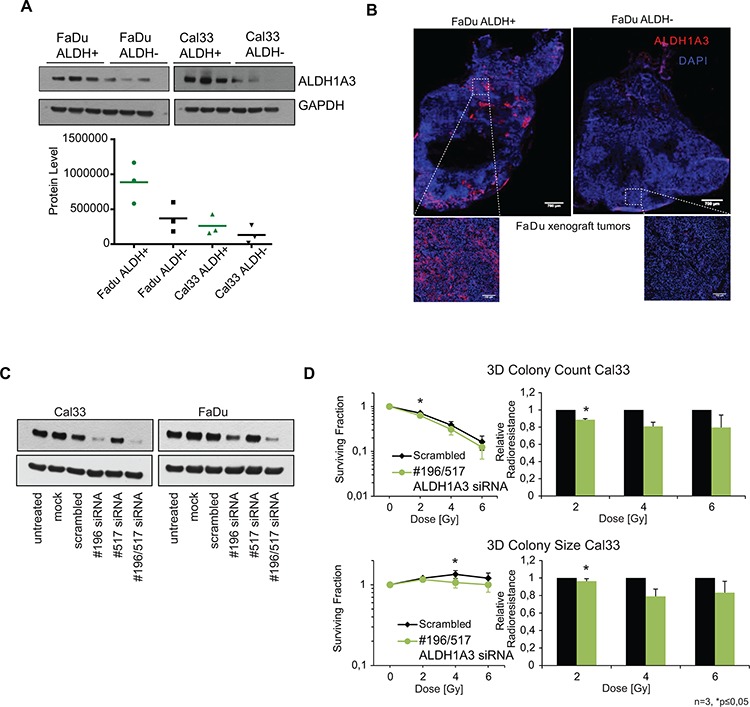
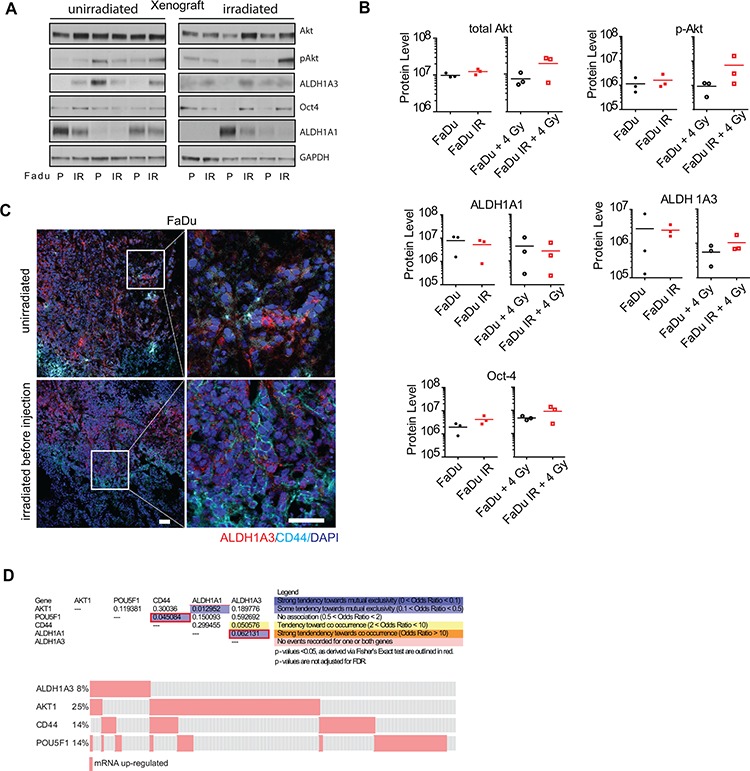
Despite recent advances in understanding of the molecular pathogenesis and improvement of treatment techniques, locally advanced head and neck squamous cell carcinoma (HNSCC) remains associated with an unfavorable prognosis. Compelling evidence suggests that cancer stem cells (CSC) may cause tumor recurrence if they are not eradicated by current therapies as radiotherapy or radio-chemotherapy. Recent in vitro studies have demonstrated that CSCs may be protected from treatment-induced death by multiple intrinsic and extrinsic mechanisms. Therefore, early determination of CSC abundance in tumor biopsies prior-treatment and development of therapeutics, which specifically target CSCs, are promising strategies to optimize treatment. Here we provide evidence that aldehyde dehydrogenase (ALDH) activity is indicative for radioresistant HNSCC CSCs. Our study suggests that ALDH+ cells comprise a population that maintains its tumorigenic properties in vivo after irradiation and may provide tumor regrowth after therapy. We found that ALDH activity in HNSCC cells can be attributed, at least in part, to the ALDH1A3 isoform and inhibition of the ALDH1A3 expression by small interfering RNA (siRNA) decreases tumor cell radioresistance. The expression dynamic of ALDH1A3 upon irradiation by either induction or selection of the ALDH1A3 positive population correlates to in vivo curability, suggesting that changes in protein expression during radiotherapy are indicative for tumor radioresistance. Our data indicate that ALDH1A3+ HNSCC cells may contribute to tumor relapse after irradiation, and inhibition of this cell population might improve therapeutic response to radiotherapy.
尽管在分子发病机制的理解和治疗技术的改进方面取得了最新进展,但局部晚期头颈部鳞状细胞癌(HNSCC)的预后仍然不佳。有力证据表明,如果癌症干细胞(CSC)未被当前的放疗或放化疗等疗法根除,它们可能会导致肿瘤复发。最近的体外研究表明,CSC可能通过多种内在和外在机制免受治疗诱导的死亡。因此,在治疗前早期测定肿瘤活检中CSC的丰度以及开发专门针对CSC的疗法,是优化治疗的有前景的策略。在此,我们提供证据表明醛脱氢酶(ALDH)活性可指示对放疗具有抗性的HNSCC CSC。我们的研究表明,ALDH+细胞群体在照射后在体内保持其致瘤特性,并可能在治疗后导致肿瘤再生。我们发现,HNSCC细胞中的ALDH活性至少部分可归因于ALDH1A3亚型,小干扰RNA(siRNA)抑制ALDH1A3表达可降低肿瘤细胞的放疗抗性。通过诱导或选择ALDH1A3阳性群体,ALDH1A3在照射后的表达动态与体内治愈率相关,这表明放疗期间蛋白质表达的变化可指示肿瘤的放疗抗性。我们的数据表明,ALDH1A3+ HNSCC细胞可能在照射后导致肿瘤复发,抑制这一细胞群体可能会改善对放疗的治疗反应。