León Xavier, Bothe Carolina, García Jacinto, Parreño Matilde, Alcolea Sonia, Quer Miquel, Vila Luis, Camacho Mercedes
Department of Otorhinolaryngology, Hospital de la Santa Creu i Sant Pau and Universitat Autònoma de Barcelona, Barcelona, Spain.
Centro de Investigación Biomédica en Red de Bioingeniería, Biomateriales y Nanomedicina (CIBER-BBN), Madrid, Spain.
Oncotarget. 2015 Nov 10;6(35):37398-409. doi: 10.18632/oncotarget.6054.
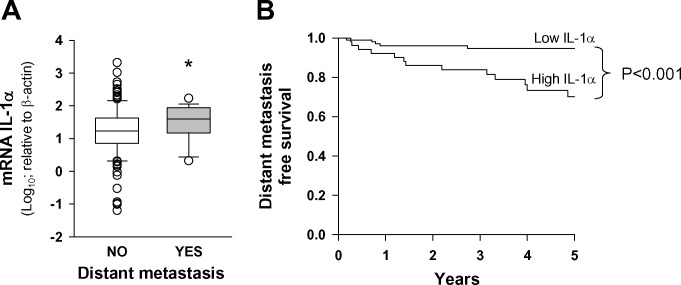
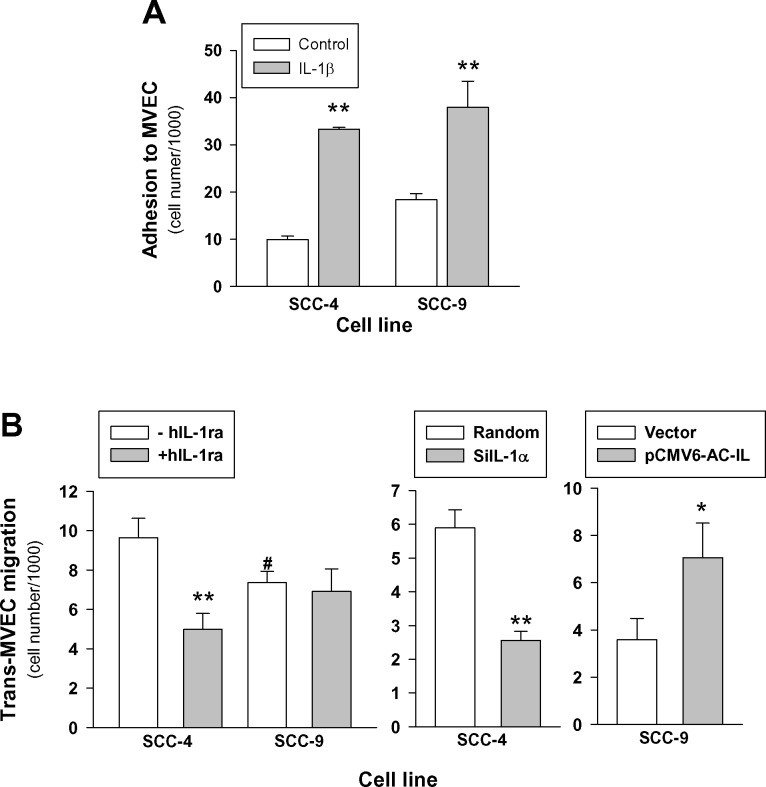
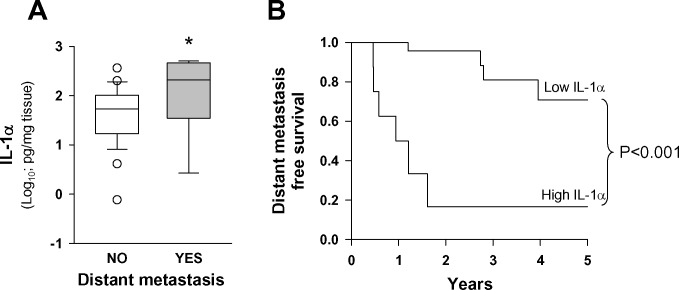
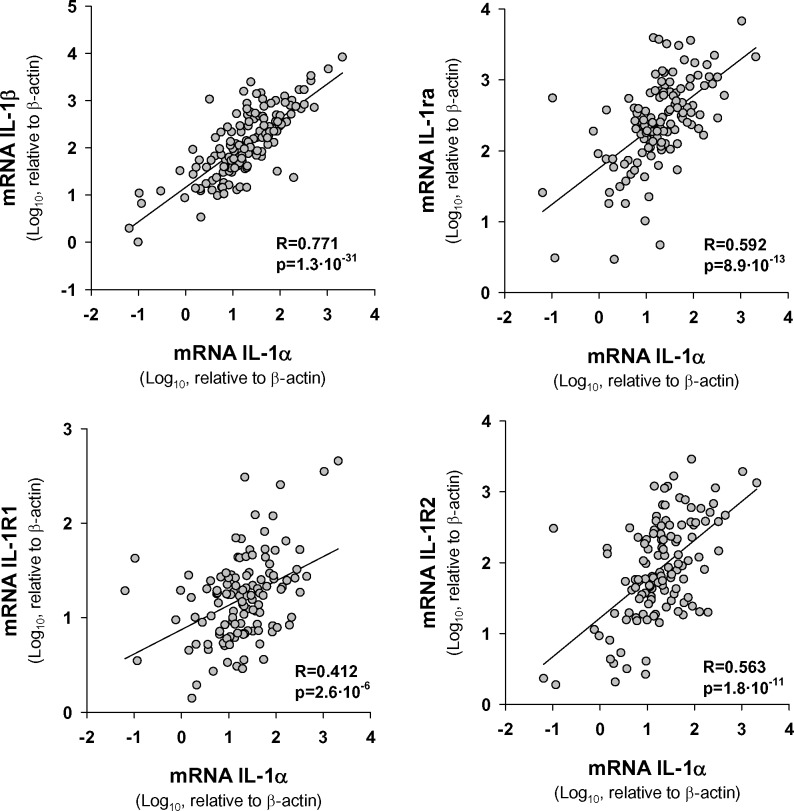
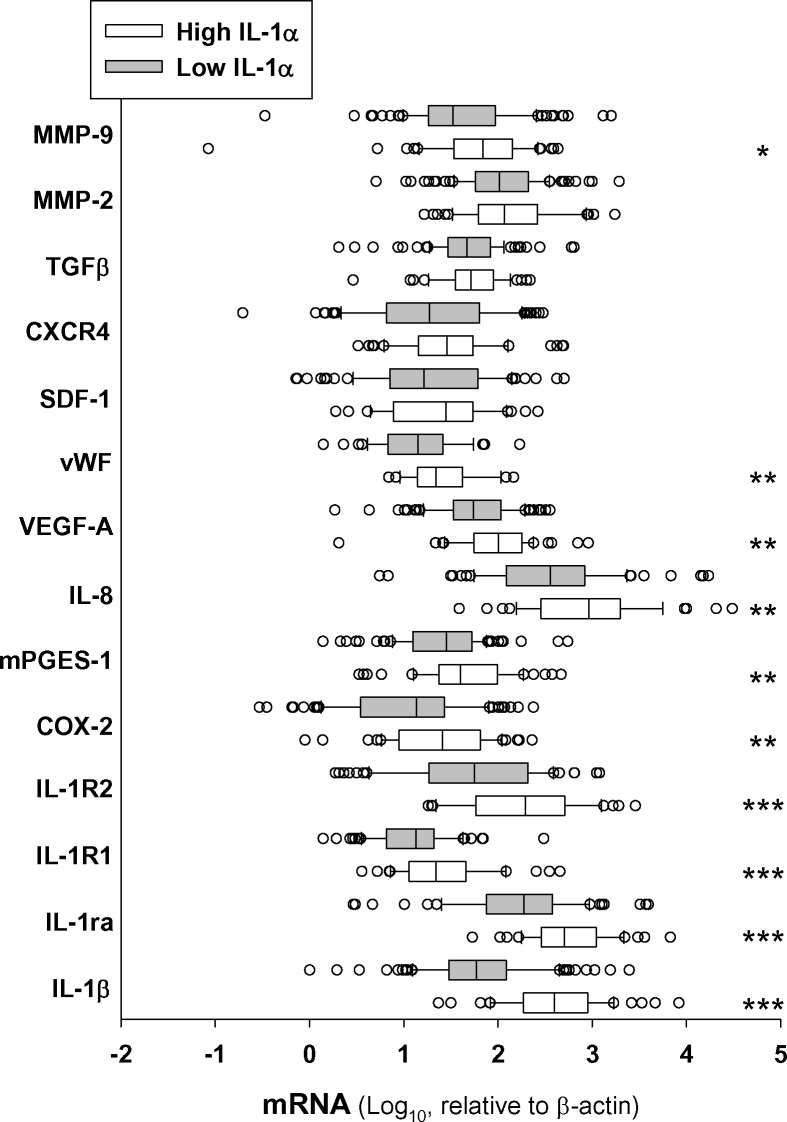
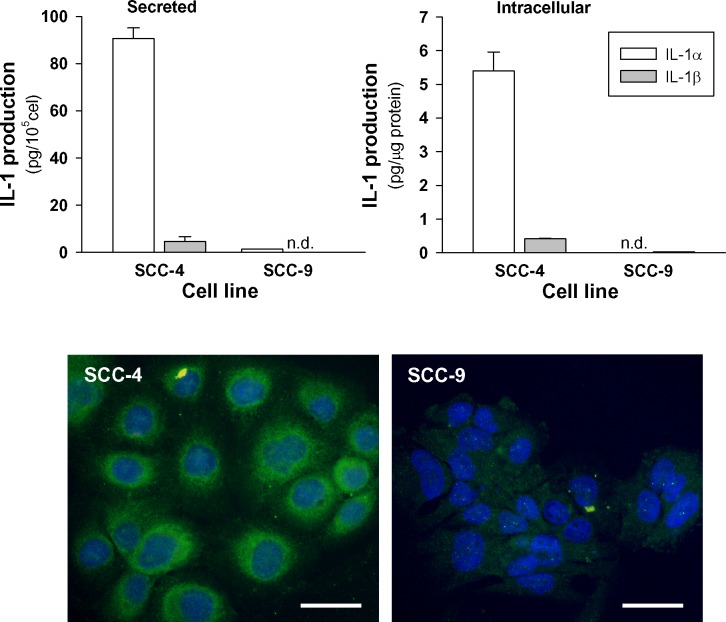
The presence of IL-1 in human cancers is associated with aggressive tumor biology but its prognostic value is unknown. We studied whether IL-1α expression is a prognostic marker of distant metastasis in patients with head and neck squamous cell carcinoma (HNSCC). IL-1α mRNA and protein levels were determined in tumor samples and cancer cell lines using RT-PCR and ELISA. The effects of constitutive IL-1α expression by tumor lines were characterized. IL-1α mRNA and protein secretion were higher in tumor samples from patients who later developed distant metastasis than in patients who did not. By using distant metastasis as a dependent variable, patients were classified into two categories of IL-1α transcript-levels. The high-IL-1α group had a significantly lower five-year distant metastasis-free survival than the low-IL-1α group [70.0% (CI 95%: 55.9-84.1%) vs 94.7% (CI 95%:90.2-99.2%)]. When IL-1α transcript-levels were combined with clinical factors related to tumor metastasis, the predictive power of the model increased significantly. Additionally, transcript levels of IL-1α correlated significantly with those of the IL-1 family genes and genes related to the metastatic process. IL-1 treatment of microvascular endothelial cells increased adhesion of HNSCC cells but no differences were found based on constitutive IL-1α expression by tumor cells. Nevertheless, IL-1α produced by tumor cells effectively increased their transmigration across the endothelium. We found a significant relationship between IL-1α expression and development of distant metastasis in HNSCC patients. IL-1α expression could help to define a subset of patients at high risk of distant metastasis who could benefit from adjuvant treatment.
白细胞介素-1(IL-1)在人类癌症中的存在与侵袭性肿瘤生物学相关,但其预后价值尚不清楚。我们研究了IL-1α表达是否是头颈部鳞状细胞癌(HNSCC)患者远处转移的预后标志物。使用逆转录聚合酶链反应(RT-PCR)和酶联免疫吸附测定(ELISA)法测定肿瘤样本和癌细胞系中IL-1α信使核糖核酸(mRNA)和蛋白水平。对肿瘤细胞系组成型表达IL-1α的作用进行了表征。与未发生远处转移的患者相比,后来发生远处转移的患者肿瘤样本中IL-1α mRNA和蛋白分泌更高。以远处转移作为因变量,将患者分为两类IL-1α转录水平组。高IL-1α组的五年无远处转移生存率显著低于低IL-1α组[70.0%(95%置信区间:55.9-84.1%)对94.7%(95%置信区间:90.2-99.2%)]。当将IL-1α转录水平与肿瘤转移相关的临床因素相结合时,模型的预测能力显著提高。此外,IL-1α的转录水平与IL-1家族基因以及与转移过程相关基因的转录水平显著相关。用IL-1处理微血管内皮细胞可增加HNSCC细胞的黏附,但未发现基于肿瘤细胞组成型IL-1α表达的差异。然而,肿瘤细胞产生的IL-1α可有效增加其穿过内皮的迁移。我们发现HNSCC患者中IL-1α表达与远处转移的发生之间存在显著关系。IL-1α表达有助于确定远处转移高危患者亚组,这些患者可能从辅助治疗中获益。