Silwal-Pandit Laxmi, Russnes Hege, Borgen Elin, Skarpeteig Veronica, Moen Vollan Hans Kristian, Schlichting Ellen, Kåresen Rolf, Naume Bjørn, Børresen-Dale Anne-Lise, Farnebo Marianne, Langerød Anita
Department of Cancer Genetics, Institute for Cancer Research, Division of Cancer Medicine, Surgery and Transplantation, Radiumhospitalet-Oslo University Hospital, 0424 Oslo, Norway; K.G. Jebsen Centre for Breast Cancer Research, Institute for Clinical Medicine, Faculty of Medicine, University of Oslo, 0313 Oslo, Norway.
Department of Cancer Genetics, Institute for Cancer Research, Division of Cancer Medicine, Surgery and Transplantation, Radiumhospitalet-Oslo University Hospital, 0424 Oslo, Norway; Department of Pathology, Division of Diagnostics and Intervention, Oslo University Hospital, 0450 Oslo, Norway; K.G. Jebsen Centre for Breast Cancer Research, Institute for Clinical Medicine, Faculty of Medicine, University of Oslo, 0313 Oslo, Norway.
PLoS One. 2015 Oct 13;10(10):e0139965. doi: 10.1371/journal.pone.0139965. eCollection 2015.
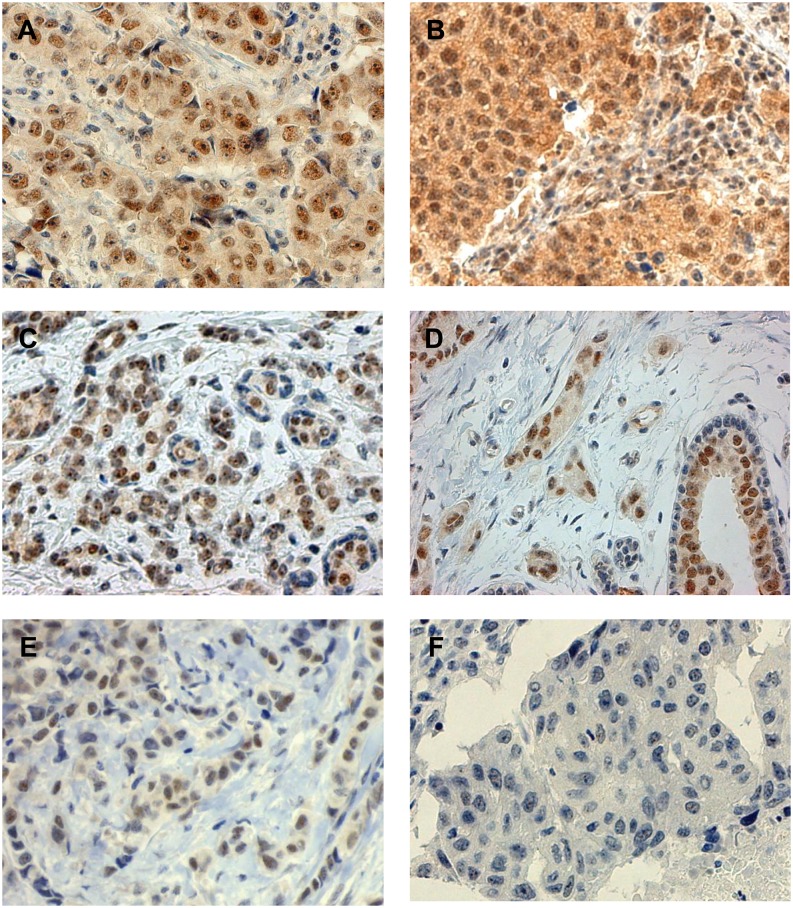
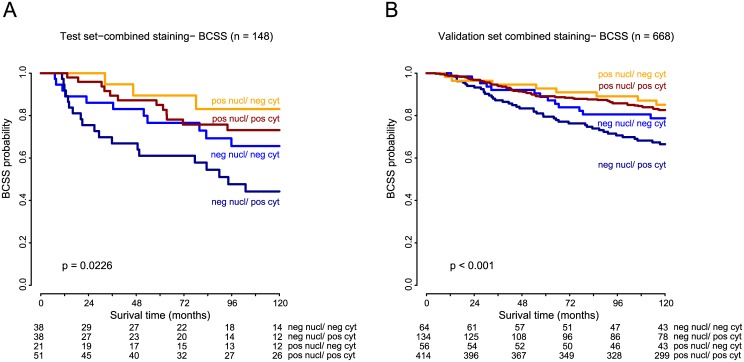
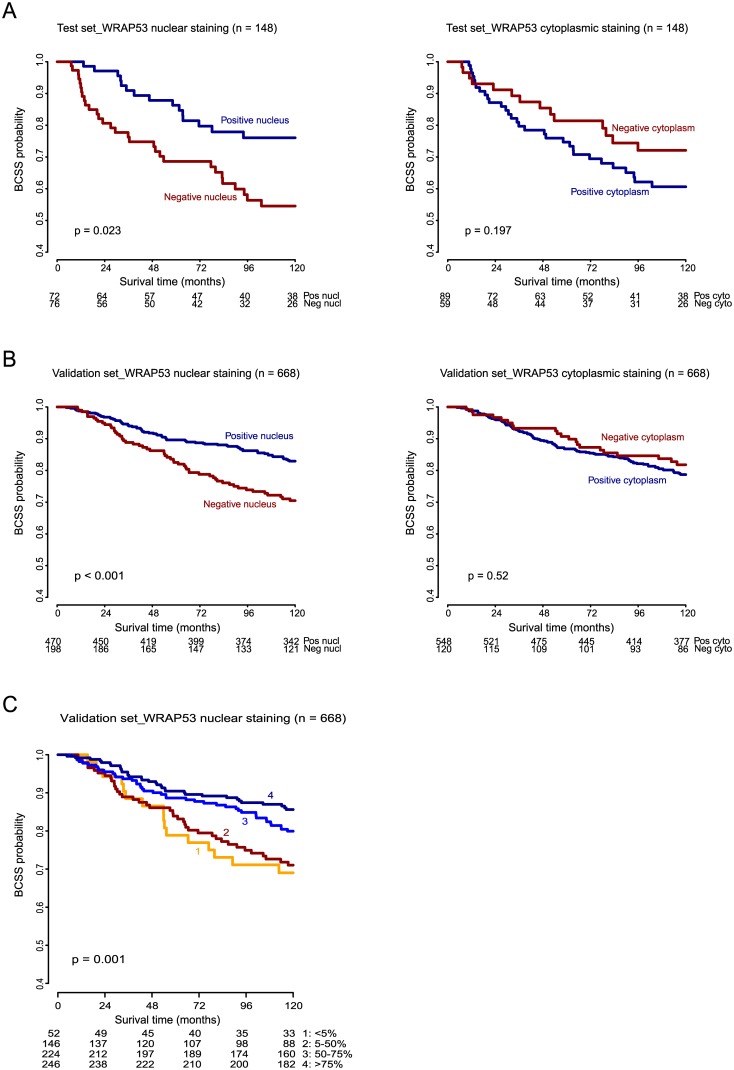
WRAP53 protein controls intracellular trafficking of DNA repair proteins, the telomerase enzyme, and splicing factors. Functional loss of the protein has been linked to carcinogenesis, premature aging and neurodegeneration. The aim of this study was to investigate the prognostic significance of WRAP53 protein expression in breast cancer. A tissue microarray was constructed from primary breast tumors and immunostained by a polyclonal WRAP53 antibody to assess the protein expression pattern. Two different patient cohorts with long term follow-up were studied; a test- and a validation set of 154 and 668 breast tumor samples respectively. Breast cancer patients with tumor cells lacking the expression of WRAP53 in the nucleus had a significantly poorer outcome compared to patients with tumor cells expressing this protein in the nuclei (HR = 1.95, 95%CI = 1.09-3.51, p = 0.025). Nuclear localization of WRAP53 was further shown to be an independent marker of prognosis in multivariate analysis (HR = 2.57, 95%CI = 1.27-5.19, p = 0.008), and also significantly associated with better outcome in patients with TP53 mutation. Here we show that the sub-cellular localization of the WRAP53 protein has a significant impact on breast cancer survival, and thus has a potential as a clinical marker in diagnostics and treatment.
WRAP53蛋白控制DNA修复蛋白、端粒酶和剪接因子的细胞内运输。该蛋白的功能丧失与致癌作用、早衰和神经退行性变有关。本研究的目的是探讨WRAP53蛋白表达在乳腺癌中的预后意义。从原发性乳腺肿瘤构建组织微阵列,并用多克隆WRAP53抗体进行免疫染色,以评估蛋白表达模式。研究了两个具有长期随访的不同患者队列;分别为154例和668例乳腺肿瘤样本的测试组和验证组。与肿瘤细胞核中表达该蛋白的患者相比,肿瘤细胞在细胞核中缺乏WRAP53表达的乳腺癌患者预后明显较差(HR = 1.95,95%CI = 1.09 - 3.51,p = 0.025)。在多变量分析中,WRAP53的核定位进一步显示为独立的预后标志物(HR = 2.57,95%CI = 1.27 - 5.19,p = 0.008),并且在TP53突变患者中也与较好的预后显著相关。在这里我们表明,WRAP53蛋白的亚细胞定位对乳腺癌生存有显著影响,因此有潜力作为诊断和治疗中的临床标志物。